
When the weather turns cold, a daily walk is often the first thing to go. The air feels sharp, the paths may be icy and the sofa looks very friendly. But a few weeks of sitting can undo months of good habits.
The good news is that you do not have to choose between a freezing walk and no walk at all. The National Institute on Aging (NIA) says older adults can stay active in winter by dressing well, picking safe routes and moving some of their walking indoors.
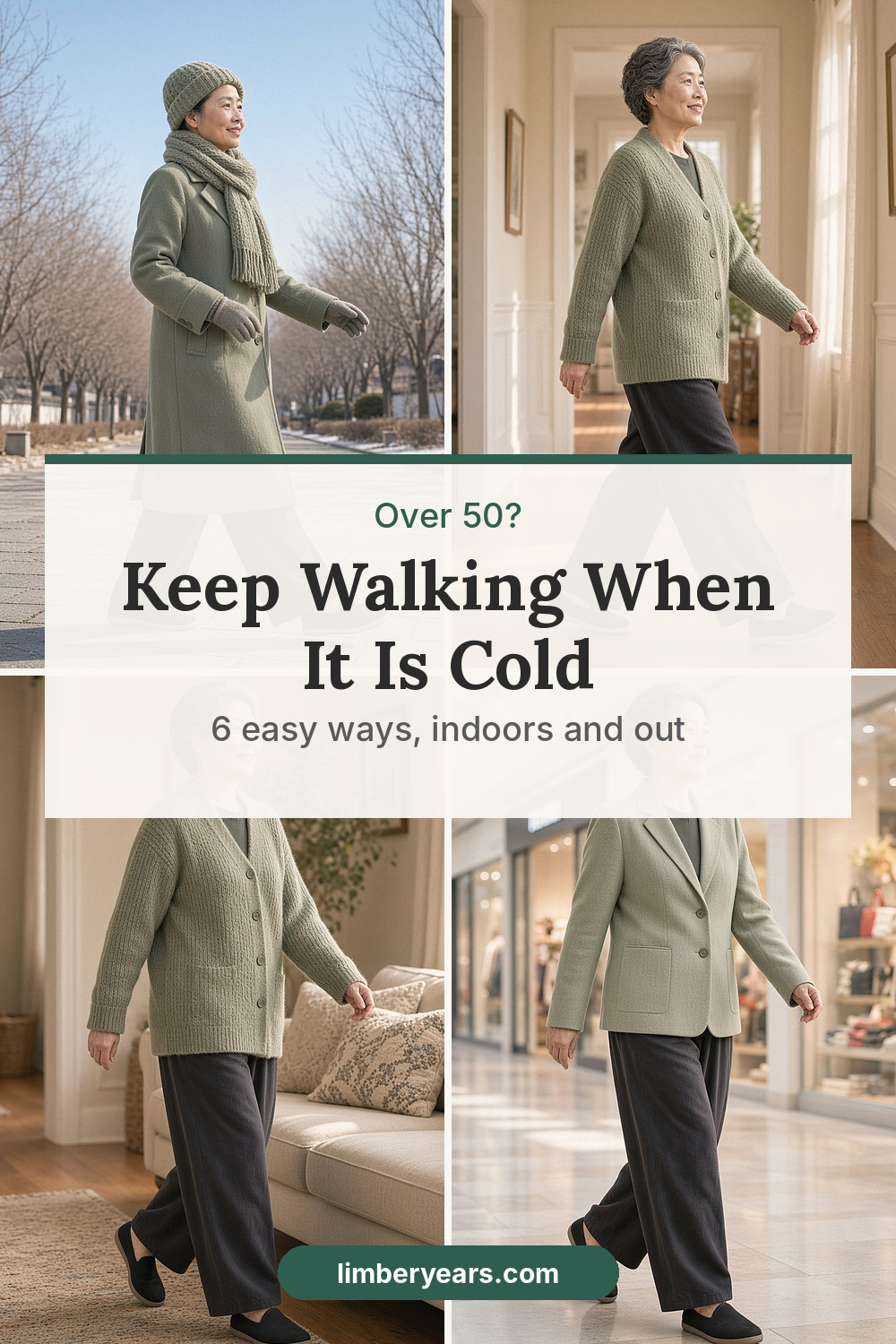
This guide gives you 6 easy ways to keep walking when it is cold, each with a photo, simple steps and an easier option. At the end you will find a weekly plan and safety tips.
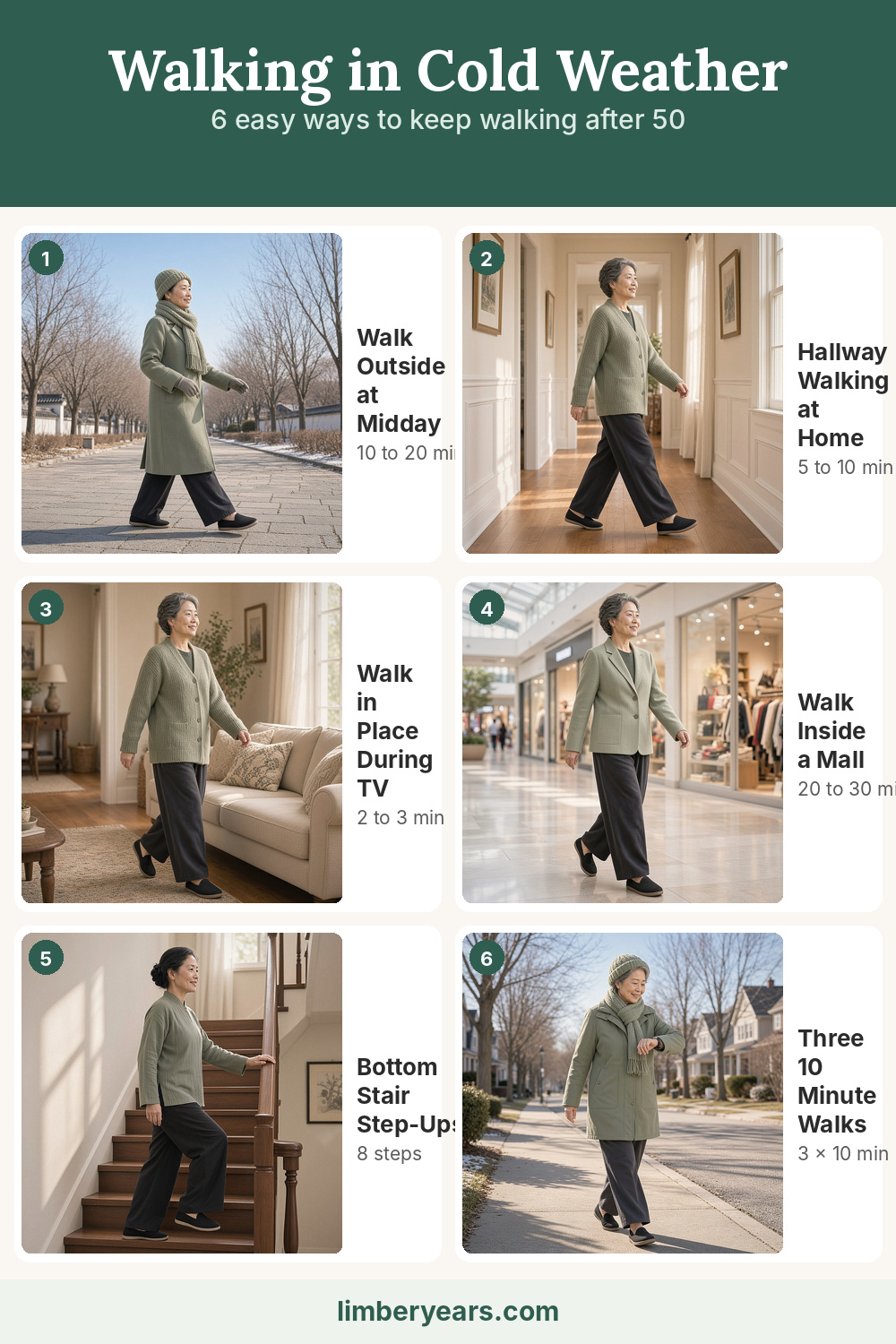
Save this chart to Pinterest or print it out and keep it near your favorite chair. Photos on this site are made with AI to show each move clearly.
Key takeaways
- Dress in warm layers and cover your head, hands and neck before you go out.
- Choose clear, well lit paths. Skip the walk on icy days and walk indoors instead.
- Short walks count. Three 10 minute walks add up to the same as one 30 minute walk.
- Indoor options like hallways, malls and marching in place keep you moving all winter.
Before you start
- Wear thin layers you can add or remove, with a windproof outer layer on top.
- Cover your head, hands and neck. A hat and scarf keep in a lot of heat.
- Wear shoes with good grip. Check the path first and avoid ice and wet leaves.
- Tell someone where you are going, and take your phone with you.
- Warm up indoors for a minute or two before you step outside.
The 6 ways to keep walking in cold weather at a glance
| # | Exercise | Works on | How much |
|---|---|---|---|
| 1 | Walk Outside at Midday | Heart and mood | 10 to 20 minutes |
| 2 | Hallway Walking at Home | Legs and stamina | 5 to 10 minutes, a few times a day |
| 3 | Walk in Place During TV | Legs and heart | 2 to 3 minutes during each ad break |
| 4 | Walk Inside a Mall | Stamina and company | 20 to 30 minutes |
| 5 | Bottom Stair Step-Ups | Legs and balance | 8 steps, then rest |
| 6 | Three 10 Minute Walks | Habit | 3 walks of 10 minutes |
1. Walk Outside at Midday

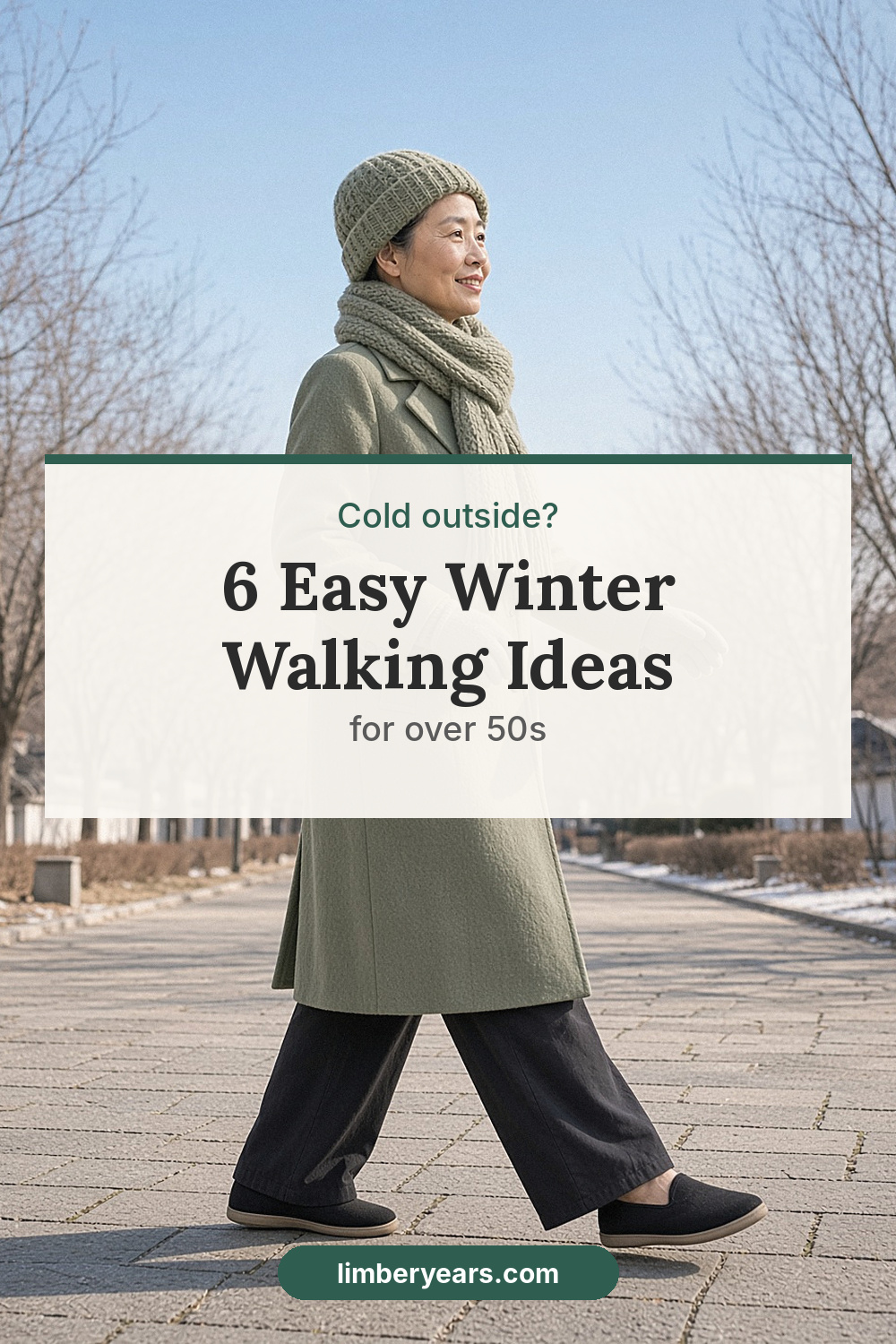
Daylight lifts your mood and the midday sun is the warmest. Even a short outdoor walk helps you feel less shut in during winter.
How to do it:
- Pick the warmest, brightest part of the day, often around midday.
- Dress in layers and cover your head, hands and neck.
- Walk at an easy pace on a clear path and turn back if it feels too cold.
Make it easier: Walk for just 10 minutes and stay close to home.
How much: 10 to 20 minutes.
2. Hallway Walking at Home
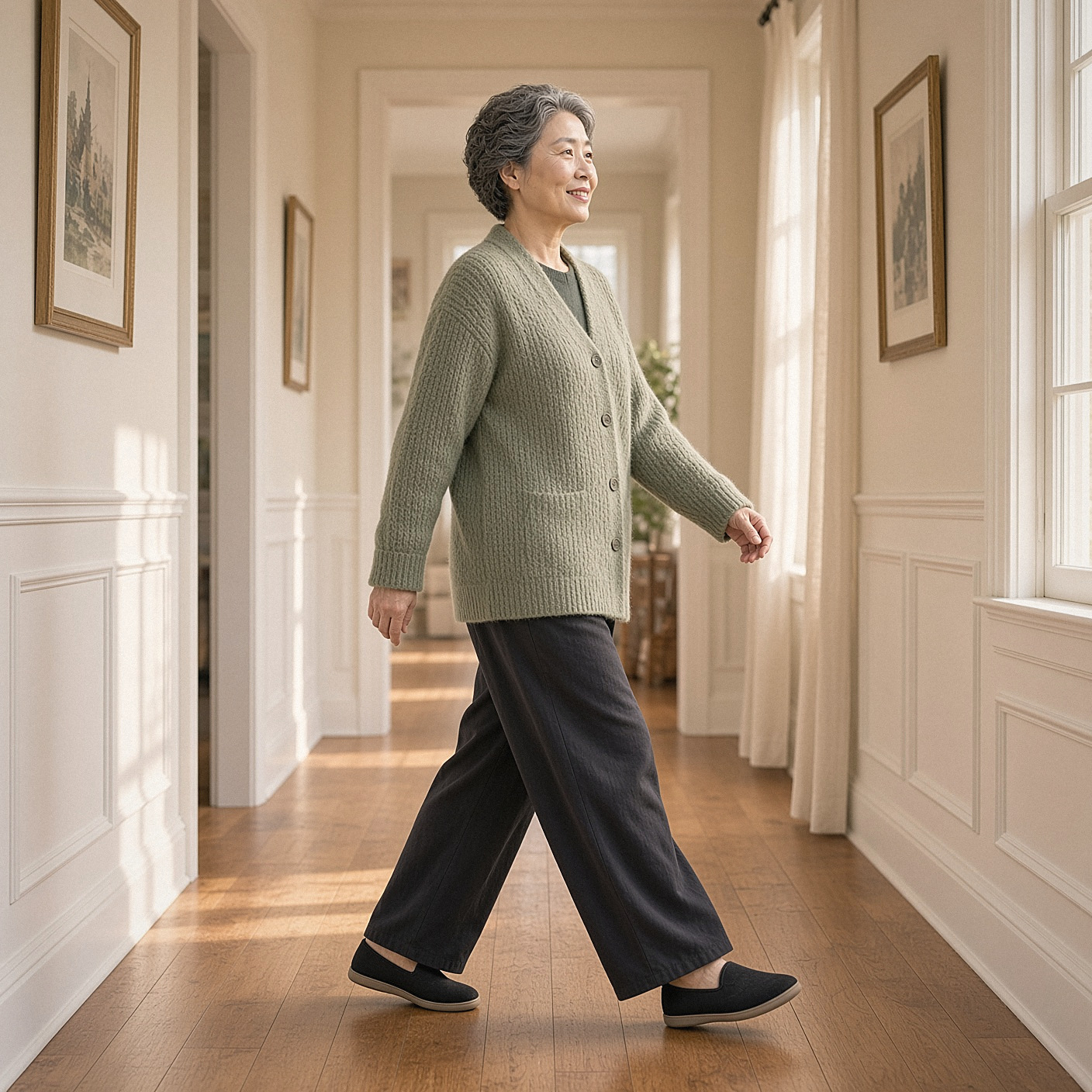
A hallway is always warm, dry and safe from ice. Many short hallway walks through the day add up fast.
How to do it:
- Pick a clear hallway or a loop around your home.
- Walk at an easy pace with your head up and arms loose.
- Turn around at the end and keep going for a few minutes.
Make it easier: Walk slowly and rest a hand on the wall if you need to.
How much: 5 to 10 minutes, a few times a day.
3. Walk in Place During TV
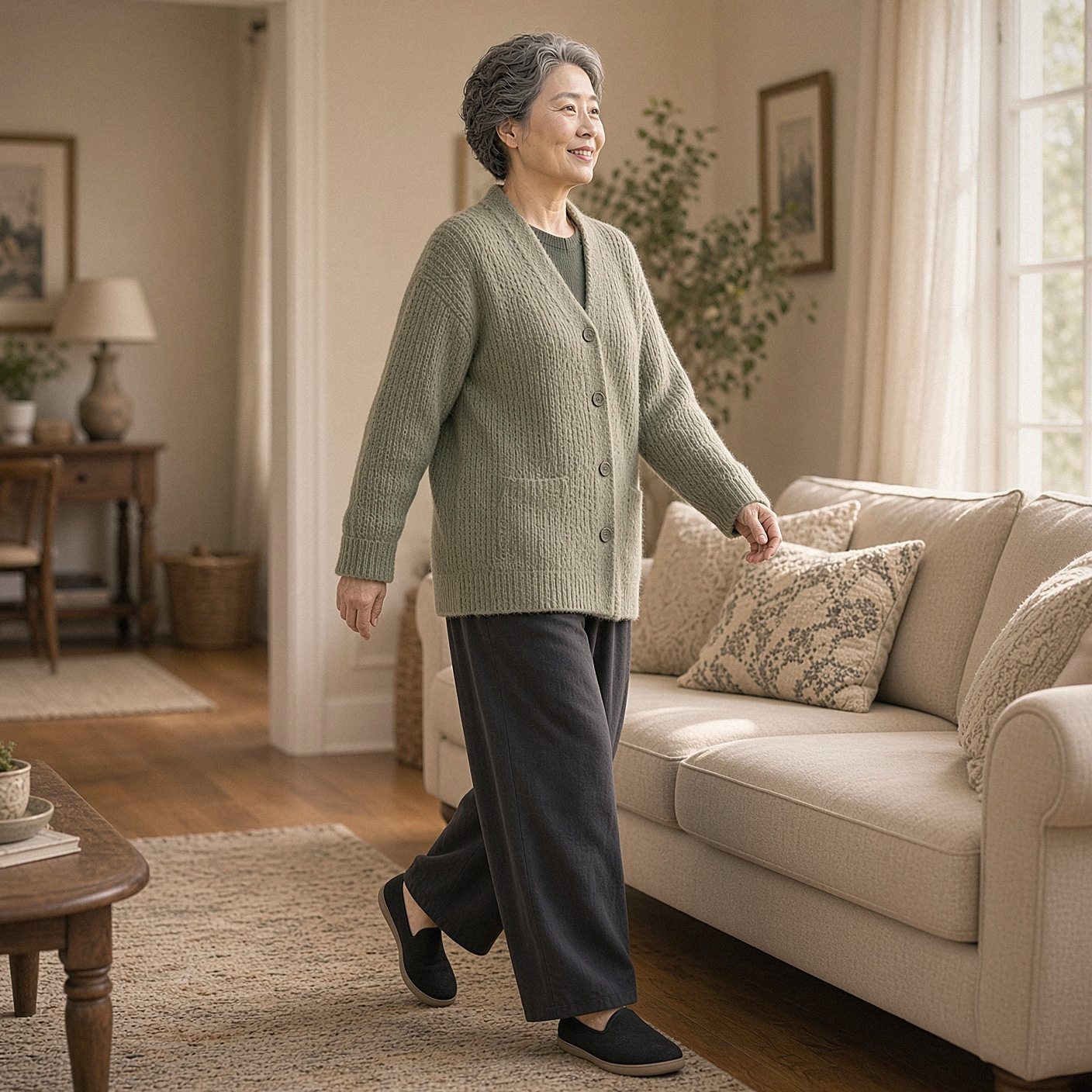
You can turn TV time into walking time. It needs no space and no equipment.
How to do it:
- Stand near a sturdy chair or the sofa for support.
- Lift one foot at a time, as if you are walking slowly on the spot.
- Keep a steady pace and swing your arms gently.
Make it easier: Hold the back of a chair with one hand.
How much: 2 to 3 minutes during each ad break.
4. Walk Inside a Mall

Malls are warm, flat and well lit, and many open early for walkers. It is also a friendly way to walk with a friend.
How to do it:
- Go in the morning when it is quiet.
- Walk the long corridors at an easy pace.
- Take a seat on a bench any time you want a rest.
Make it easier: Do one lap and have a seat before the next.
How much: 20 to 30 minutes.
5. Bottom Stair Step-Ups
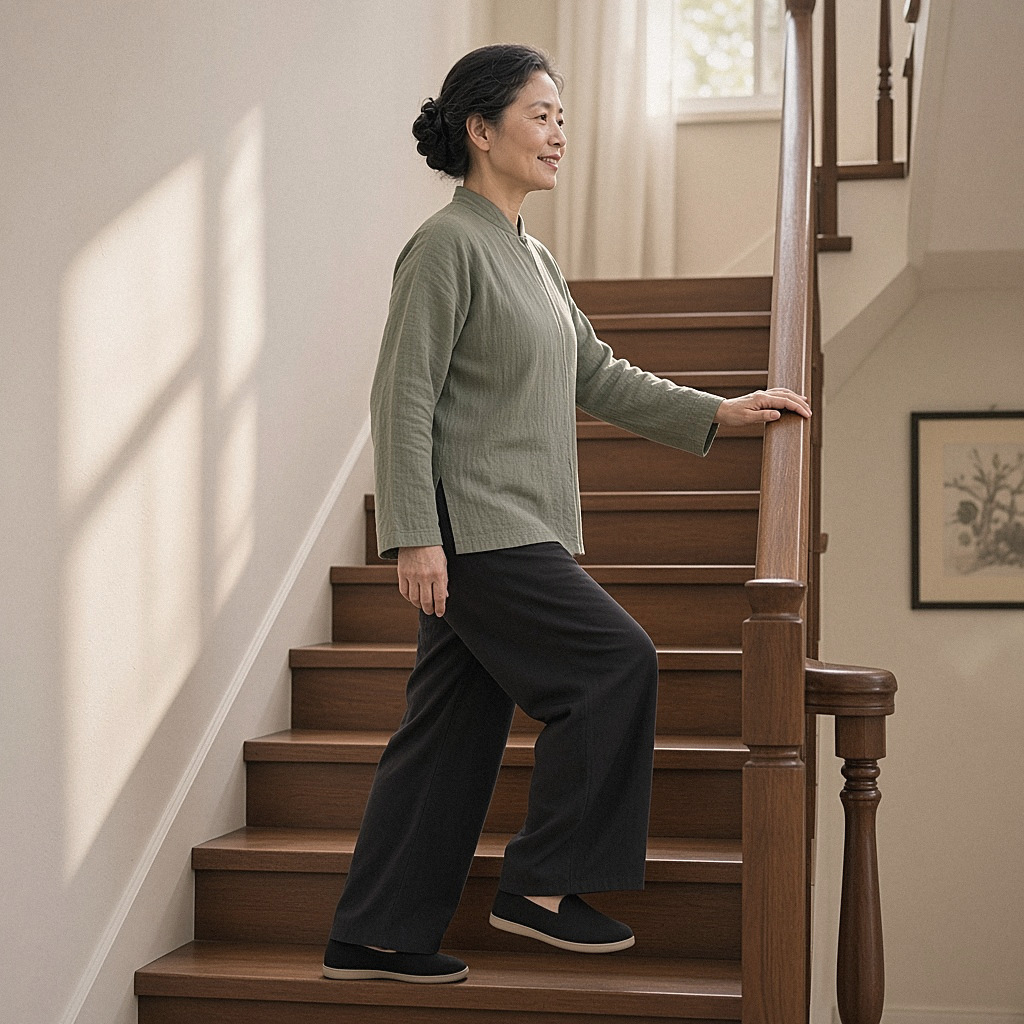
Stairs build leg strength, which helps your walking. Always keep a hand on the rail.
How to do it:
- Stand facing the bottom step with one hand on the rail.
- Step up with one foot, then bring the other foot up.
- Step back down one foot at a time.
Make it easier: Step up and down with the same foot leading, a few times.
How much: 8 steps, then rest.
6. Three 10 Minute Walks

Short walks are easier to fit in and easier on cold days. Together they give you 30 minutes of walking.
How to do it:
- Walk for 10 minutes after breakfast.
- Walk again for 10 minutes after lunch.
- Finish with a 10 minute walk after dinner.
Make it easier: Start with three 5 minute walks and add a minute each week.
How much: 3 walks of 10 minutes.
A simple cold weather walking week
You do not need to walk outside every day. Mix indoor and outdoor walks so you keep moving whatever the weather.
| Step | Exercise | Amount |
|---|---|---|
| 1 | Monday | Midday walk outside, 15 minutes |
| 2 | Tuesday | Hallway walks, 3 times 5 minutes |
| 3 | Wednesday | Three 10 minute walks |
| 4 | Thursday | Mall walking, 20 minutes |
| 5 | Friday | Walk in place during TV, plus a short walk outside |
| 6 | Saturday | Longer walk with a friend if the weather is good |
| 7 | Sunday | Rest, or gentle stair step-ups |
Your 4 week plan
Build up slowly. Aim for the CDC goal of 150 minutes of moderate activity a week, but start with what feels easy today.
| Week | What to do |
|---|---|
| Week 1 | Walk 10 minutes a day, indoors or out. Get used to your winter layers. |
| Week 2 | Walk 15 minutes on most days. Add one outdoor walk at midday. |
| Week 3 | Try three short walks on a day or two. Add stair step-ups. |
| Week 4 | Aim for 20 to 30 minutes of walking on most days, in whatever mix suits the weather. |
When to check with your doctor
Cold air puts extra strain on the body. Talk to your doctor first if any of these apply to you:
- You have heart disease, high blood pressure or breathing problems such as asthma or COPD.
- You get chest tightness, dizziness or shortness of breath when you walk.
- You have joint pain, balance problems or a recent injury or surgery.
- You take medicines that affect how you feel the cold. Ask your doctor or pharmacist if you are not sure.
Frequently asked questions
Is it safe to walk outside in cold weather after 50?
It can be, if you dress in warm layers, cover your head, hands and neck, and stay on clear paths. The NIA advises older adults to take extra care in the cold, and to move indoors if it is icy or very cold.
How cold is too cold for a walk?
There is no single number. Very cold, windy or icy days are better spent walking indoors. Check with your doctor if you have a heart or lung condition.
How much should I walk each week?
The CDC suggests 150 minutes a week of moderate activity for older adults. That is about 30 minutes on 5 days, and you can split it into short walks.
What can I do on days I cannot go out?
Walk your hallway, march in place during TV, walk in a mall or do bottom stair step-ups. You can also try our chair tai chi routine.
What should I wear?
Thin layers with a windproof coat, a hat, gloves, a scarf and shoes with good grip. Add or remove layers so you do not get too hot or too cold.
Keep going
Want a calmer way to walk? Try our tai chi walking guide for better balance, or our chair tai chi routine on days you stay in.

Written by June Ashby
June writes the Limber Years guides to posture, tai chi, mobility and gentle strength for people over 50. She keeps every routine short, gentle and easy to follow at home. June is not a doctor or physical therapist, so please check with yours before starting something new. More about Limber Years
Sources
- National Institute on Aging (NIA): Safety tips for exercising outdoors
- National Institute on Aging (NIA): 5 tips for exercising safely during cold weather
- CDC: Physical activity guidelines for older adults
This article is general information, not medical advice. Read our full disclaimer.