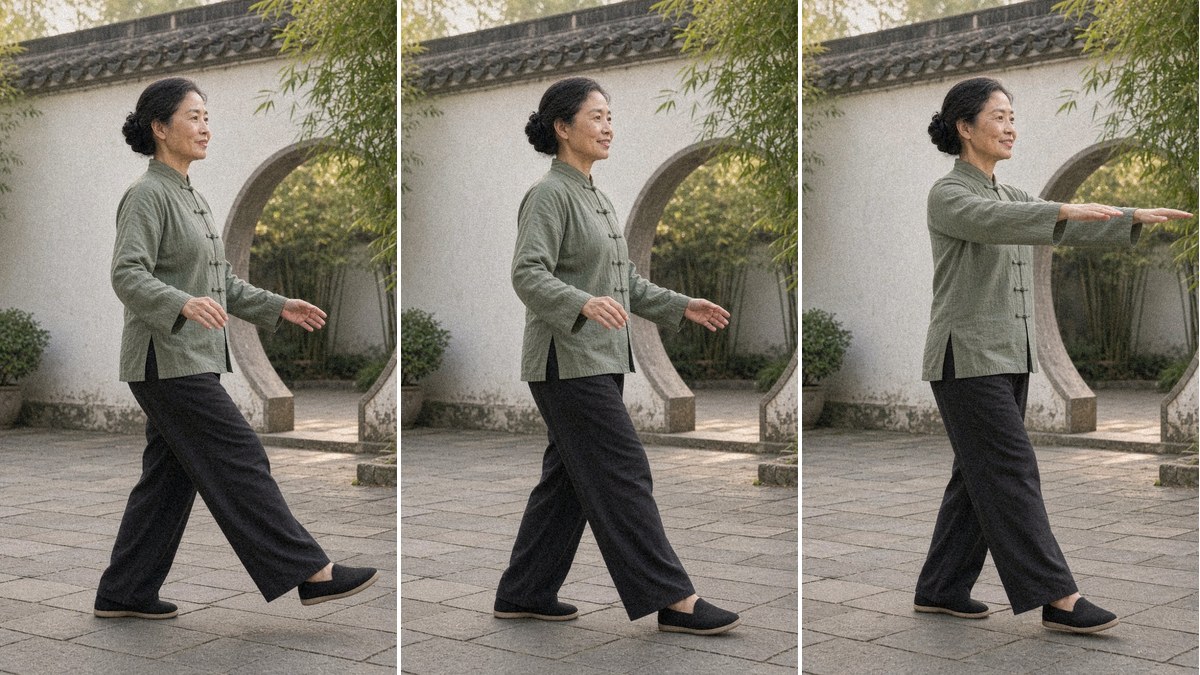
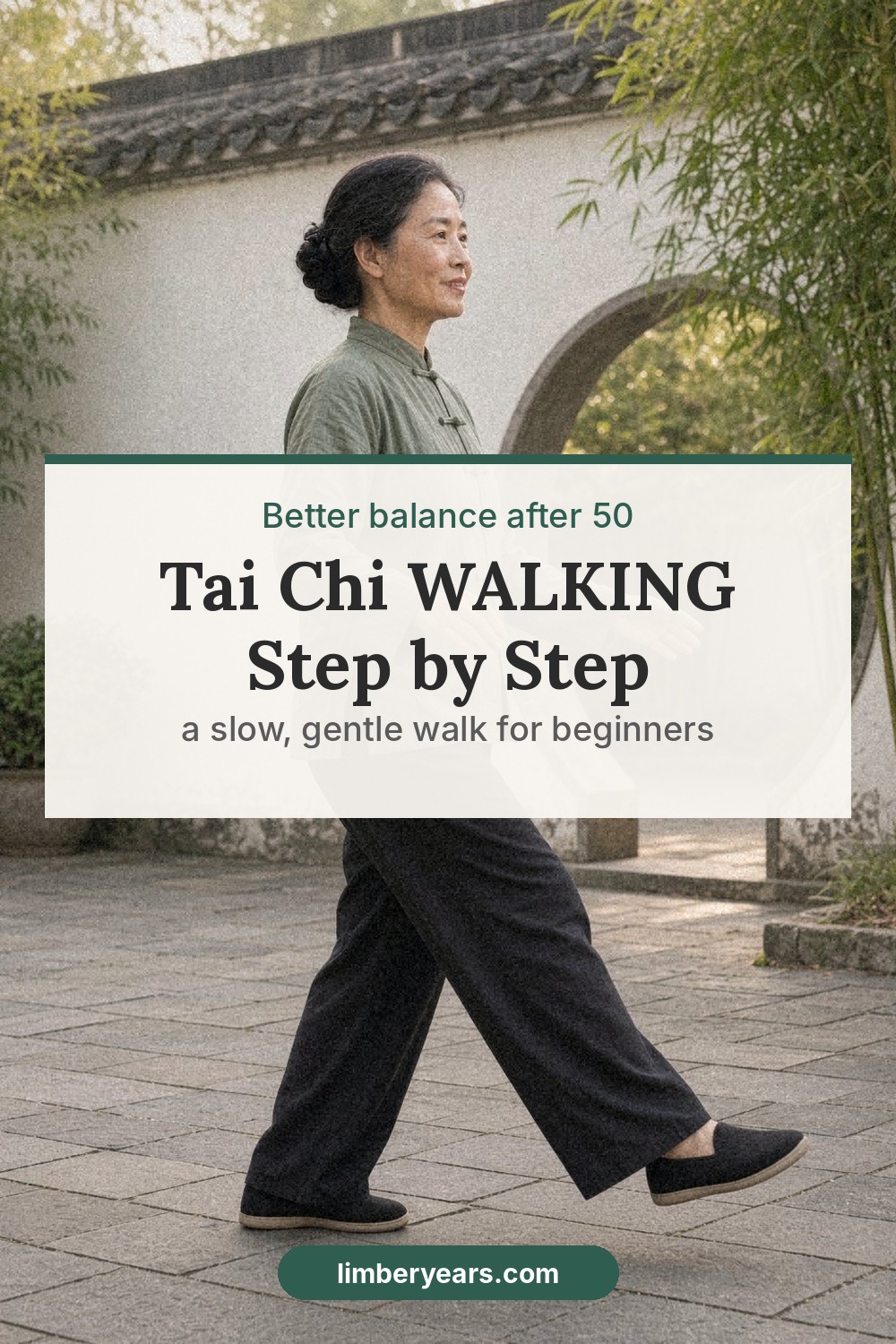
Tai chi walking takes the most ordinary thing you do every day and slows it right down. You place your heel first, roll gently onto the whole foot and move your weight forward on purpose, one calm step at a time.
That slow, careful weight shift is what makes it such good balance practice. The CDC lists walking heel to toe as an example of a balance activity for older adults, and the US National Center for Complementary and Integrative Health (NCCIH) reports that tai chi may reduce the rate of falls in older people.
This guide breaks tai chi walking into 8 simple steps, each with a photo, clear instructions and an easier option. At the end you will find a 10 minute session and a 4 week plan to help you build the habit.
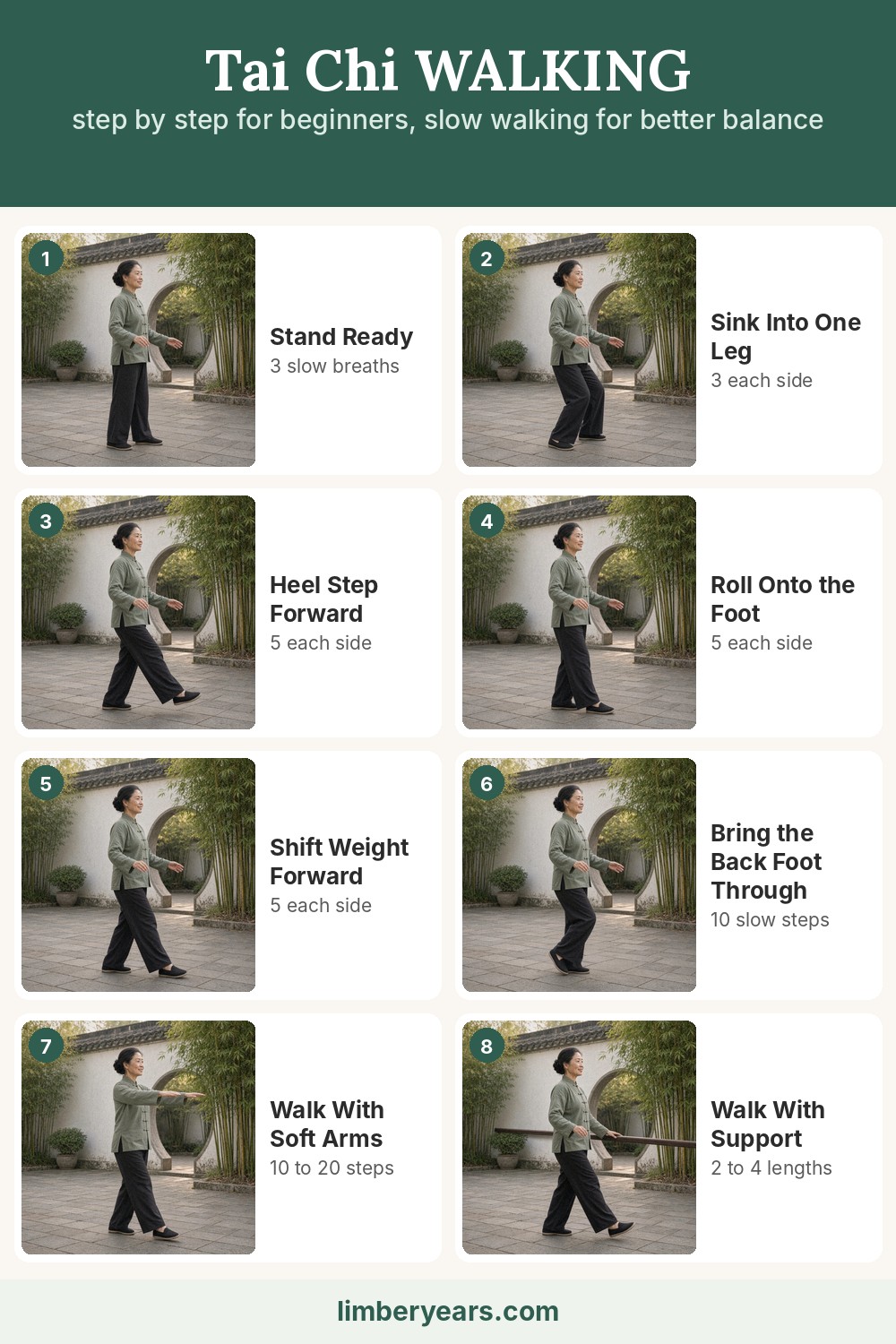
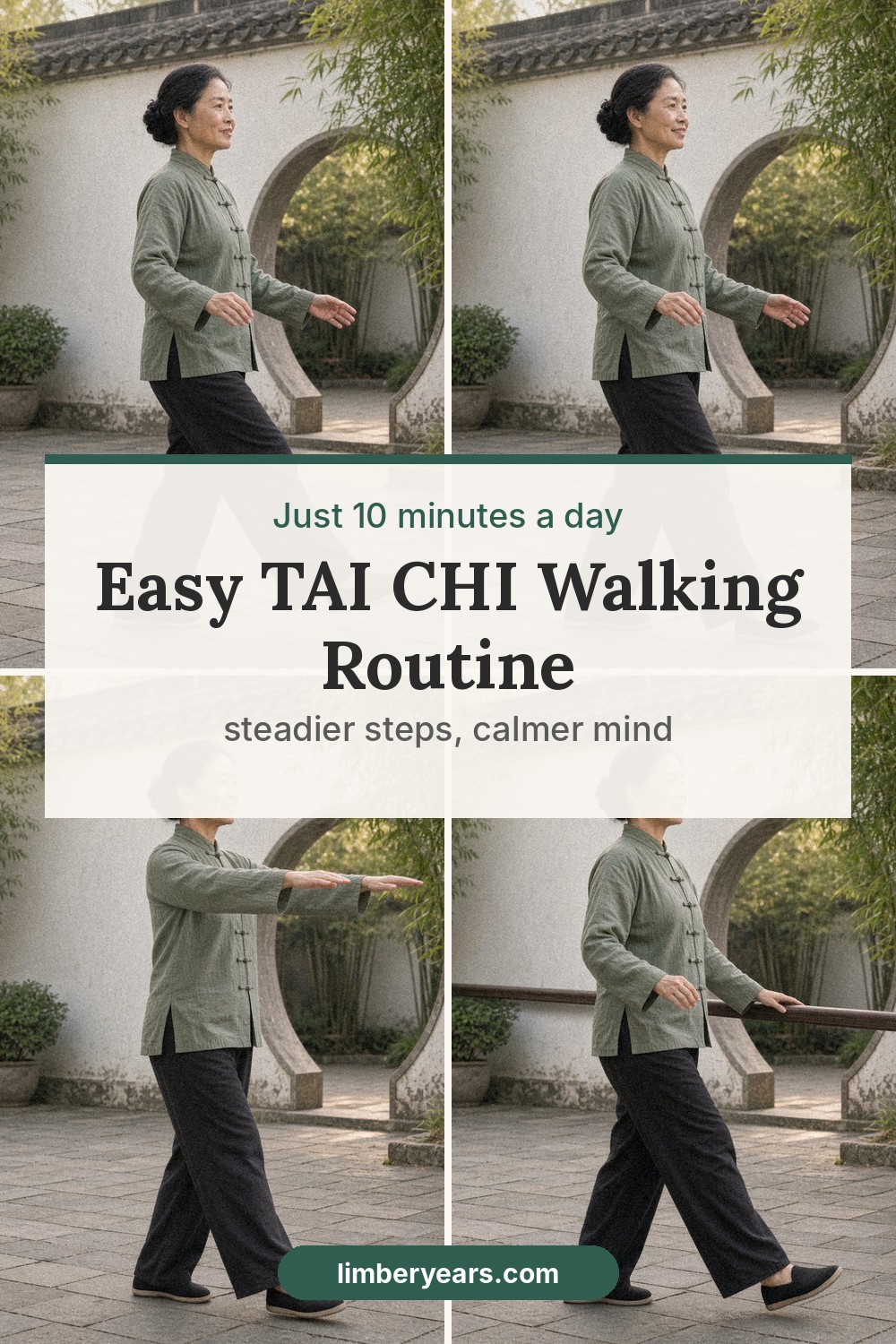
Save this chart to Pinterest or print it out and keep it near your favorite chair.
Key takeaways
- Tai chi walking is ordinary walking done very slowly: heel first, roll the foot, then shift your weight.
- Keep your knees soft and your steps short. Slow and steady matters more than distance.
- You can practise indoors in a hallway, with a wall or counter for support.
- A few minutes most days builds steadier balance and stronger legs over time.
Before you start
- Wear flat, thin soled shoes or go barefoot on a non slip floor.
- Clear a path of about 12 to 15 feet, with no rugs, cables or clutter.
- Practise near a wall, kitchen counter or sturdy furniture so you can steady yourself.
- Breathe slowly and naturally. Look ahead, not down at your feet.
- If you often feel dizzy or unsteady, have a friend nearby the first few times and check with your doctor first.
Tai chi walking in 8 steps
| # | Step | Works on | How much |
|---|---|---|---|
| 1 | Stand Ready | Posture | 3 slow breaths |
| 2 | Sink Into One Leg | Legs and balance | Hold 2 breaths, 3 times each side |
| 3 | Heel Step Forward | Balance | 5 slow steps each side |
| 4 | Roll Onto the Whole Foot | Feet and ankles | 5 slow steps each side |
| 5 | Shift Your Weight Forward | Legs and balance | 5 slow shifts each side |
| 6 | Bring the Back Foot Through | Balance | 10 slow steps |
| 7 | Walk With Soft Arms | Coordination | 10 to 20 slow steps |
| 8 | Walk With Support | Confidence | 2 to 4 lengths |
1. Stand Ready
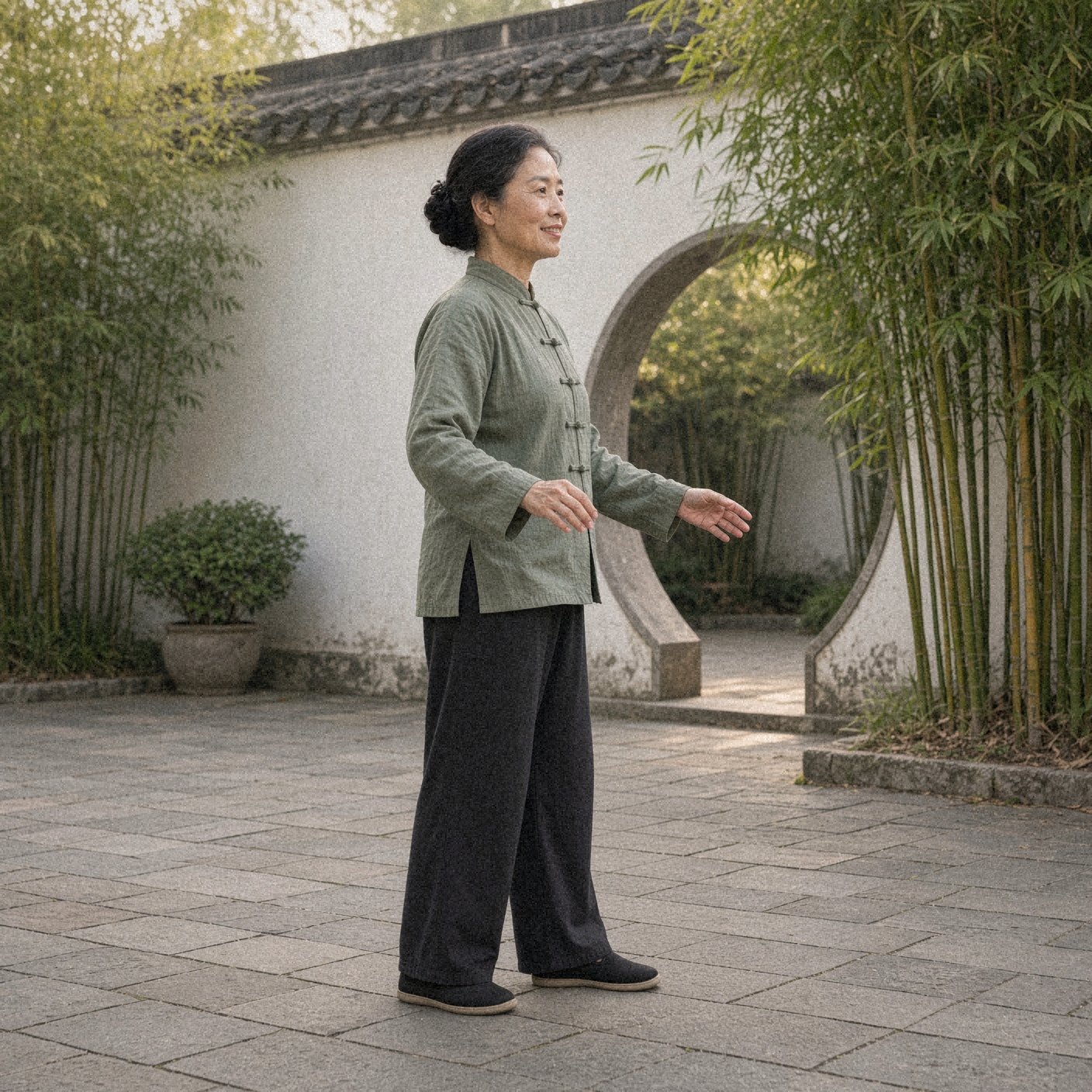
A good start sets up the whole walk. Soft knees and an upright body make every step that follows steadier.
How to do it:
- Stand with your feet hip width apart and your knees softly bent.
- Let your arms relax and rest your hands in front of your waist, palms down.
- Stand tall, look ahead and take two or three slow breaths.
Make it easier: Rest one hand on a wall or counter beside you.
How much: 3 slow breaths.
2. Sink Into One Leg
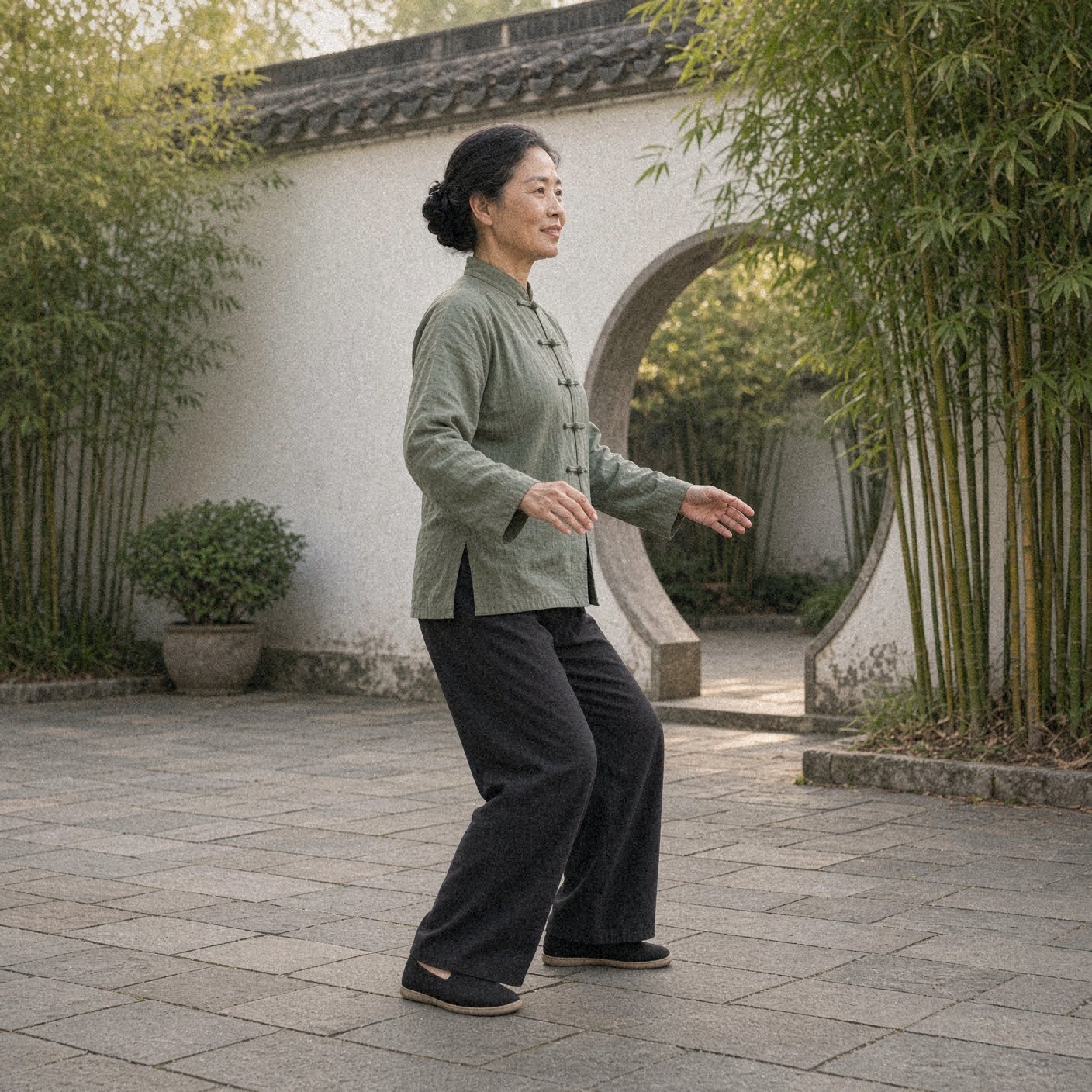
Every tai chi step begins by moving your weight onto one leg. Practising this on its own builds the leg strength you need to step slowly.
How to do it:
- From standing ready, slowly shift your weight onto your right leg.
- Bend the right knee a little more so you sink gently into that leg.
- Let your left foot become light, with just the toes resting on the floor.
Make it easier: Shift only part of your weight and keep the whole left foot on the floor.
How much: Hold 2 breaths, 3 times each side.
3. Heel Step Forward
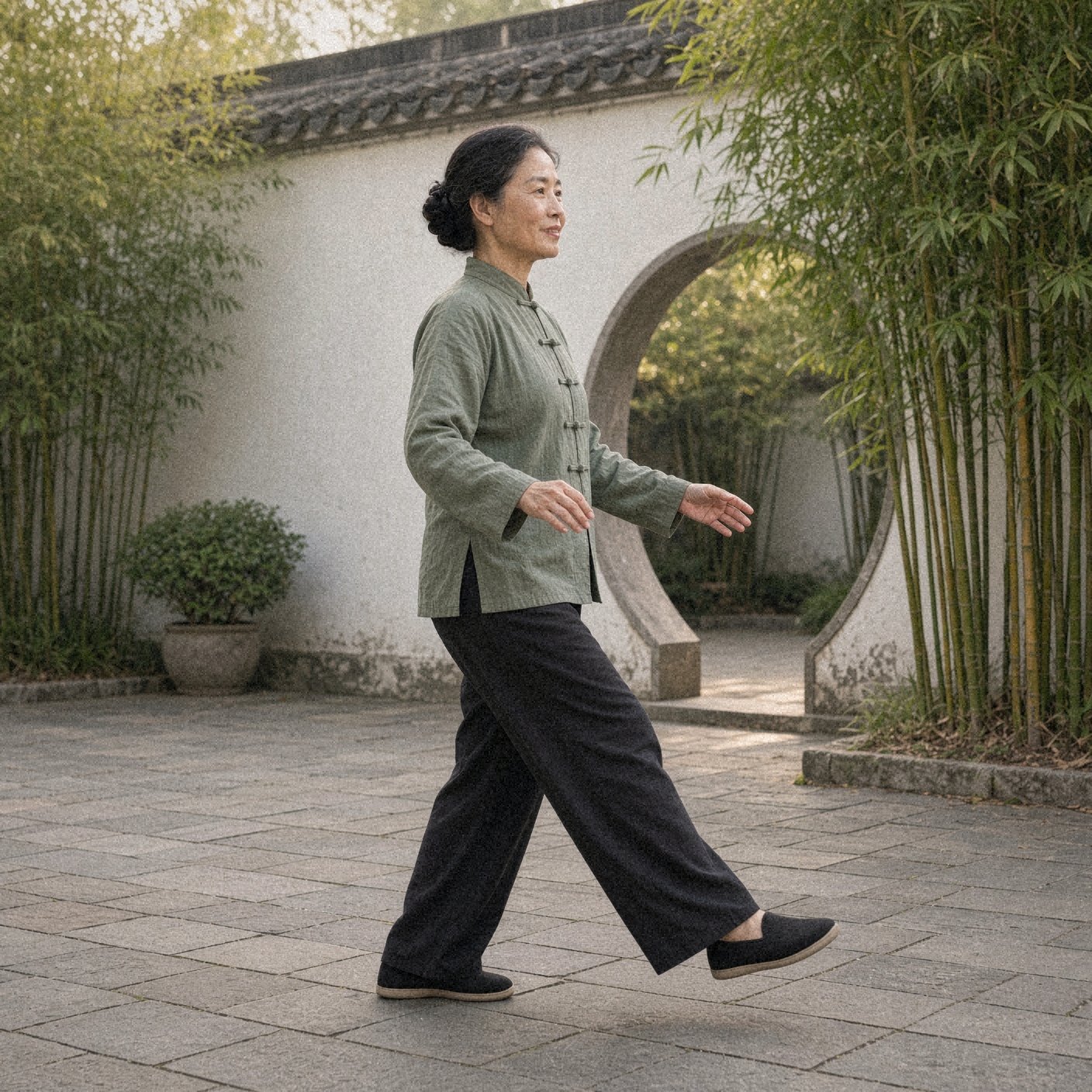
Placing the heel first, without any weight on it, is the heart of tai chi walking. It trains you to control each step instead of falling into it.
How to do it:
- Keep your weight on your bent back leg.
- Slowly reach your light foot forward and place just the heel on the floor, toes lifted.
- Pause here. Your front foot should carry almost no weight yet.
Make it easier: Take a very small step, and keep one hand on the wall.
How much: 5 slow steps each side.
4. Roll Onto the Whole Foot
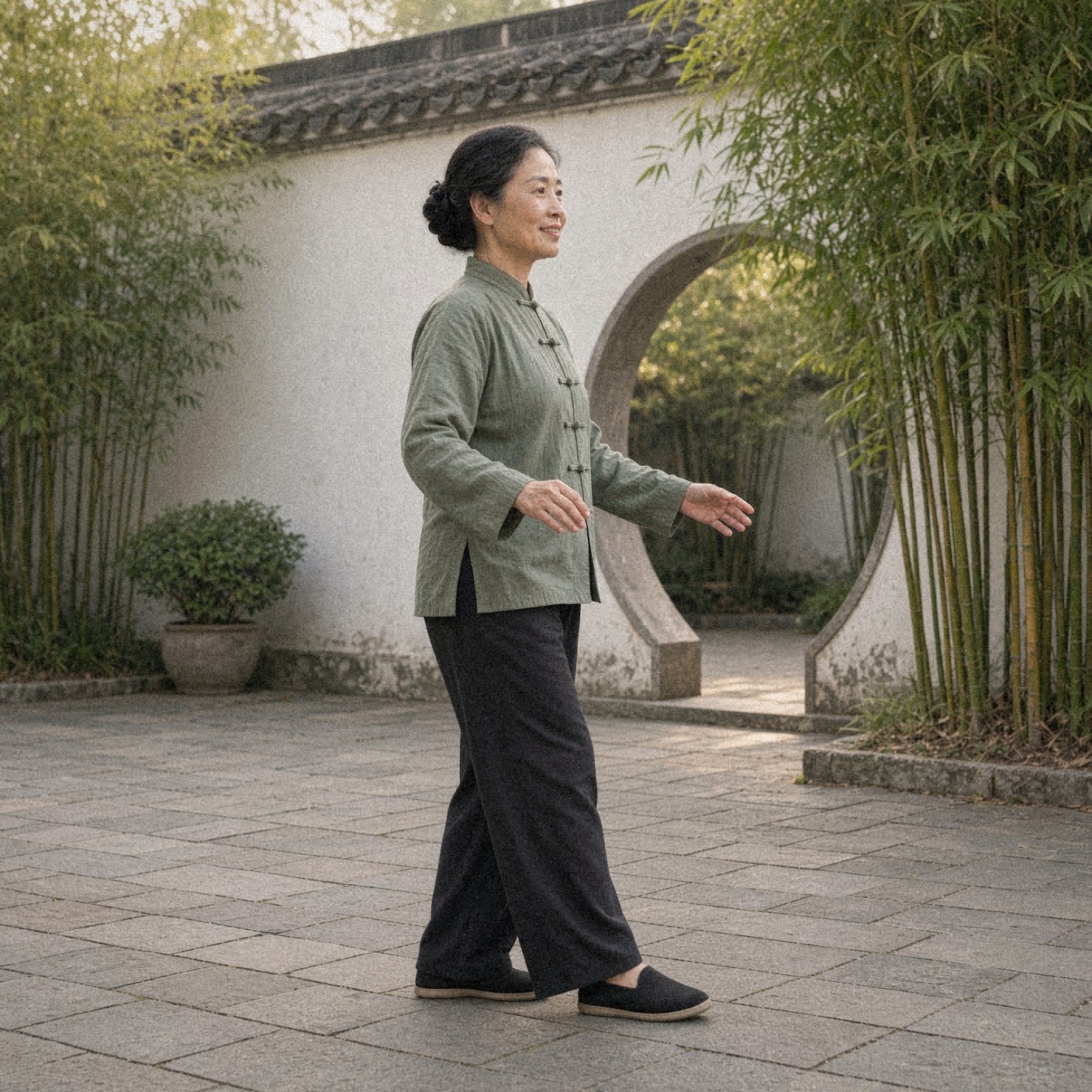
Rolling slowly through the foot wakes up the small muscles in your feet and ankles, which help you react if you trip.
How to do it:
- From the heel step, slowly lower the front toes to the floor.
- Feel the whole front foot make contact, from heel to toes.
- Keep most of your weight on the back leg for now.
Make it easier: Pause with the front foot flat for a breath before moving on.
How much: 5 slow steps each side.
5. Shift Your Weight Forward
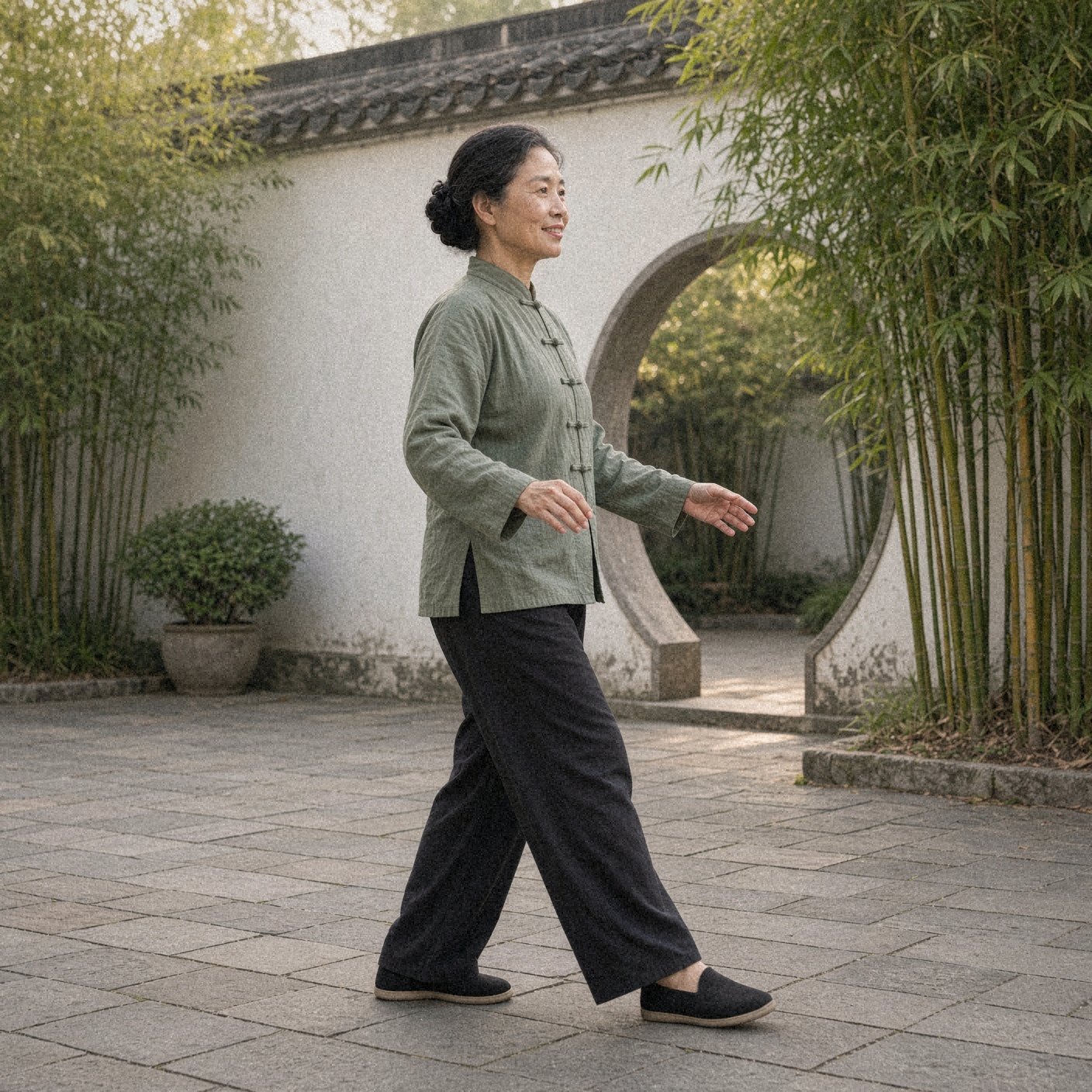
This smooth forward shift is what walking really is. Doing it slowly teaches your body to stay balanced the whole way through.
How to do it:
- Slowly move your body forward until your front knee is over your front ankle.
- Keep your body upright. Do not lean forward from the waist.
- Let the back heel lift a little as your weight arrives on the front leg.
Make it easier: Shift only halfway forward, then back again, without bringing the back foot through.
How much: 5 slow shifts each side.
6. Bring the Back Foot Through
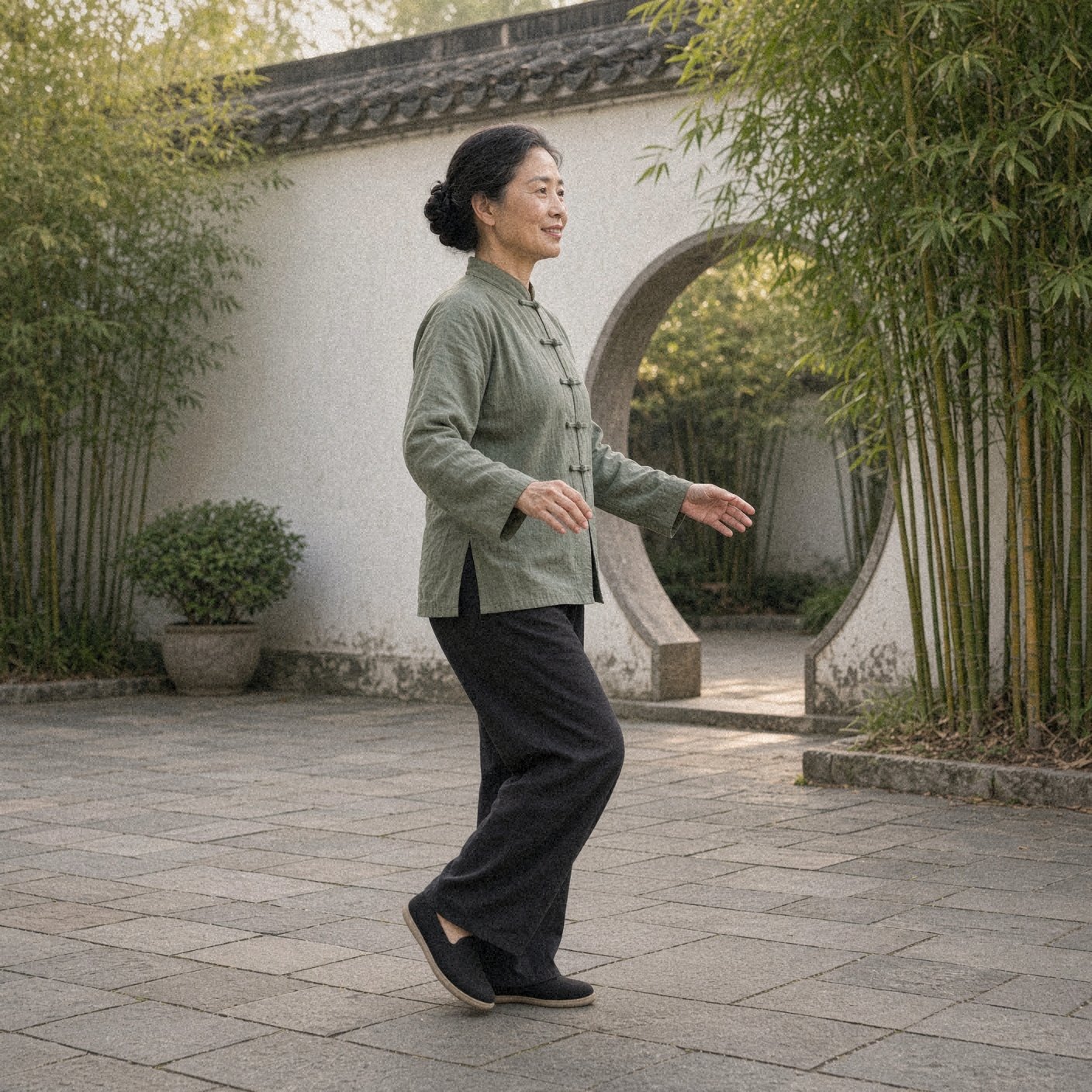
For a moment you are on one leg. Moving slowly through this part is excellent, safe practice for single leg balance.
How to do it:
- With your weight on the front leg, lift the back foot just off the floor.
- Bring it slowly forward so it passes close to your standing ankle.
- Without stopping, reach it forward for the next heel step.
Make it easier: Let the toes brush the floor as the foot moves through, or touch it down beside the standing foot before stepping on.
How much: 10 slow steps.
7. Walk With Soft Arms
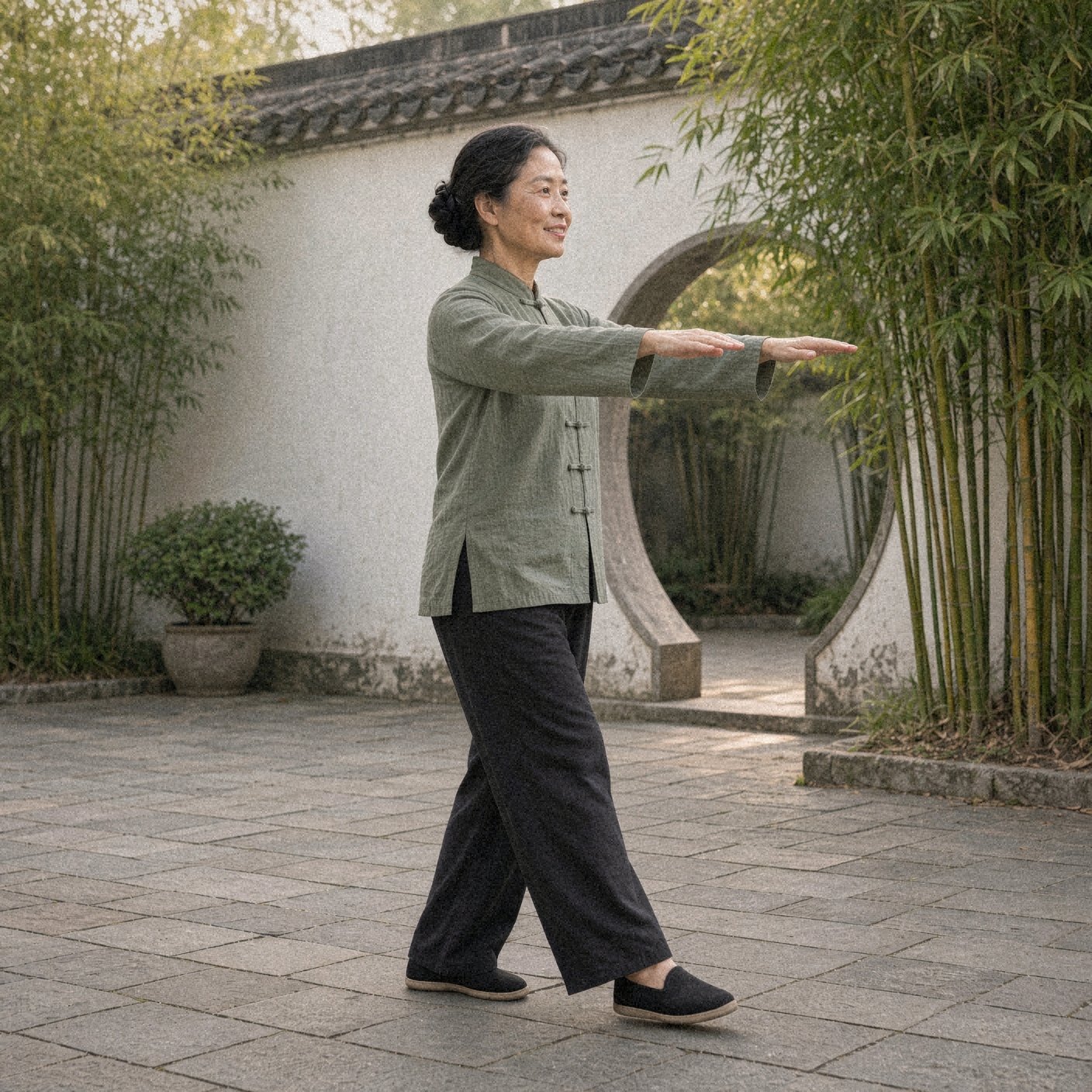
Adding gentle arms turns tai chi walking into a moving meditation and helps your upper and lower body work together.
How to do it:
- Once the steps feel smooth, let your arms float up in front of you to chest height.
- Keep your shoulders relaxed and your elbows soft, palms facing down.
- Keep walking slowly, letting your breath set the pace.
Make it easier: Keep your hands at your waist, or simply let them hang by your sides.
How much: 10 to 20 slow steps.
8. Walk With Support
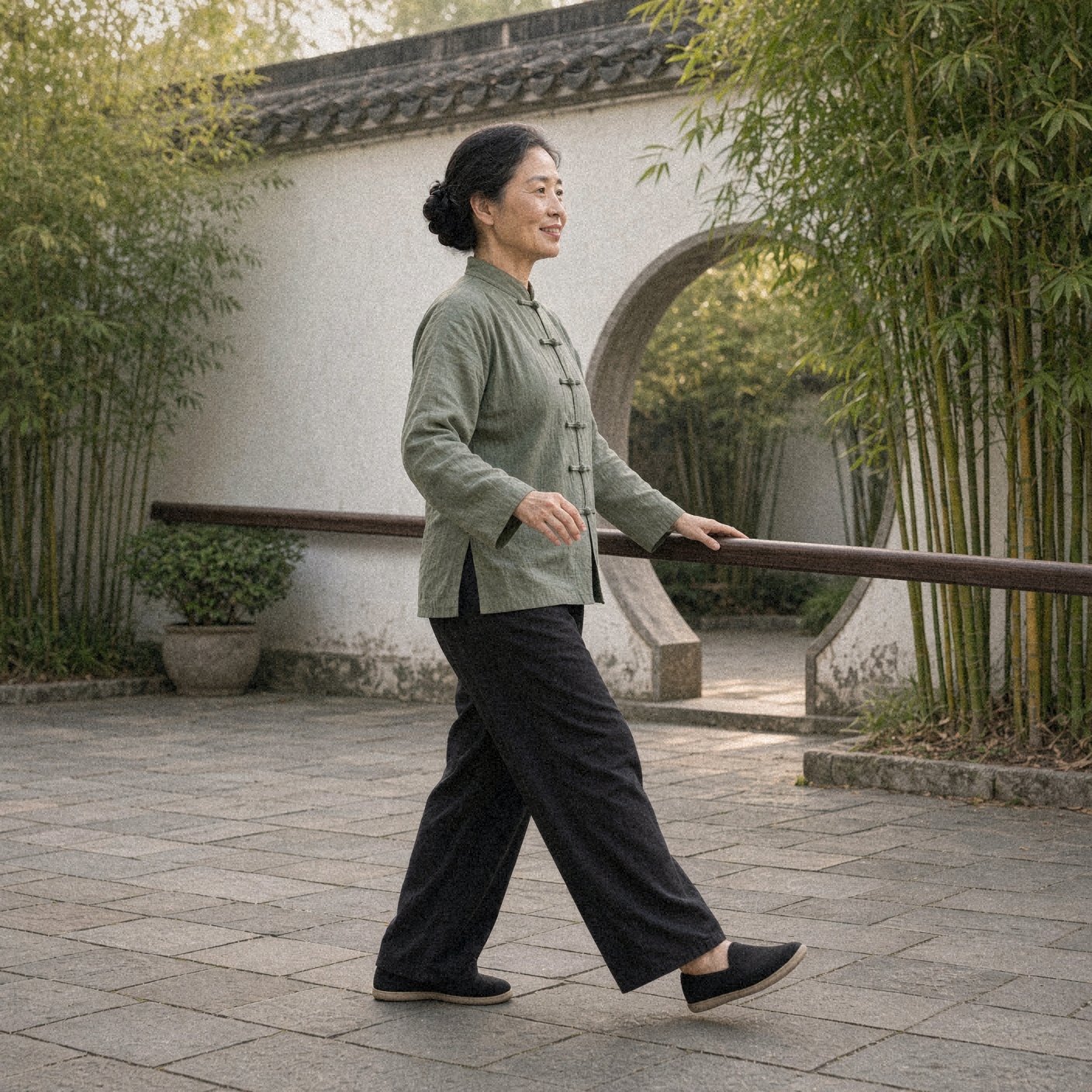
Support lets you practise with confidence. Most people find they need it less and less after a couple of weeks.
How to do it:
- Walk slowly beside a wall, counter or sturdy rail.
- Rest one hand lightly on it as you take each tai chi step.
- Use the support less as you feel steadier, then turn around and walk back.
Make it easier: Stay close to the wall and take shorter steps.
How much: 2 to 4 lengths.
A simple 10 minute tai chi walking session
Once the steps feel natural, put them together in a short session. Find a clear space about 12 to 15 feet long, or a hallway, and keep a wall or counter close by.
| # | Step | Amount |
|---|---|---|
| 1 | Stand Ready | 3 slow breaths |
| 2 | Sink Into One Leg | 3 each side |
| 3 | Heel Step Forward | 5 each side |
| 4 | Roll Onto the Whole Foot | 5 each side |
| 5 | Shift Your Weight Forward | 5 each side |
| 6 | Walk With Support | 2 lengths |
| 7 | Bring the Back Foot Through | 10 steps |
| 8 | Walk With Soft Arms | 2 lengths |
Your 4 week plan
Tai chi walking feels strange at first because it is so slow. Give it four weeks of short, regular practice and it starts to feel calm and natural.
| Week | What to do |
|---|---|
| Week 1 | Stand ready and sink into one leg, then 10 slow steps beside a wall, once a day. |
| Week 2 | Practise the heel step, rolling the foot and the forward shift. Walk 2 lengths of your hallway with support. |
| Week 3 | Join the steps into smooth walking. Do the 10 minute session on 3 to 5 days, using the wall less. |
| Week 4 | Add soft arms. Do the full session on most days and try a few slow steps before your normal walks. |
When to check with your doctor
Tai chi walking is gentle, but it asks you to balance on one leg for a moment with every step. Talk to your doctor or a physical therapist first if any of these apply to you:
- You have fallen in the past year, or often feel unsteady.
- You get dizzy or light headed when you stand or turn.
- You have had a hip or knee replacement, or recent surgery on your legs or feet.
- You have numbness in your feet, or problems with your vision that affect your balance.
- You feel chest pain, shortness of breath or dizziness while walking. Stop and get help.
Frequently asked questions
What is tai chi walking?
It is a slow, mindful way of walking taken from tai chi. You place each heel down first with no weight on it, roll onto the whole foot, then shift your weight forward smoothly before bringing the back foot through.
Is tai chi walking good for balance?
It is built around controlled weight shifts and brief moments on one leg, which are exactly what balance training uses. The CDC lists walking heel to toe as a balance activity for older adults, and NCCIH reports that tai chi may reduce falls in older people.
How long should I do tai chi walking?
Start with 5 minutes and build up to the 10 minute session above. A few minutes most days works better than one long session a week.
Can I do tai chi walking indoors?
Yes. A hallway or any clear path of about 12 to 15 feet is enough. Walk beside a wall or counter so you can steady yourself.
Is tai chi walking the same as normal walking?
No. It is much slower and more deliberate. It will not replace your normal walks for fitness, but it is a great way to practise balance and control. Many people do a few slow steps before a regular walk.
Keep going
Tai chi walking works best as a small daily habit. Try a few slow lengths of your hallway while the kettle boils, or one minute of slow steps before a normal walk. If you enjoy it, our 10 easy tai chi moves for beginners are the natural next step.

Written by June Ashby
June writes the Limber Years guides to posture, tai chi, mobility and gentle strength for people over 50. She keeps every routine short, gentle and easy to follow at home. June is not a doctor or physical therapist, so please check with yours before starting something new. More about Limber Years
Sources
- CDC: Physical activity guidelines for older adults
- National Center for Complementary and Integrative Health (NCCIH): Tai Chi: What You Need To Know
- Harvard Health Publishing: The health benefits of tai chi
This article is general information, not medical advice. Read our full disclaimer.