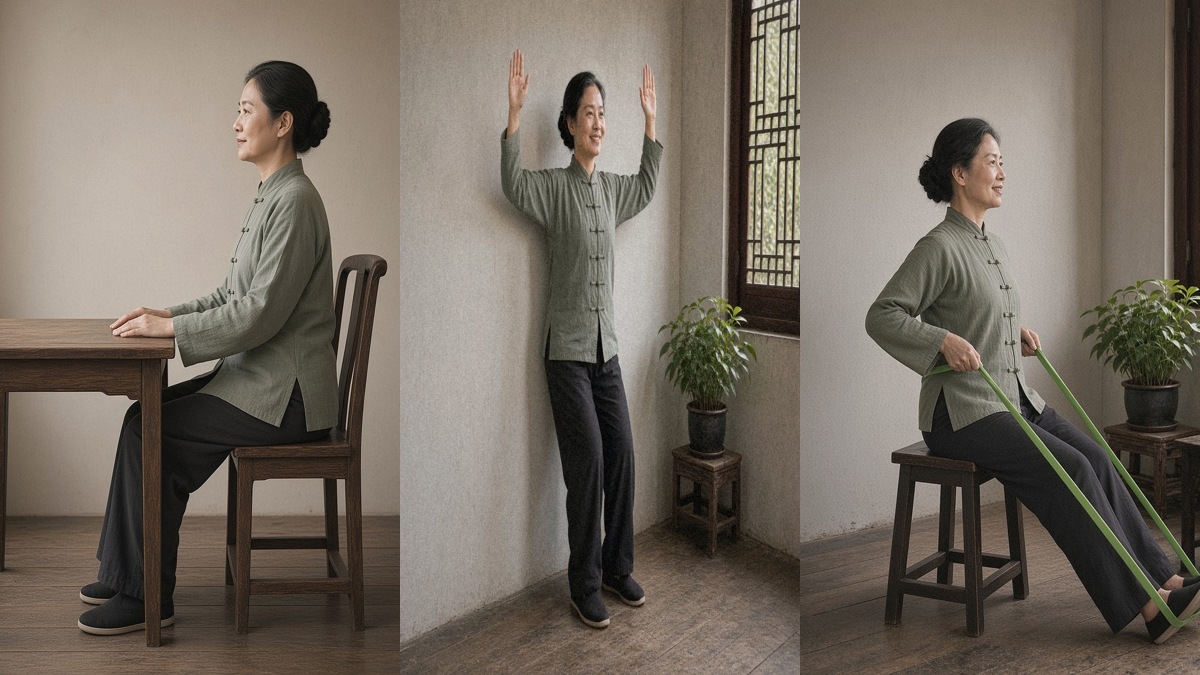
Maybe you caught your reflection in a shop window and thought you looked more bent than you feel. Or a photo from the side surprised you. Posture often changes after 50, and it usually happens so slowly that we do not notice until one day we do.
Some of the change comes from the body itself, and some comes from how we spend our days. The part that comes from habits and muscles is the part you can work on, at any age.
This guide explains why posture changes, gives you a 30 second test to see where you are, and shows you 7 simple ways to stand and sit taller, with a photo for each.
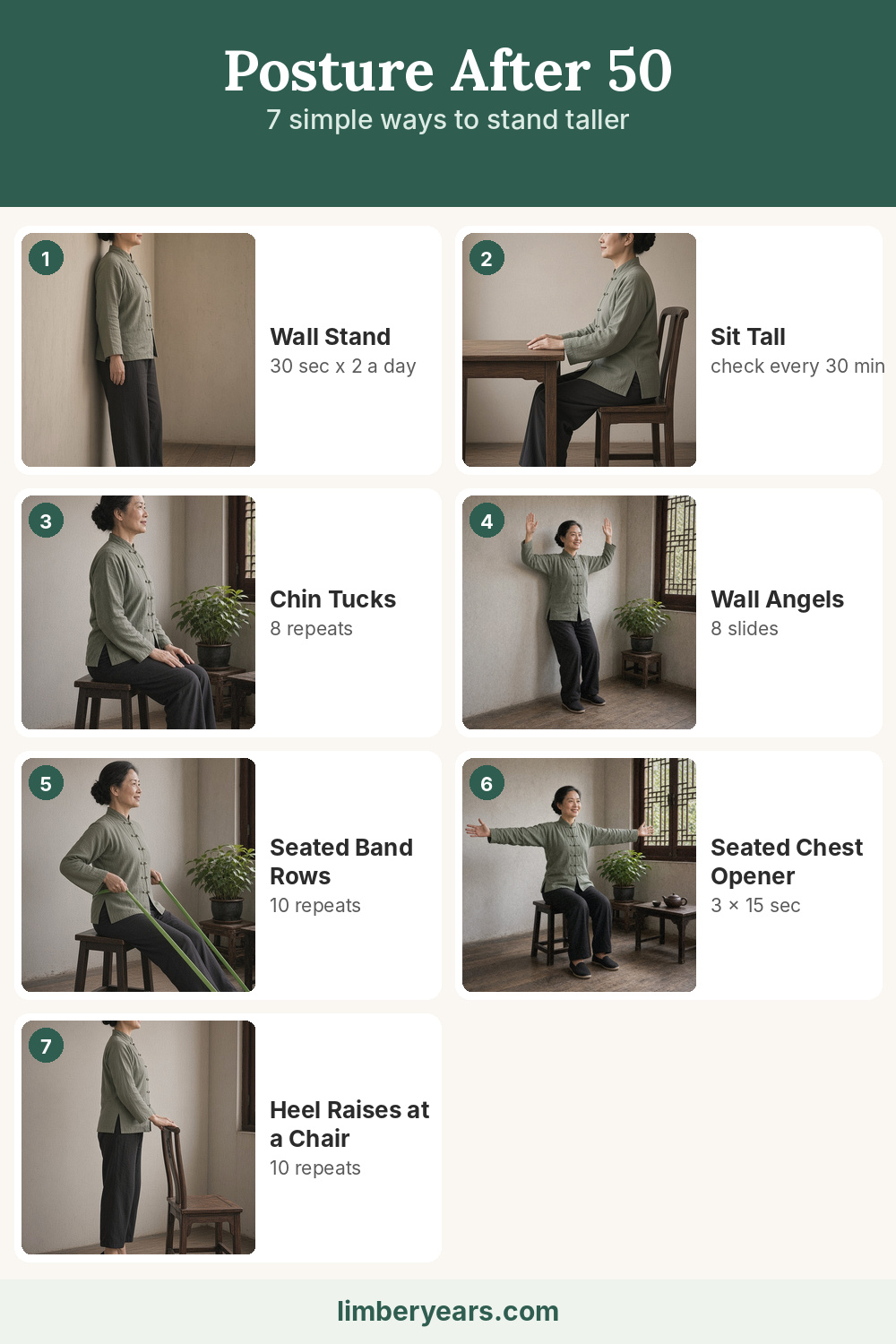
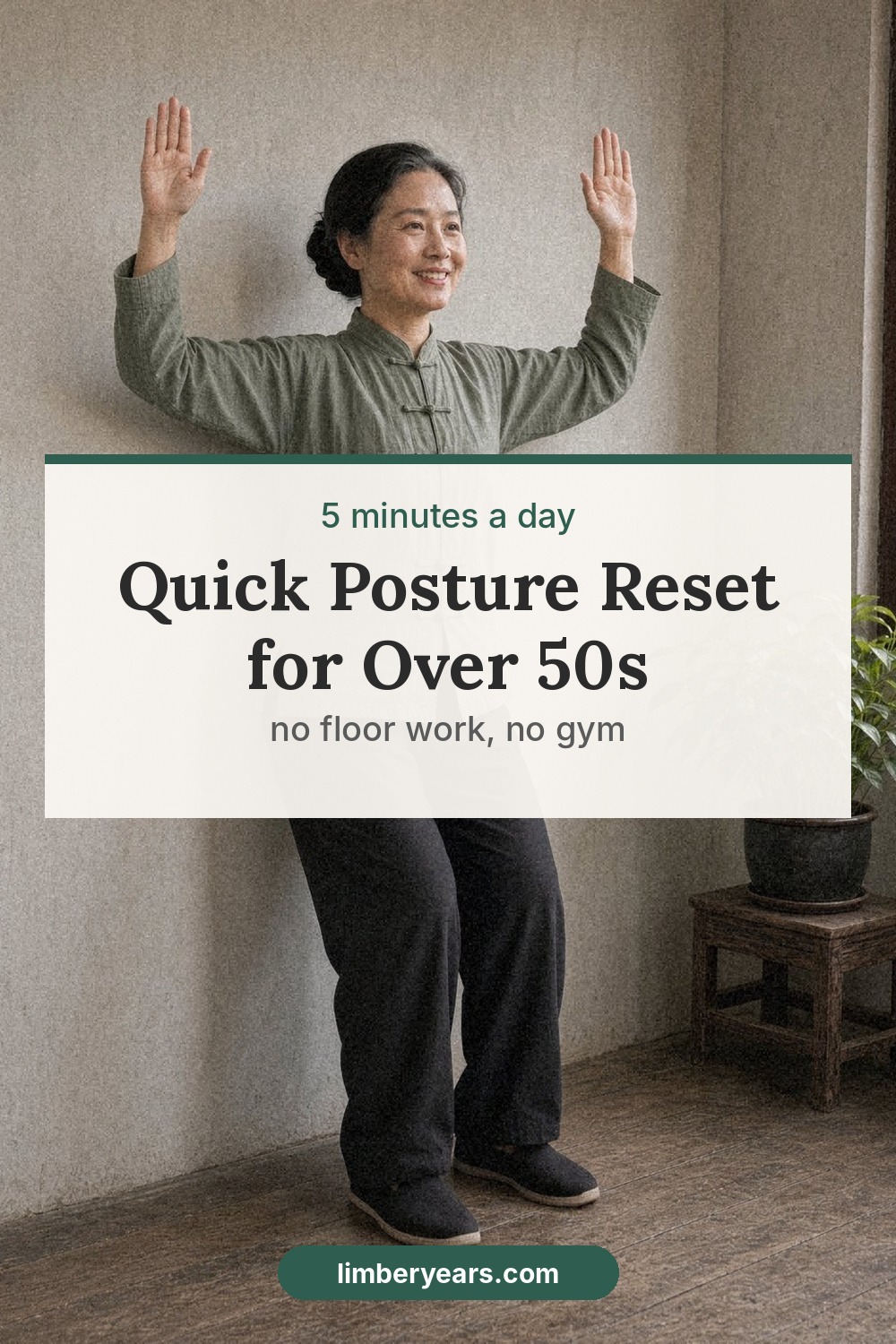
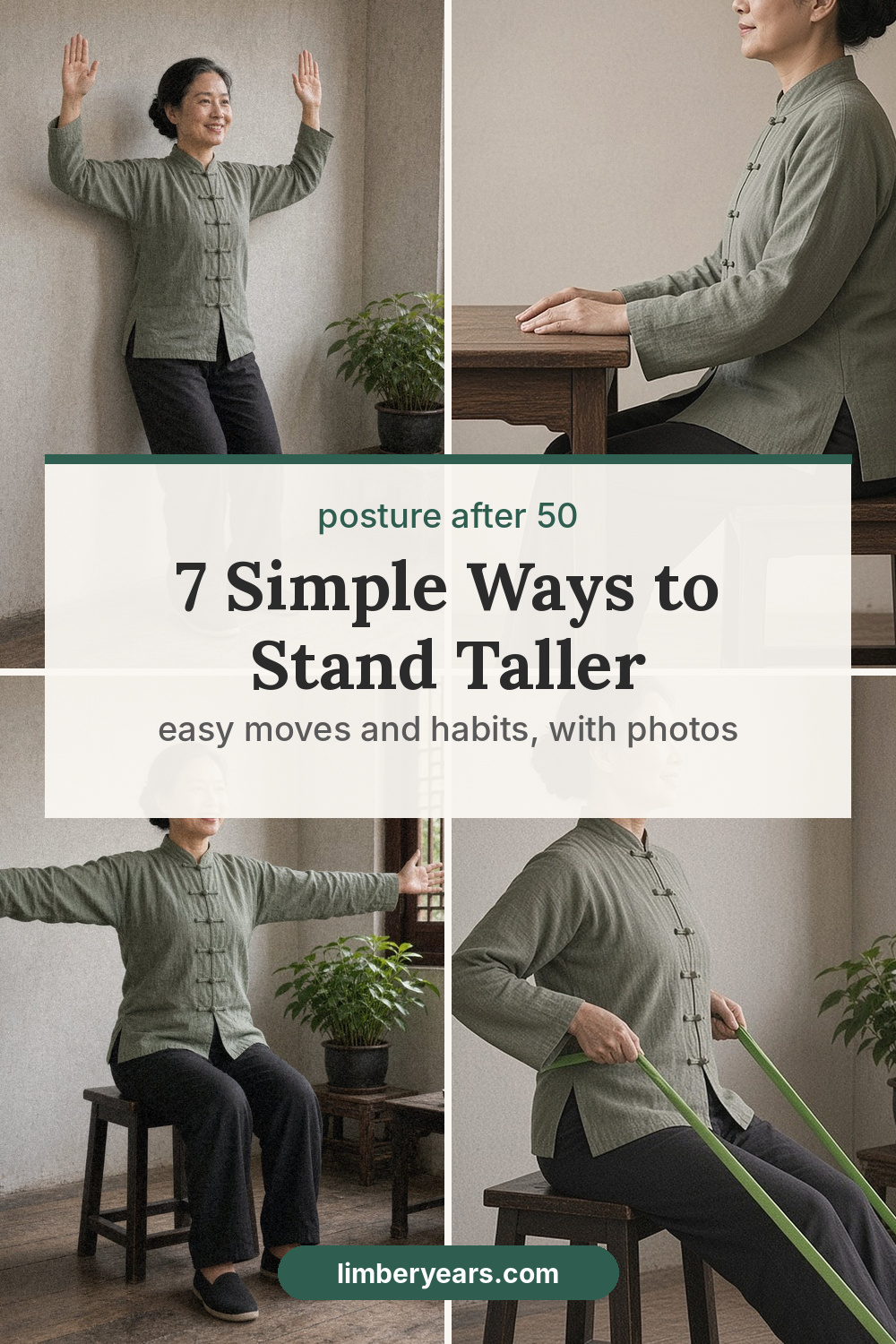
Save this chart to Pinterest or print it out and keep it near your favorite chair. Photos on this site are made with AI to show each move clearly.
Key takeaways
- Posture changes after 50 are common and come from both the body and daily habits.
- A simple wall test shows you where you are today.
- Small habits, like sitting tall and raising your screen, matter as much as exercise.
- A quick or painful change in posture should always be checked by a doctor.
Before you start
- Have a clear piece of wall and a sturdy chair nearby.
- Take a photo of yourself from the side so you can compare later.
- Move slowly and stay in a comfortable range.
- Stop if you feel pain, numbness or dizziness.
Why posture changes after 50
Several changes happen in the body with age. MedlinePlus, from the US National Library of Medicine, describes them plainly:
With aging, the middle of the body (trunk) becomes shorter as the disks gradually lose fluid and become thinner.
MedlinePlus: Aging changes in the bones, muscles and joints
- Bones: “Vertebrae also lose some of their mineral content, making each bone thinner.”
- Muscles: “Loss of muscle mass reduces strength.”
- Posture: “The posture may become more stooped (bent).”
Habits add to this. Years of sitting, reading, driving and looking down at phones all pull the head and shoulders forward. The muscles at the back of the body that hold us upright get less work, so they find it harder to do their job.
The good news is that muscles respond to use at any age, and habits can change. That is where this guide focuses.
Try the 30 second wall test
Stand with your back to a wall, heels a few inches out. Let your hips and shoulder blades touch the wall. Now notice:
| What you notice | What it suggests |
|---|---|
| The back of your head touches the wall with your chin level | Your head sits well over your shoulders |
| Your head is a short gap from the wall | Your head sits a little forward, which is very common |
| Your head is far from the wall, or this feels hard | Start gently and consider asking your doctor or a physical therapist for advice |
Never tip your chin up to make your head reach. Do the test again every few weeks and see if anything changes.
Can you fix bad posture at 50 or later?
You can usually improve the part that comes from muscles and habits. Harvard Health says posture can improve “noticeably in just a few weeks” with practice, and that “you can improve your posture with a few simple exercises.”
Bone changes are different. MedlinePlus notes that “treating and preventing osteoporosis can prevent many cases of kyphosis in older adults,” so if you have a very rounded upper back or a sudden change, talk to your doctor about your bones as well as exercise.
7 simple ways to stand taller at a glance
| # | Move | Works on | How much |
|---|---|---|---|
| 1 | Wall Stand | Whole body alignment | 30 seconds, twice a day |
| 2 | Sit Tall | Everyday sitting | Check in every 30 minutes |
| 3 | Chin Tucks | Neck | 8 slow repeats |
| 4 | Wall Angels | Upper back and shoulders | 8 slow slides |
| 5 | Seated Band Rows | Middle back | 10 repeats, 2 to 3 days a week |
| 6 | Seated Chest Opener | Chest and shoulders | 3 holds of 15 seconds |
| 7 | Heel Raises at a Chair | Balance and calves | 10 repeats |
1. Wall Stand
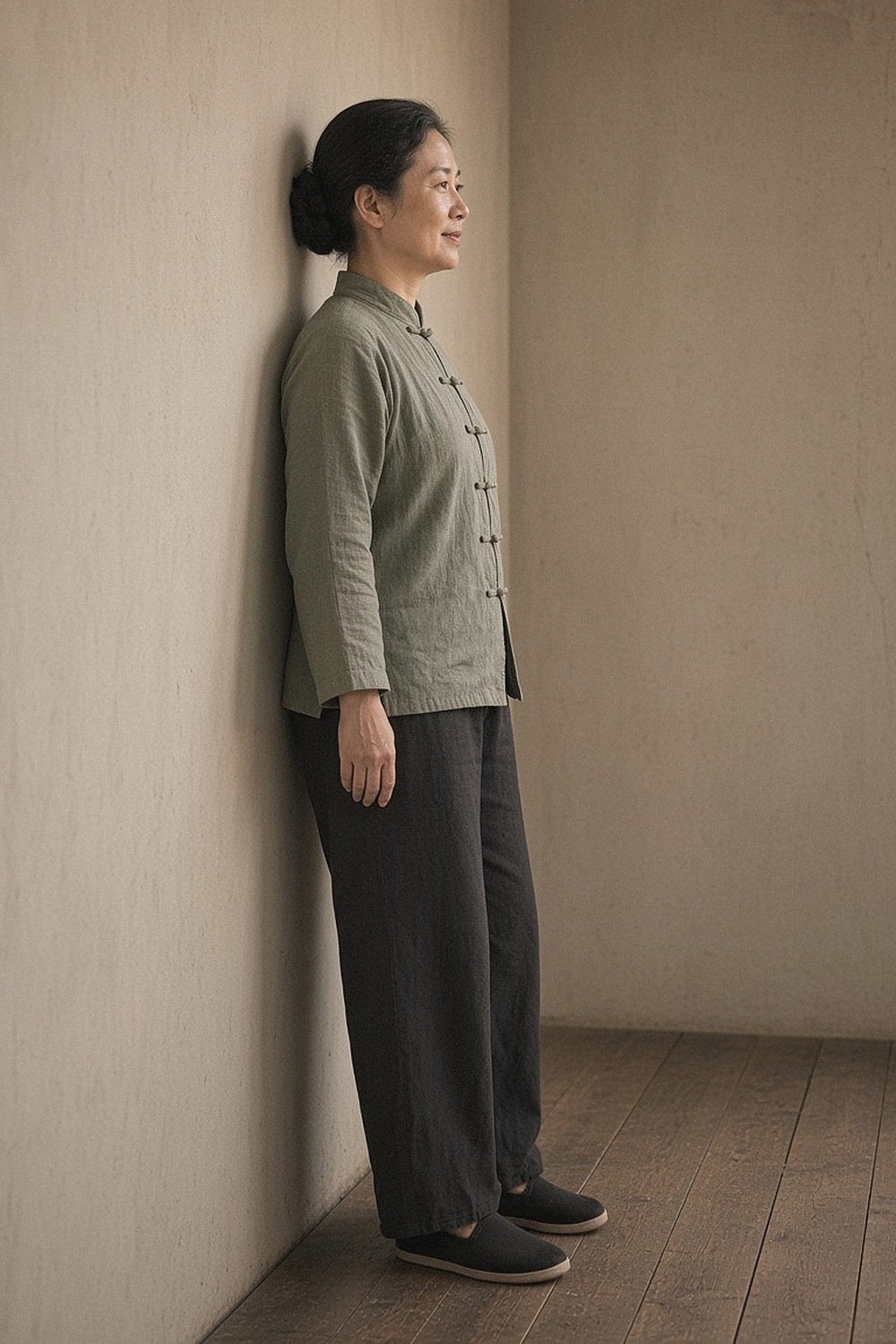
The same position as the wall test, used as a daily reminder of what tall feels like.
How to do it:
- Stand with your back against a wall and your heels a few inches out.
- Let your hips, shoulder blades and, if you can, the back of your head touch the wall.
- Keep your chin level and breathe slowly for 30 seconds.
Make it easier: If your head does not reach the wall, keep your chin level and let the gap be.
How much: 30 seconds, twice a day.
2. Sit Tall
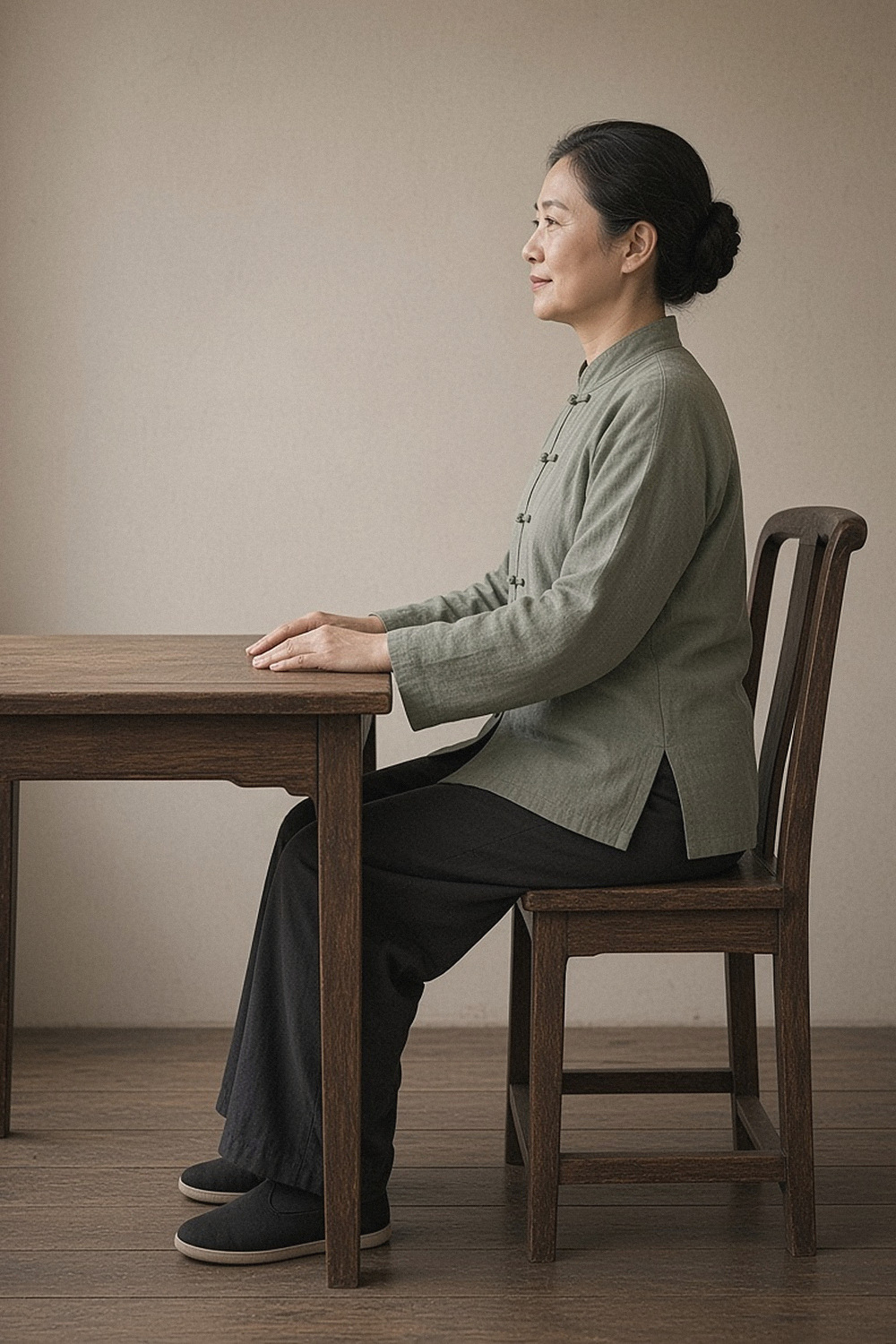
We spend hours sitting each day, so how we sit shapes how we stand. Harvard Health advises keeping your chin parallel to the floor when sitting.
How to do it:
- Sit near the front of your chair with your feet flat on the floor.
- Stack your ears over your shoulders and your shoulders over your hips.
- Rest your forearms on the table and keep your chin level.
Make it easier: Put a small cushion behind your lower back for support.
How much: Check in every 30 minutes.
3. Chin Tucks

This trains your head to sit back over your shoulders instead of drifting forward.
How to do it:
- Sit tall with your eyes level, as in the photo.
- Gently draw your chin straight back, making a small double chin.
- Hold for 3 seconds, then relax.
Make it easier: Make the movement tiny, or rest your fingertips on your chin as a guide.
How much: 8 slow repeats.
4. Wall Angels
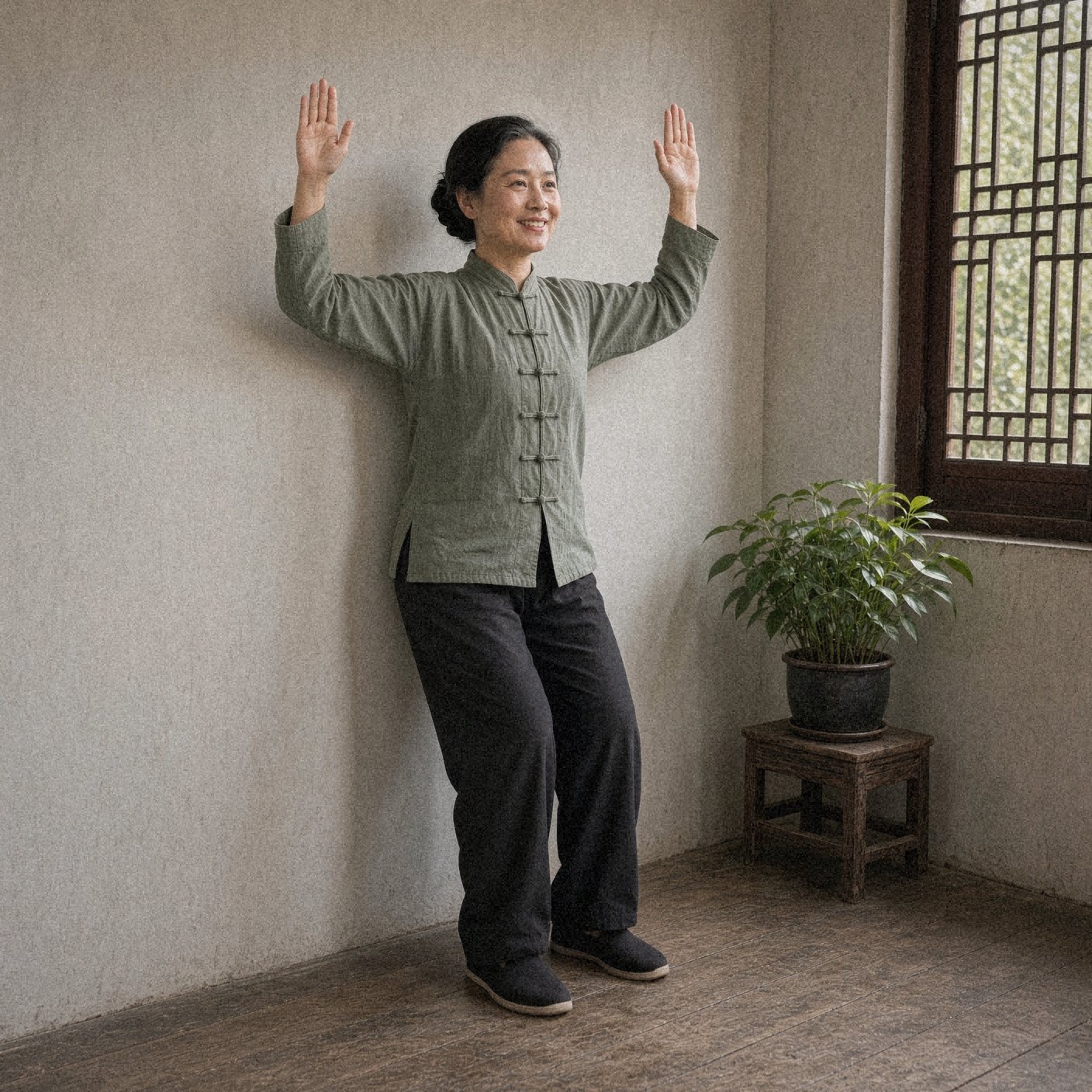
Wall angels open the chest and work the upper back, the two areas that change most with a rounded posture.
How to do it:
- Stand with your back against a wall, feet a little way out.
- Bring your arms up beside you with bent elbows, as close to the wall as is comfortable.
- Slide your arms slowly up and down.
Make it easier: Slide only a short way, or let your hands come off the wall.
How much: 8 slow slides.
5. Seated Band Rows
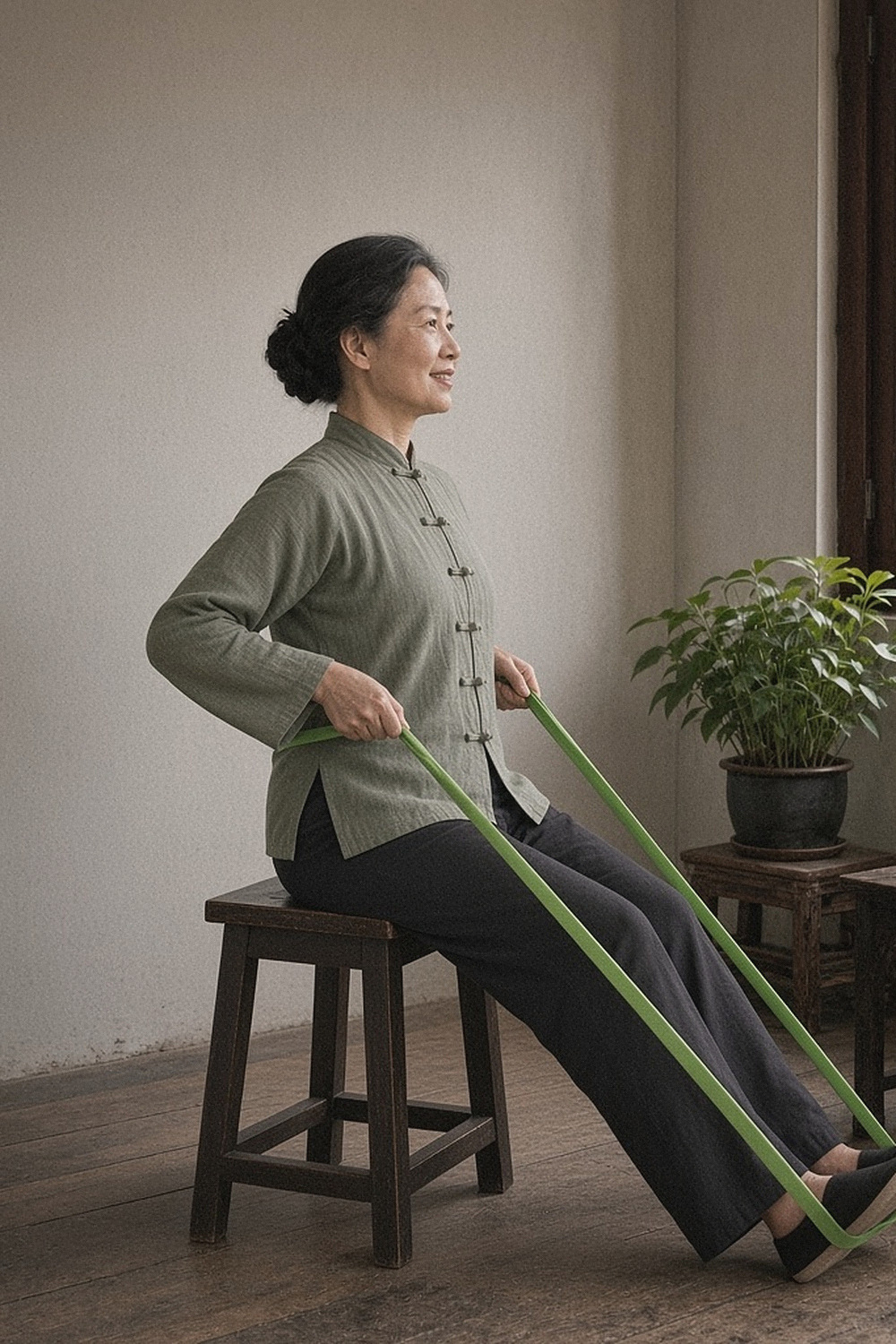
Rows build the muscles between your shoulder blades that help pull your shoulders back.
How to do it:
- Sit tall with your legs out in front and a light band looped around your feet.
- Hold one end in each hand and pull your elbows back past your ribs.
- Return slowly.
Make it easier: Bend your knees a little or use a rolled towel instead of a band.
How much: 10 repeats, 2 to 3 days a week.
6. Seated Chest Opener
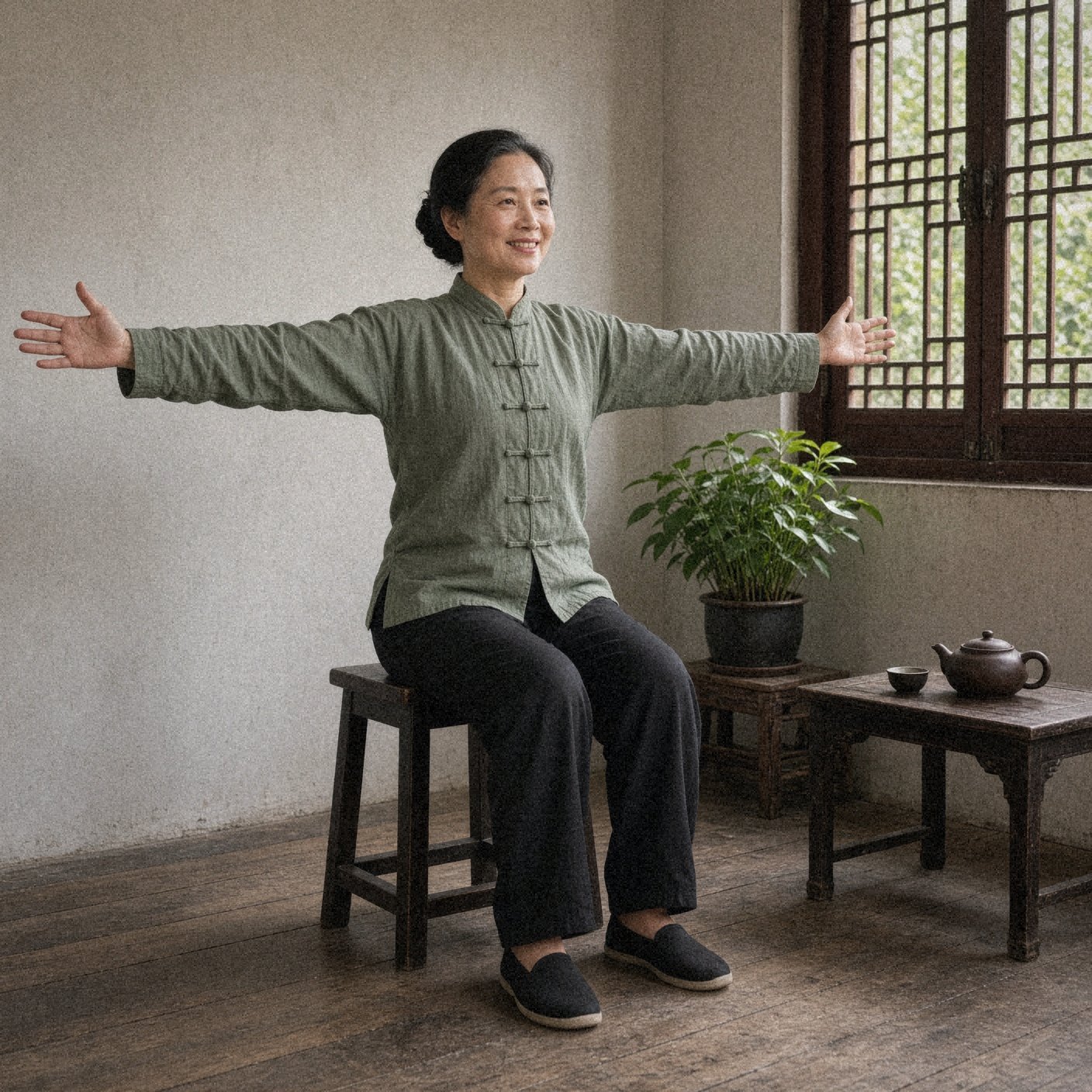
A tight chest pulls the shoulders forward. Stretching it helps you sit and stand more upright.
How to do it:
- Sit tall and hold the sides of the chair seat, or reach your arms out wide.
- Gently lift your chest and draw your shoulders back and down.
- Hold for 15 seconds and breathe slowly.
Make it easier: Rest your hands on your thighs and just lift your chest.
How much: 3 holds of 15 seconds.
7. Heel Raises at a Chair
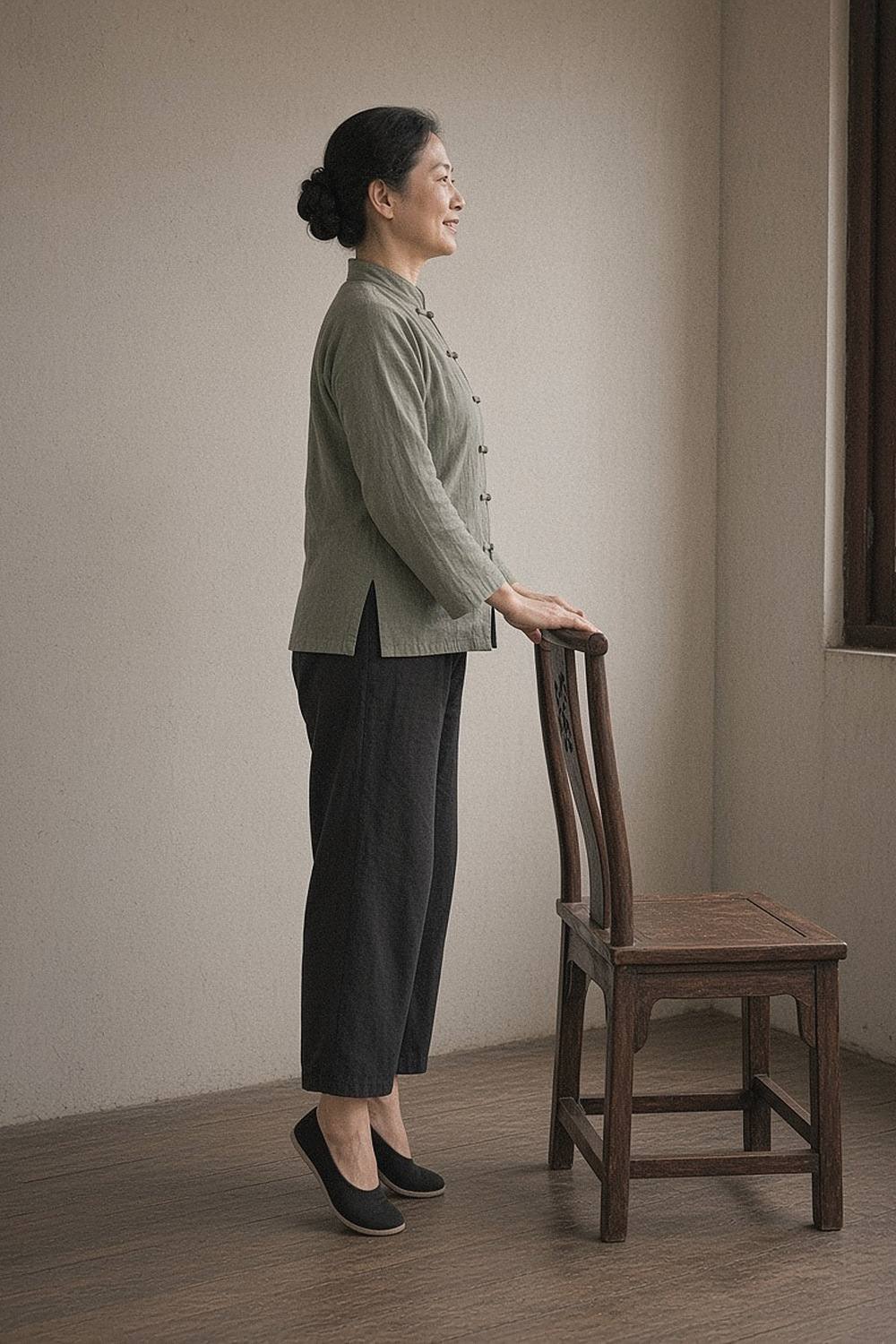
Standing tall and balancing go together. This simple move practices both.
How to do it:
- Stand tall beside a sturdy chair and hold the back.
- Rise slowly onto the balls of your feet, keeping your body tall.
- Hold for a second and lower slowly.
Make it easier: Hold on with both hands and lift your heels only a little.
How much: 10 repeats.
Everyday habits that help your posture
- Raise your phone, tablet or book to eye level instead of looking down.
- Set your computer or TV screen so the top is roughly at eye level.
- Get up and move for a minute or two every 30 minutes of sitting.
- Sit in chairs that let your feet rest flat on the floor.
- Carry bags on alternate shoulders, or use a backpack with both straps.
- Walk tall: look ahead, not down at your feet.
A 5 minute posture reset
Do this once or twice a day, for example after breakfast and in the afternoon.
| Step | What to do | Amount |
|---|---|---|
| 1 | Wall Stand | 30 seconds |
| 2 | Chin Tucks | 8 repeats |
| 3 | Wall Angels | 8 slides |
| 4 | Seated Chest Opener | 3 holds of 15 seconds |
| 5 | Heel Raises at a Chair | 10 repeats |
Your 4 week plan
Small daily changes add up. Build the habits and the moves in over four weeks.
| Week | What to do |
|---|---|
| Week 1 | Wall stand twice a day and check your sitting posture every 30 minutes. |
| Week 2 | Add chin tucks and the seated chest opener. Raise your phone and screens. |
| Week 3 | Add wall angels and heel raises. Do the 5 minute reset daily. |
| Week 4 | Add seated band rows 2 or 3 times a week. Retake your side photo and the wall test. |
When to check with your doctor
Posture changes are common, but some need a doctor. Get checked if any of these apply to you:
- Your posture changed quickly over weeks or months.
- You have new or worsening back pain.
- You have lost height, or you have osteoporosis or a past spine fracture.
- You have numbness, tingling or weakness in your arms or legs.
- You feel unsteady or have had a fall.
Frequently asked questions
Is it normal for posture to change after 50?
Yes, it is common. MedlinePlus notes that with age “the posture may become more stooped (bent).” A slow, mild change is normal, but a fast or painful change should be checked.
Can stooped posture be corrected?
The part that comes from tight or weak muscles and habits can often improve with regular practice. Changes in the bones may not reverse, which is why it is worth asking your doctor about bone health if your back has become very rounded.
How do I stop being hunched over as I age?
Practice standing and sitting tall every day, keep your upper back strong with moves like rows and wall angels, stretch your chest, and raise screens to eye level.
How long does it take to improve posture?
Harvard Health says posture can improve “noticeably in just a few weeks” with practice. Lasting change takes longer, so keep going for a few months.
What causes poor posture?
Common causes include long hours of sitting, looking down at phones and books, weaker back muscles and changes in the spine and bones with age.
Keep going
For a full routine, see our posture exercises for seniors and our wall posture exercises. If your head sits forward, try our neck hump exercises.

Written by June Ashby
June writes the Limber Years guides to posture, tai chi, mobility and gentle strength for people over 50. She keeps every routine short, gentle and easy to follow at home. June is not a doctor or physical therapist, so please check with yours before starting something new. More about Limber Years
Sources
- MedlinePlus: Aging changes in the bones, muscles and joints
- MedlinePlus: Kyphosis
- Harvard Health: Why good posture matters
- NHS: Kyphosis
This article is general information, not medical advice. Read our full disclaimer.