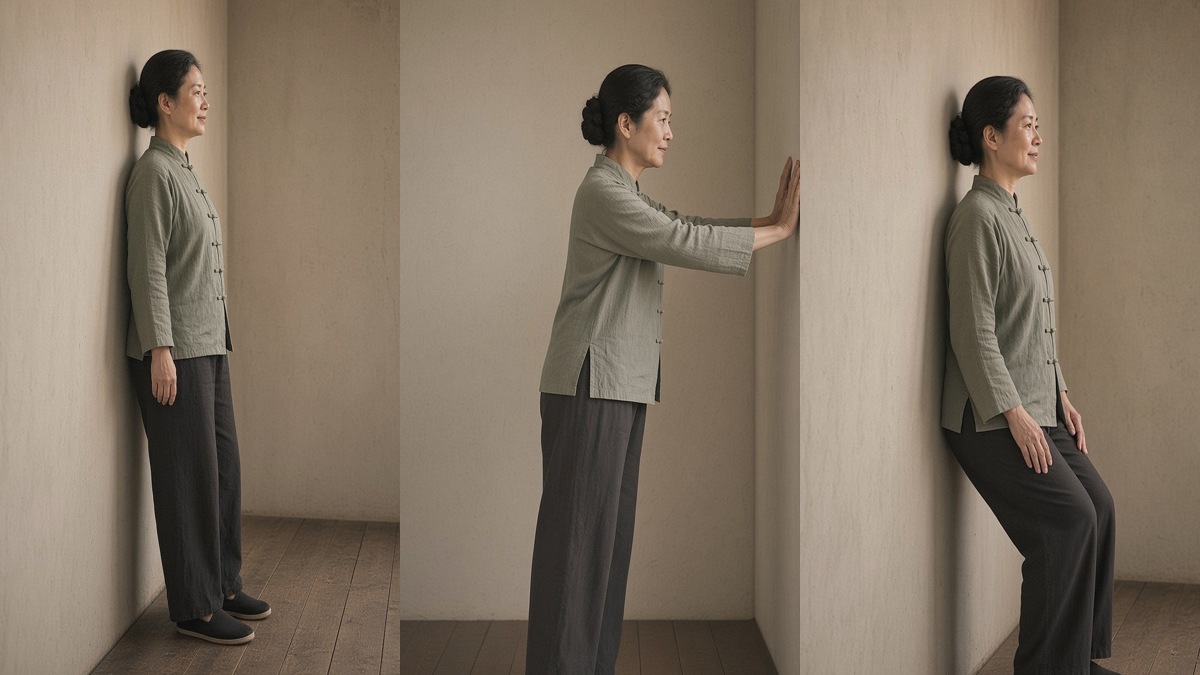
A wall is one of the most useful pieces of exercise equipment you own. It gives you something to lean on for balance, and it gives you honest feedback. When your back is against it, you can feel straight away whether your head, shoulders and hips are lined up.
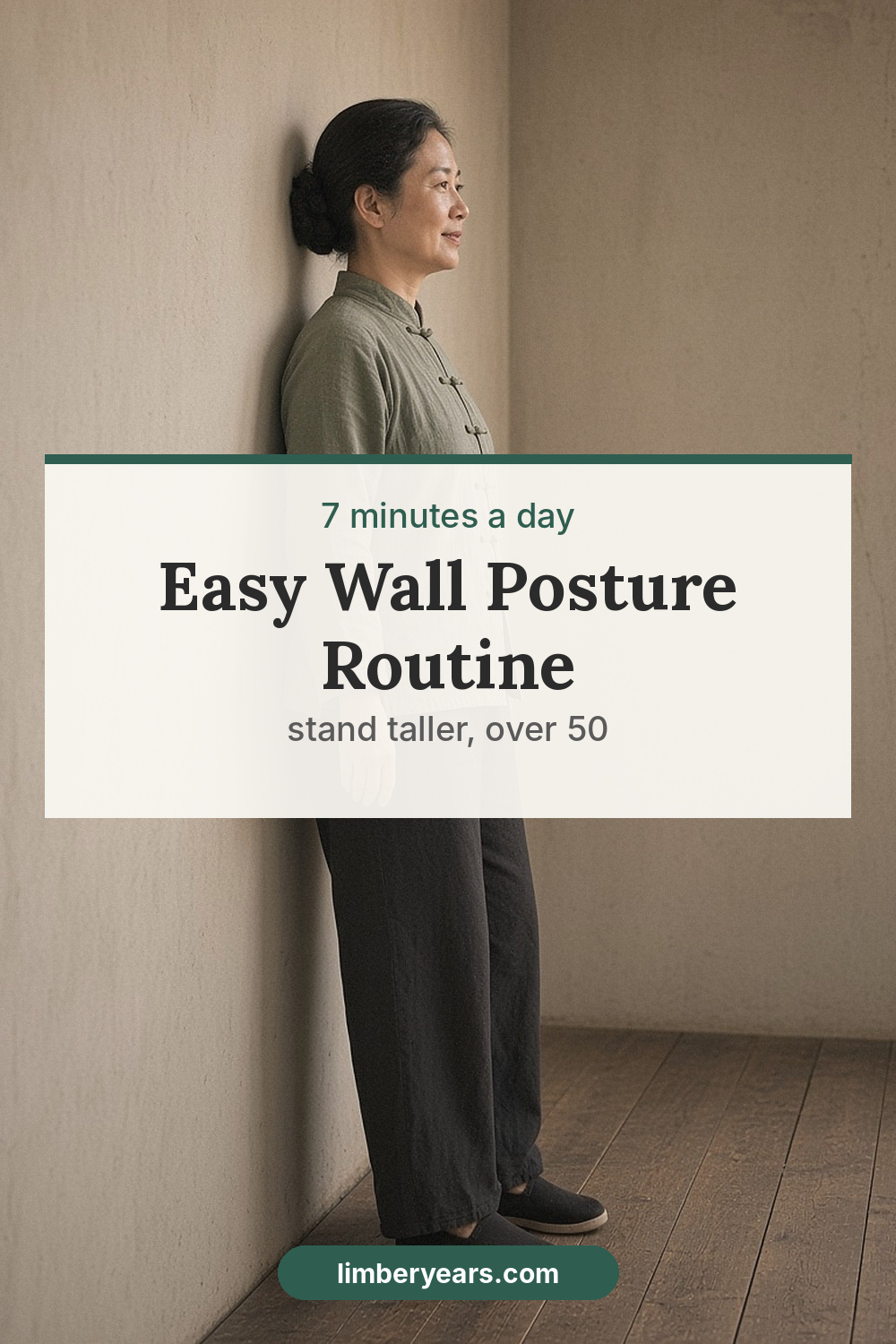
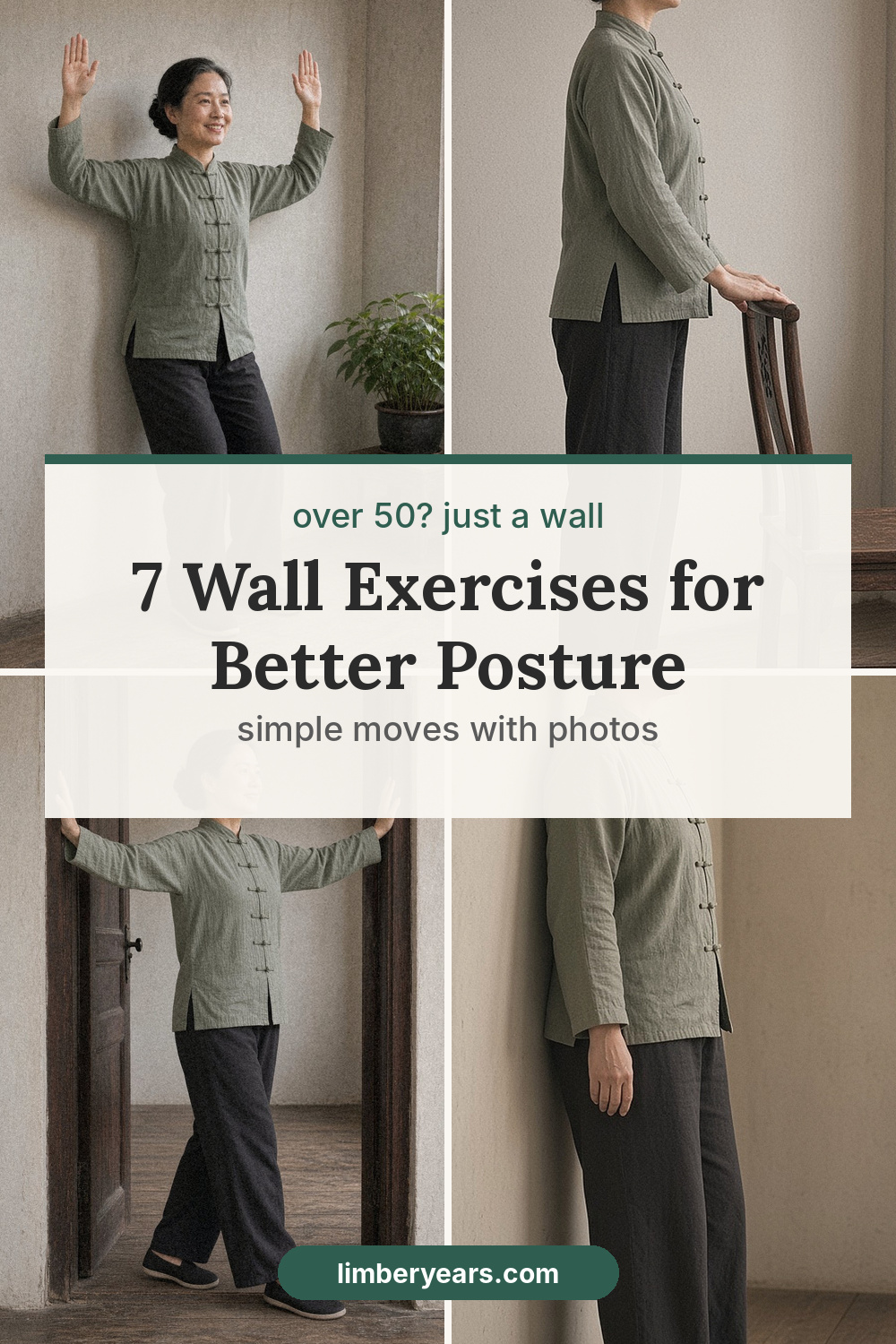
Most wall posture videos online show just one or two moves aimed at desk workers. This guide is written for people over 50 and gives you a full routine of 7 simple moves, all standing at a wall, with a photo for each one.
There is also help if your head does not reach the wall, plus a 7 minute daily routine.
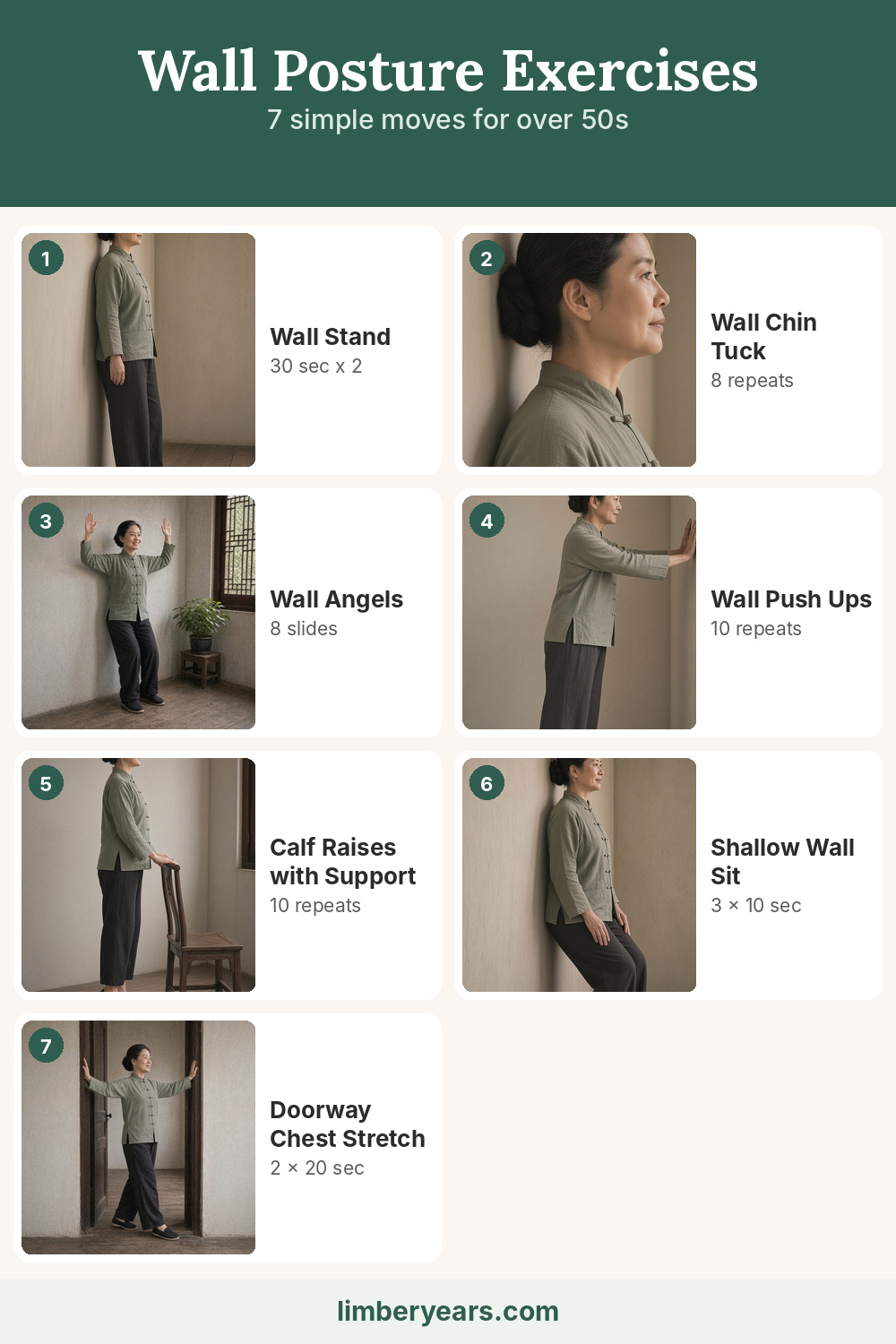
Save this chart to Pinterest or print it out and keep it near your favorite chair. Photos on this site are made with AI to show each move clearly.
Key takeaways
- A wall gives you support and shows you what tall posture feels like.
- If your head does not touch the wall, keep your chin level and do not force it.
- Move slowly and stay within a comfortable range.
- Check with your doctor first if you have shoulder problems, osteoporosis or a rounded upper back.
Before you start
- Find a clear, flat wall with no pictures or shelves in the way.
- Wear flat shoes with a good grip, or bare feet on a non slip floor.
- Keep a sturdy chair nearby in case you want to sit or hold on.
- Breathe normally. Do not hold your breath.
- Stop if you feel pain, dizziness, numbness or tingling.
What if your head does not touch the wall?
This is very common. If your upper back is rounded or your head sits forward, the back of your head may stay a few inches away from the wall when your shoulders and hips touch it.
Do not tip your chin up to make your head reach. That squeezes the back of your neck. Instead:
- Keep your chin level, as if looking at the horizon.
- Let the gap be there, or place a small folded towel behind your head.
- Over the weeks, notice if the gap gets smaller. Do not force it.
Harvard Health describes good sitting posture as keeping “your chin parallel to the floor.” The same rule works standing at a wall.
The 7 wall posture exercises at a glance
| # | Move | Works on | How much |
|---|---|---|---|
| 1 | Wall Stand | Whole body alignment | 30 seconds, 2 times |
| 2 | Wall Chin Tuck | Neck | 8 slow repeats |
| 3 | Wall Angels | Upper back and shoulders | 8 slow slides |
| 4 | Wall Push Ups | Chest, arms and core | 10 repeats |
| 5 | Calf Raises with Support | Calves and balance | 10 repeats |
| 6 | Shallow Wall Sit | Thighs and hips | 3 holds of 10 seconds |
| 7 | Doorway Chest Stretch | Chest | 2 holds on each side |
1. Wall Stand
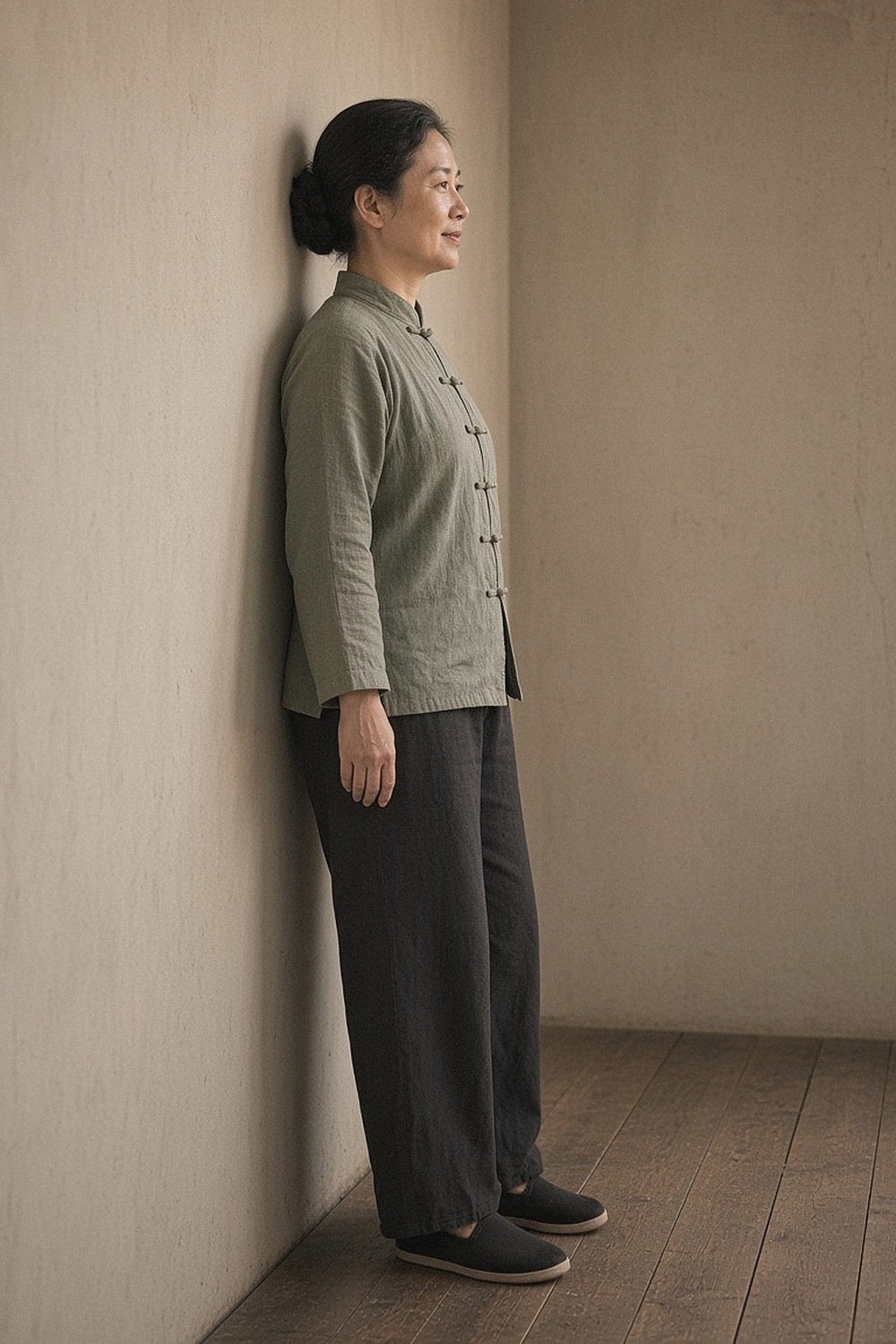
This is your starting point. It shows your body what standing tall feels like.
How to do it:
- Stand with your back against the wall and your heels a few inches out.
- Let your hips, shoulder blades and, if you can, the back of your head rest on the wall.
- Keep your chin level, relax your shoulders and breathe slowly.
Make it easier: Stand a little further from the wall and let only your hips and shoulders touch.
How much: 30 seconds, 2 times.
2. Wall Chin Tuck
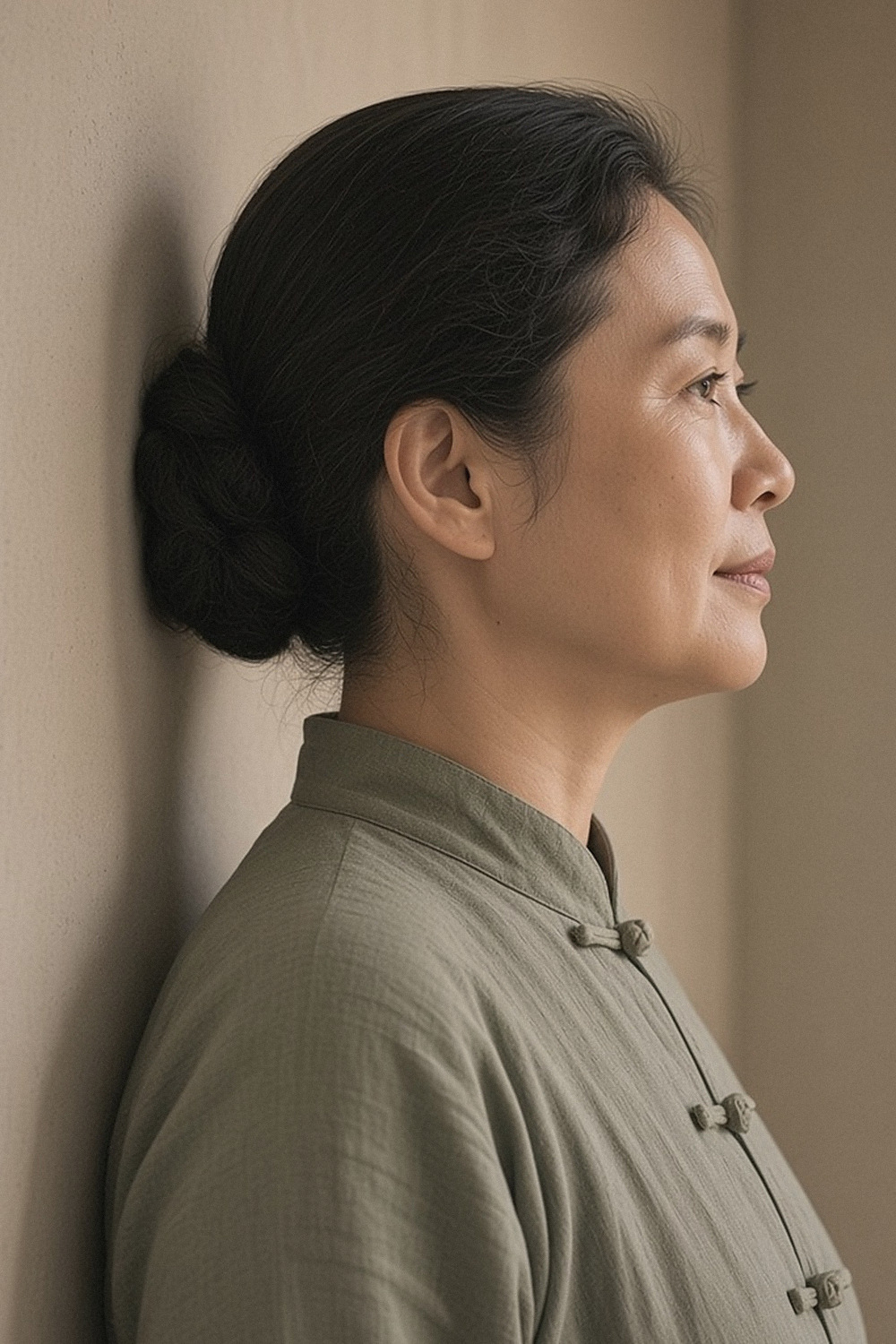
The wall guides your head straight back instead of up or down.
How to do it:
- Stand in the wall stand position with your chin level, as in the photo.
- Gently draw your chin straight back so the back of your head presses lightly toward the wall.
- Hold for 3 seconds, then relax.
Make it easier: Do it seated with your back against a chair, or make the movement tiny.
How much: 8 slow repeats.
3. Wall Angels
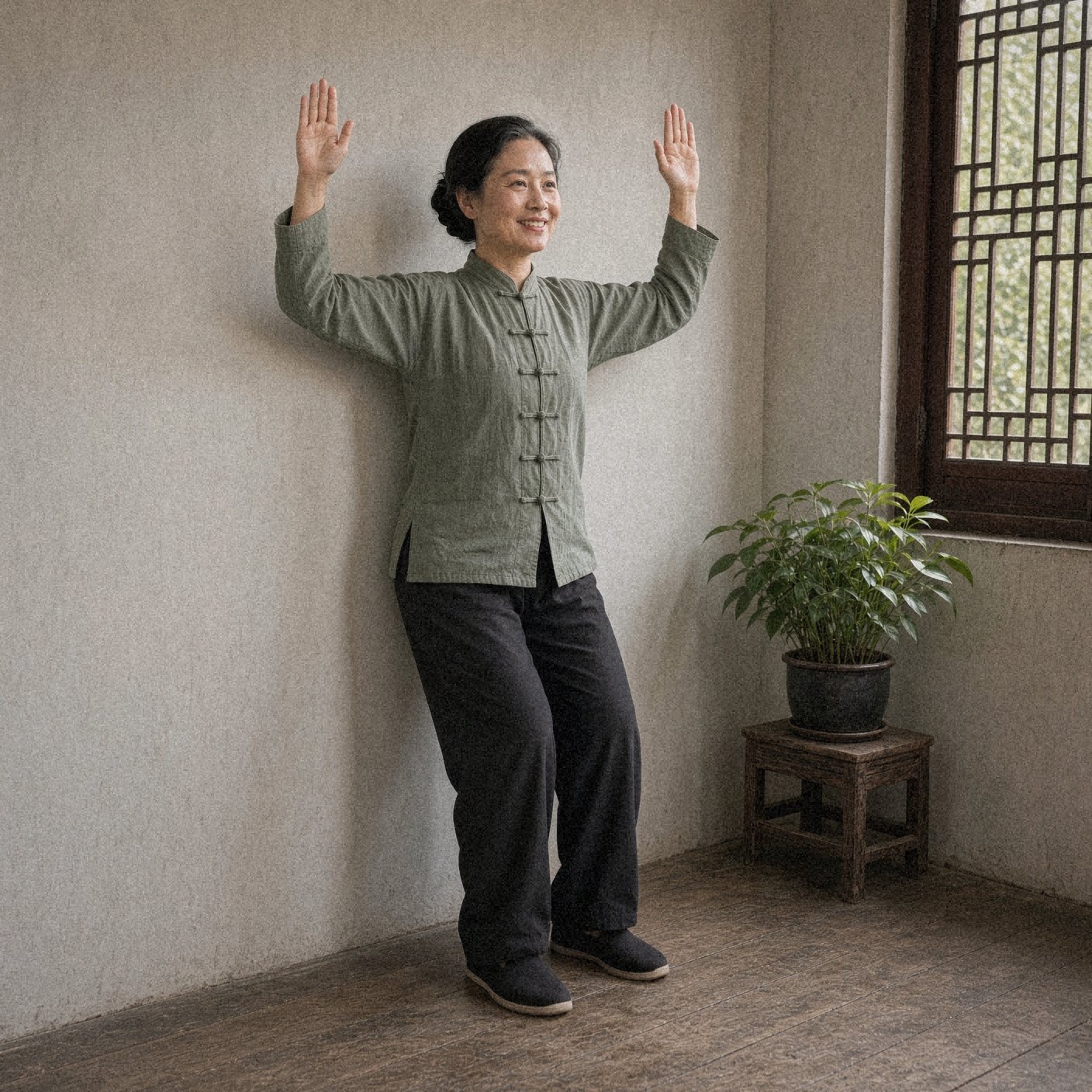
Wall angels open the chest and work the upper back while the wall keeps you honest.
How to do it:
- Stand with your back against the wall and your feet a little way out.
- Bring your arms up beside you with bent elbows, as close to the wall as feels comfortable.
- Slide your arms slowly up and down like a snow angel.
Make it easier: Slide only a short way, or let your hands come away from the wall.
How much: 8 slow slides.
4. Wall Push Ups
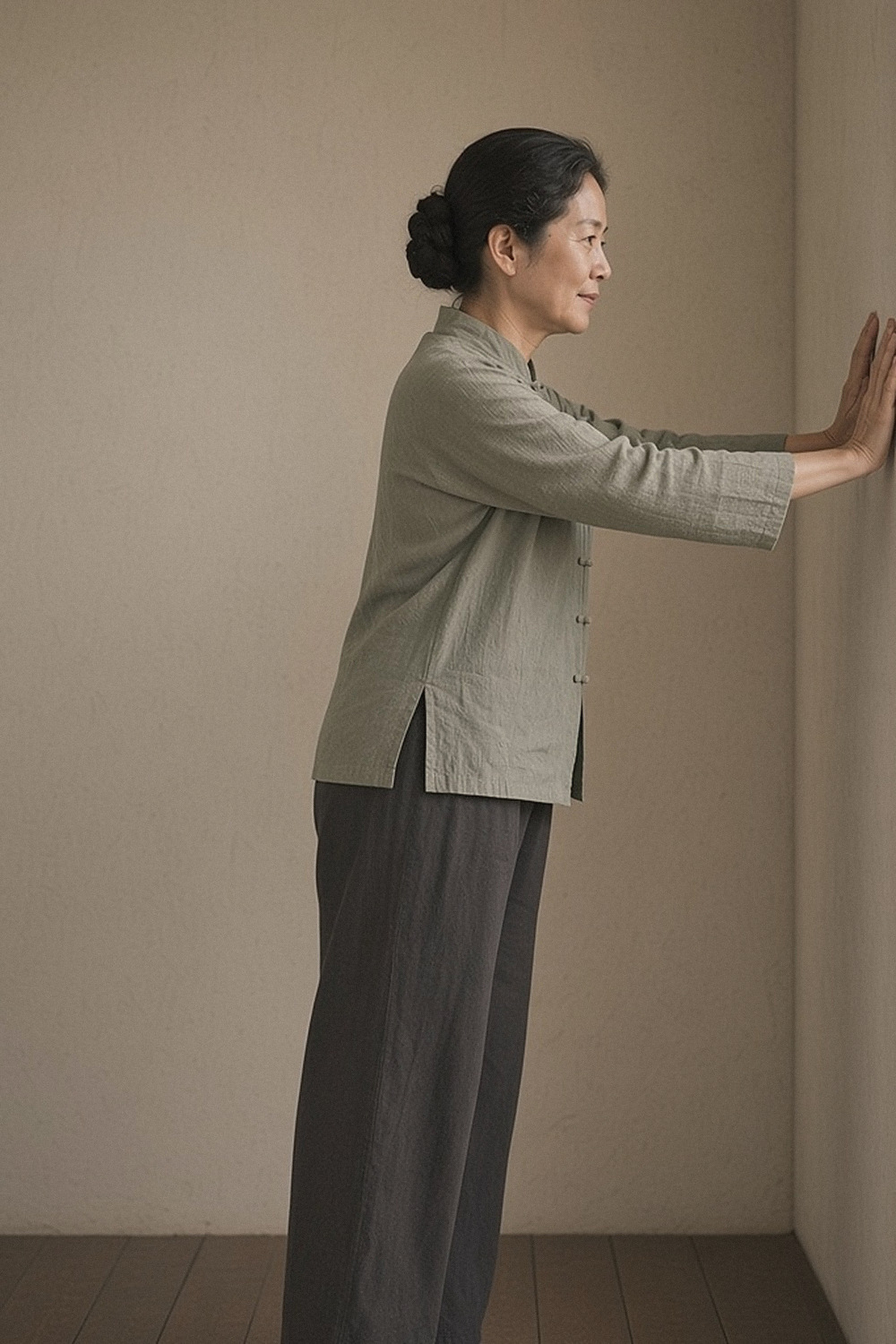
A gentle way to build arm and core strength, which helps you hold yourself upright.
How to do it:
- Stand about an arm’s length from the wall and place your hands flat on it at shoulder height. The photo shows this start position.
- Keeping your body straight, bend your elbows and lean in slowly.
- Push back to the start.
Make it easier: Stand closer to the wall so the lean is smaller.
How much: 10 repeats.
5. Calf Raises with Support
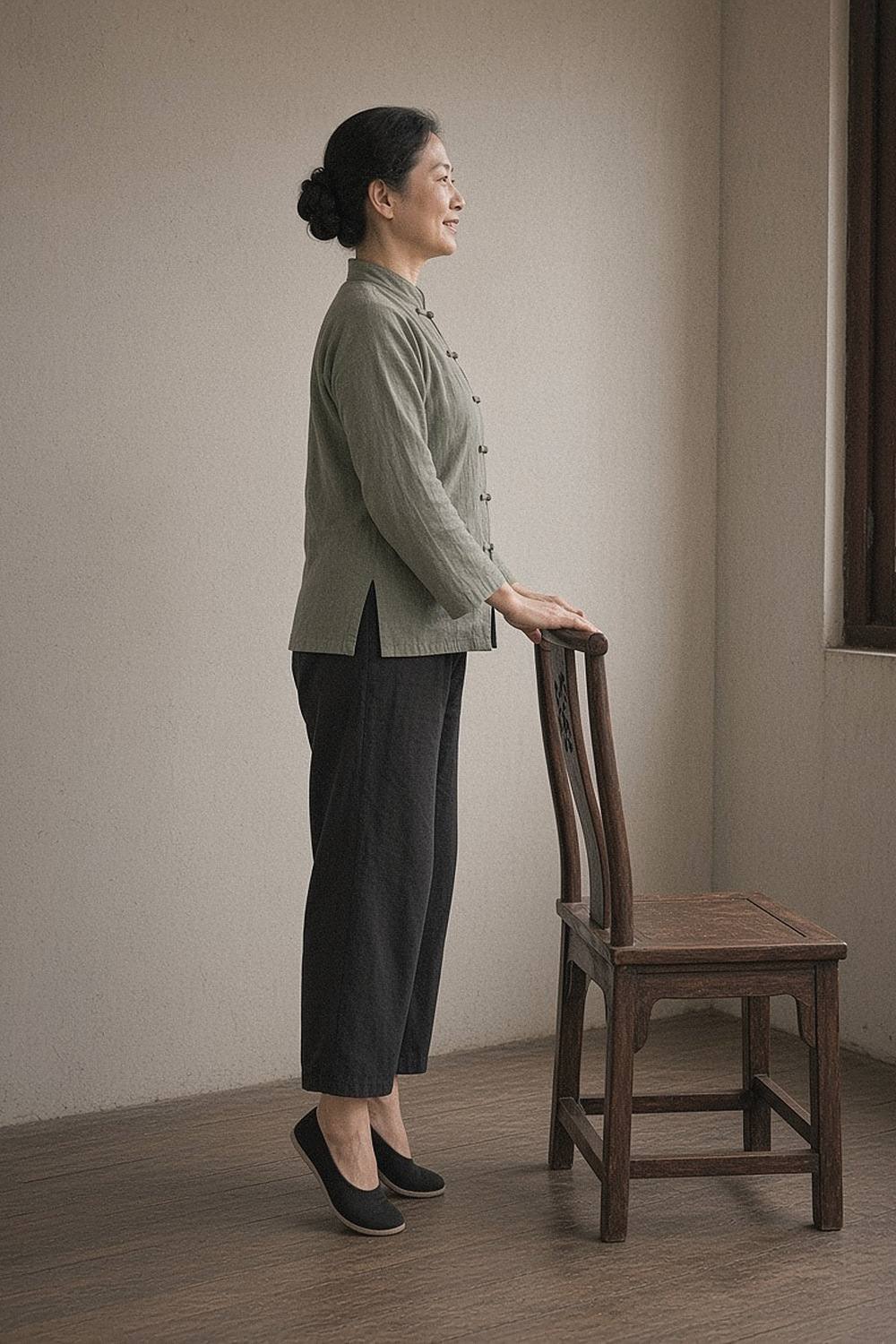
Strong calves help you balance and walk with confidence.
How to do it:
- Stand tall and rest your hands on the wall, or hold the back of a sturdy chair as in the photo.
- Slowly rise onto the balls of your feet, keeping your body tall.
- Hold for a second and lower slowly.
Make it easier: Hold on with both hands and lift your heels only a little.
How much: 10 repeats.
6. Shallow Wall Sit
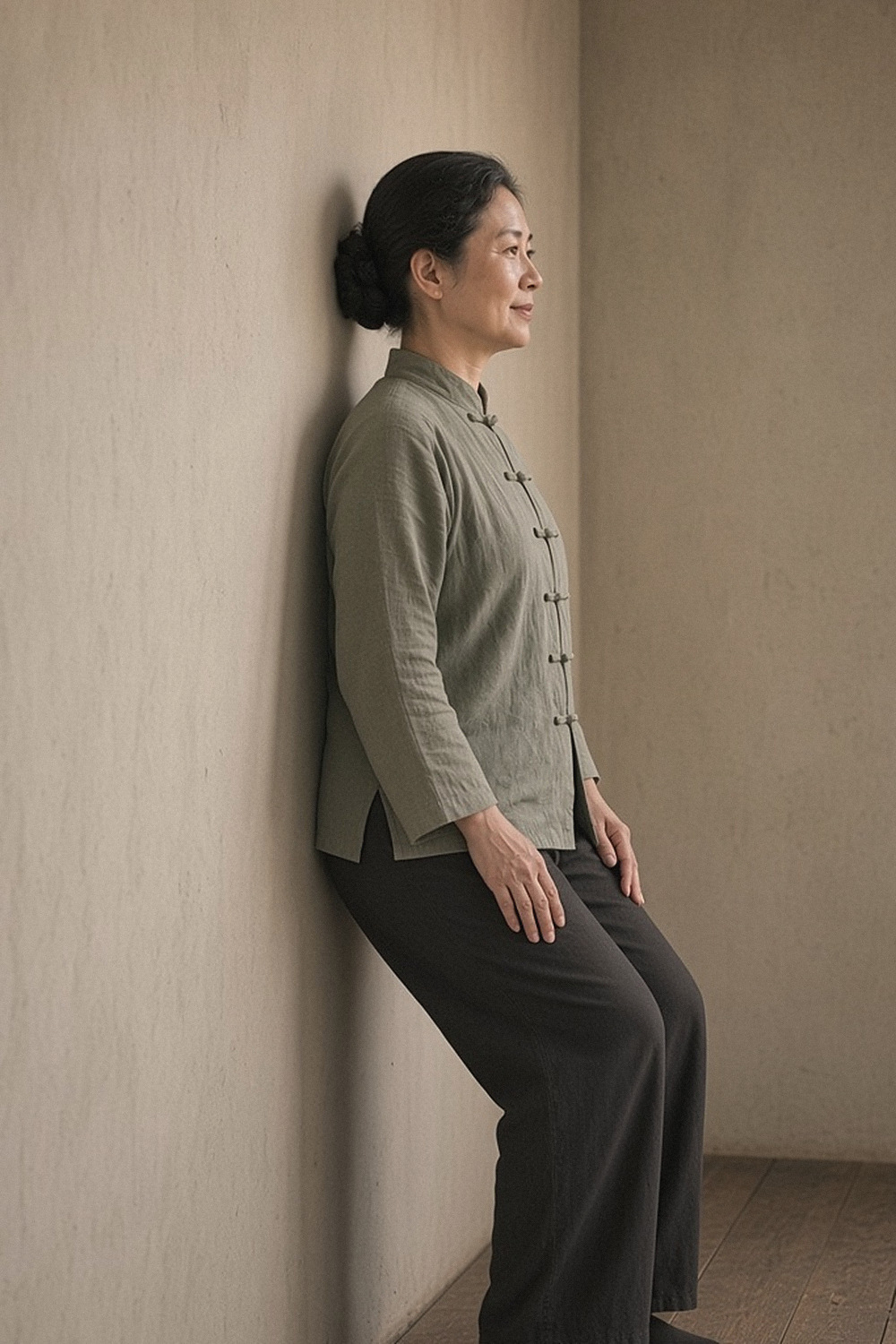
This builds leg strength for everyday jobs like getting up from a chair.
How to do it:
- Stand with your back against the wall and your feet about a foot out.
- Slide down a few inches, keeping your knees behind your toes.
- Hold for 5 to 10 seconds, then slide back up.
Make it easier: Bend your knees only slightly and hold for a shorter time.
How much: 3 holds of 10 seconds.
7. Doorway Chest Stretch
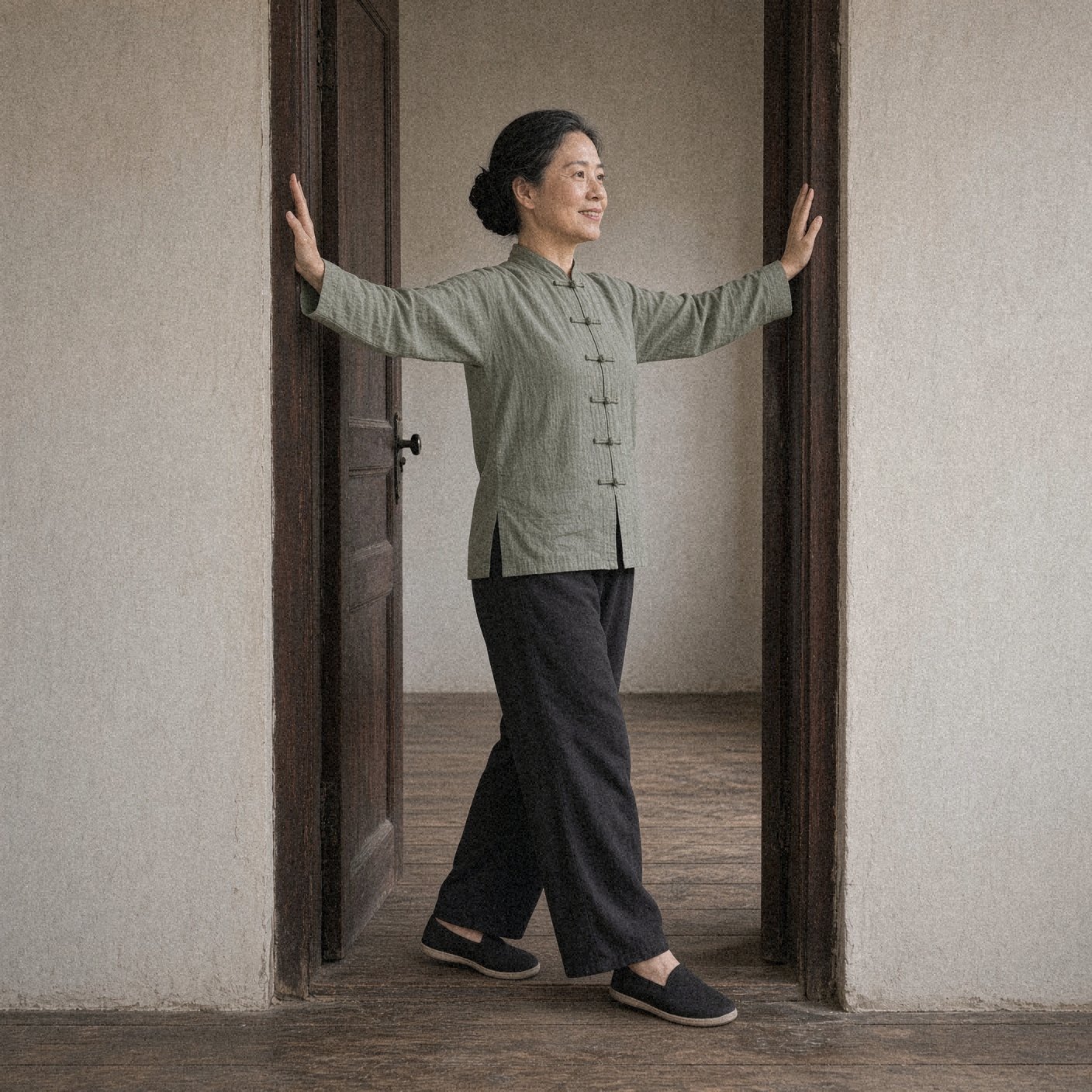
A tight chest pulls the shoulders forward. This stretch helps undo that.
How to do it:
- Stand in a doorway or at the corner of a wall with your forearm on the frame and your elbow bent.
- Step one foot forward and lean gently until you feel a mild stretch across your chest.
- Hold for 20 seconds, then switch arms.
Make it easier: Place your arm lower and lean only a little.
How much: 2 holds on each side.
A 7 minute wall posture routine
All you need is a clear piece of wall. Do these in order once a day.
| Step | What to do | Amount |
|---|---|---|
| 1 | Wall Stand | 30 seconds |
| 2 | Wall Chin Tuck | 8 repeats |
| 3 | Wall Angels | 8 slides |
| 4 | Wall Push Ups | 10 repeats |
| 5 | Calf Raises with Support | 10 repeats |
| 6 | Shallow Wall Sit | 3 holds of 10 seconds |
| 7 | Doorway Chest Stretch | 2 holds each side |
Your 4 week plan
Start with the easiest moves and add one or two each week.
| Week | What to do |
|---|---|
| Week 1 | Wall stand and wall chin tucks once a day. |
| Week 2 | Add wall angels and calf raises. |
| Week 3 | Add wall push ups and the doorway chest stretch. |
| Week 4 | Do the full 7 minute routine most days and add the shallow wall sit. |
When to check with your doctor
Wall exercises are gentle, but check with your doctor or a physical therapist first if any of these apply to you:
- You have shoulder pain or a shoulder injury.
- You have osteoporosis, kyphosis or a spine condition.
- You have knee pain when you bend your knees.
- You have neck pain, numbness or tingling in your arms.
- You have had a recent fall or operation.
Frequently asked questions
What are good wall exercises for posture?
The wall stand, wall chin tucks and wall angels are the core three. Add wall push ups, supported calf raises and a shallow wall sit for strength and balance.
How long should I stand against a wall for posture?
Start with 30 seconds, twice. You can build up to a minute. Doing it a few times a day is more useful than one long hold.
Are wall angels good for seniors?
Many people find them a comfortable way to open the chest and work the upper back. Move slowly, stay in a range that feels easy, and skip them if they hurt your shoulders.
Should my head touch the wall?
Only if it does so with your chin level. If it does not, keep your chin level and let the gap be. Never tip your head back to force it.
Can I do wall exercises every day?
Yes, these moves are gentle enough for most people to do daily. Rest on any day you feel sore.
Keep going
Want more seated options? See our posture exercises for seniors. For a forward head, try our neck hump exercises. New to exercise? Start with our guide to gentle exercise.

Written by June Ashby
June writes the Limber Years guides to posture, tai chi, mobility and gentle strength for people over 50. She keeps every routine short, gentle and easy to follow at home. June is not a doctor or physical therapist, so please check with yours before starting something new. More about Limber Years
Sources
- Harvard Health: Why good posture matters
- NHS: Flexibility exercises
- National Institute on Aging (NIA): Four types of exercise
- MedlinePlus: Guide to good posture
This article is general information, not medical advice. Read our full disclaimer.