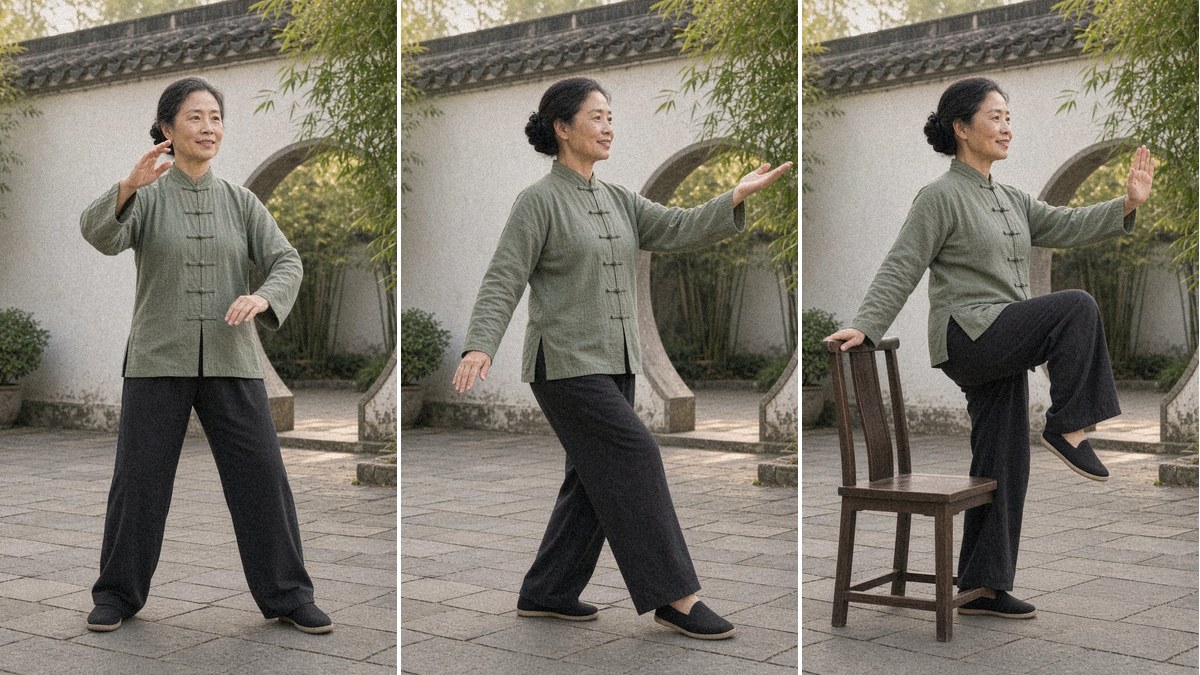
Tai chi looks calm and simple from the outside: slow arms, soft knees, steady breathing. That is exactly why it suits so many people over 50. It is low impact, it never asks you to jump or bend to the floor, and you can start in your living room in comfortable clothes.
Harvard Health calls tai chi “medication in motion”, and the research backs that up. The US National Center for Complementary and Integrative Health (NCCIH) reports that tai chi may reduce the rate of falls in older adults, and it is strongly recommended for knee osteoarthritis. Mayo Clinic adds that it can ease stress and improve balance and flexibility.
You do not need to learn a full form to begin. Below are 10 easy tai chi moves for complete beginners, each with a photo, clear steps and a simpler option. At the end you will find a 10 minute routine and a 4 week plan to help it become a habit.
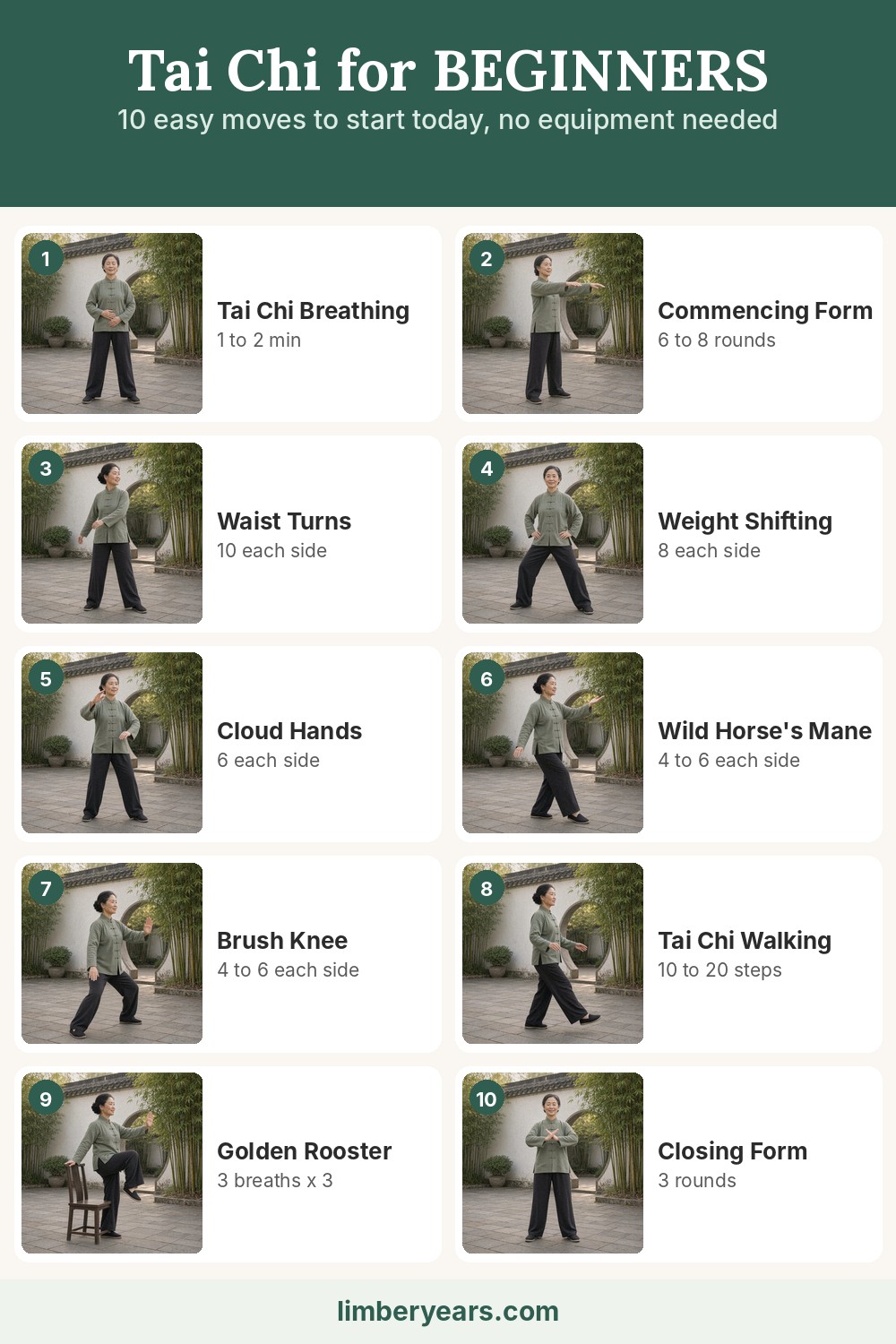
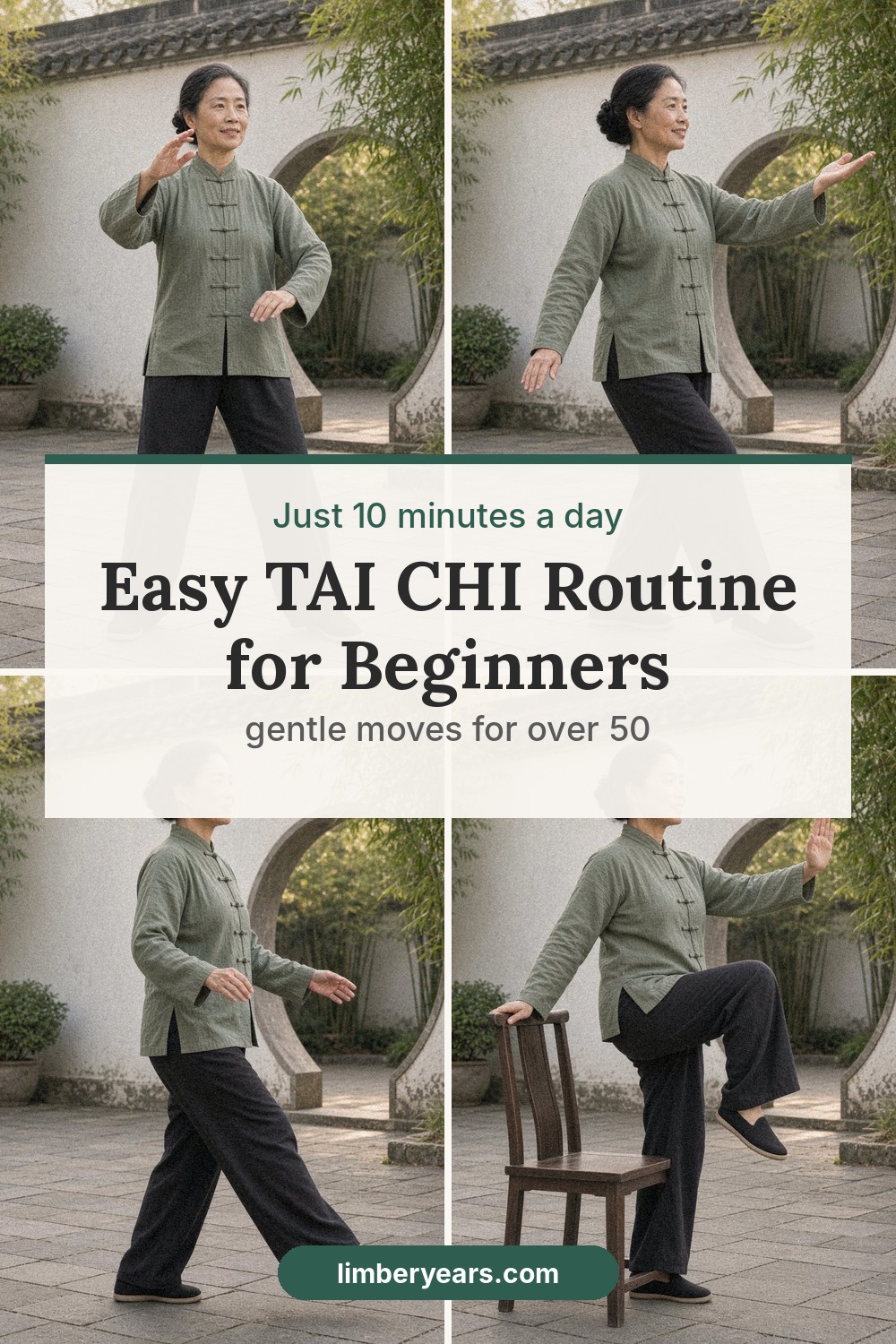
Save this chart to Pinterest or print it out and keep it near your favorite chair.
Key takeaways
- Tai chi is slow, low impact exercise that trains balance, leg strength and calm breathing at the same time.
- You can start at home with no equipment. A sturdy chair nearby is all the support you need.
- Keep your knees soft, move slowly and never force a stretch. Small and smooth beats big and shaky.
- Practise a few minutes most days. Benefits build over weeks, not days.
Before you start
- Wear loose, comfortable clothes and flat, thin soled shoes, or bare feet on a non slip floor.
- Clear a small space and keep a sturdy chair within reach for balance.
- Stand with your feet about hip width apart and your knees slightly bent, never locked.
- Breathe slowly and naturally. Never hold your breath.
- If you have balance problems, a joint replacement, osteoporosis or take medicine that makes you dizzy, check with your doctor first.
The 10 tai chi moves at a glance
| # | Exercise | Works on | How much |
|---|---|---|---|
| 1 | Tai Chi Breathing | Breath and calm | 1 to 2 minutes |
| 2 | Commencing Form | Shoulders and breath | 6 to 8 slow rounds |
| 3 | Waist Turns | Back and hips | 10 slow turns each side |
| 4 | Weight Shifting | Legs and balance | 8 to 10 shifts each side |
| 5 | Wave Hands Like Clouds | Balance and coordination | 6 to 8 slow turns each side |
| 6 | Part the Wild Horse’s Mane | Legs and shoulders | 4 to 6 each side |
| 7 | Brush Knee | Legs and coordination | 4 to 6 each side |
| 8 | Tai Chi Walking | Balance | 10 to 20 slow steps |
| 9 | Golden Rooster Stands on One Leg | Balance | Hold 3 to 5 breaths, 3 times each side |
| 10 | Closing Form | Breath and calm | 3 slow rounds |
1. Tai Chi Breathing
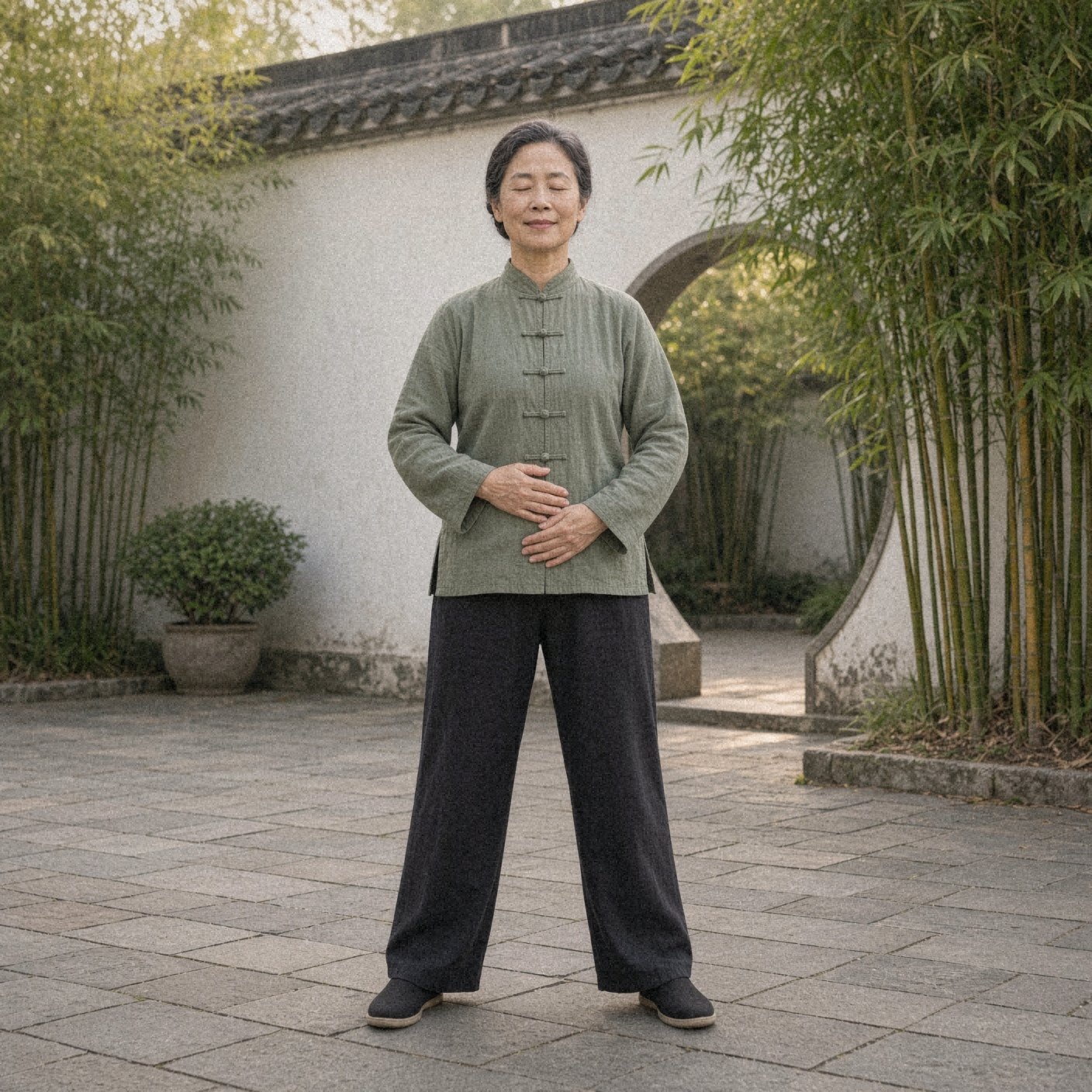
Every tai chi session starts by slowing down. Calm belly breathing settles your mind and sets the slow pace for the rest of the moves.
How to do it:
- Stand with your feet hip width apart and your knees soft.
- Rest both hands on your lower belly, just below your navel.
- Breathe in slowly through your nose and feel your belly gently rise under your hands. Breathe out slowly and feel it fall.
Make it easier: Sit on the front of a sturdy chair with your feet flat and do the same breathing.
How much: 1 to 2 minutes.
2. Commencing Form
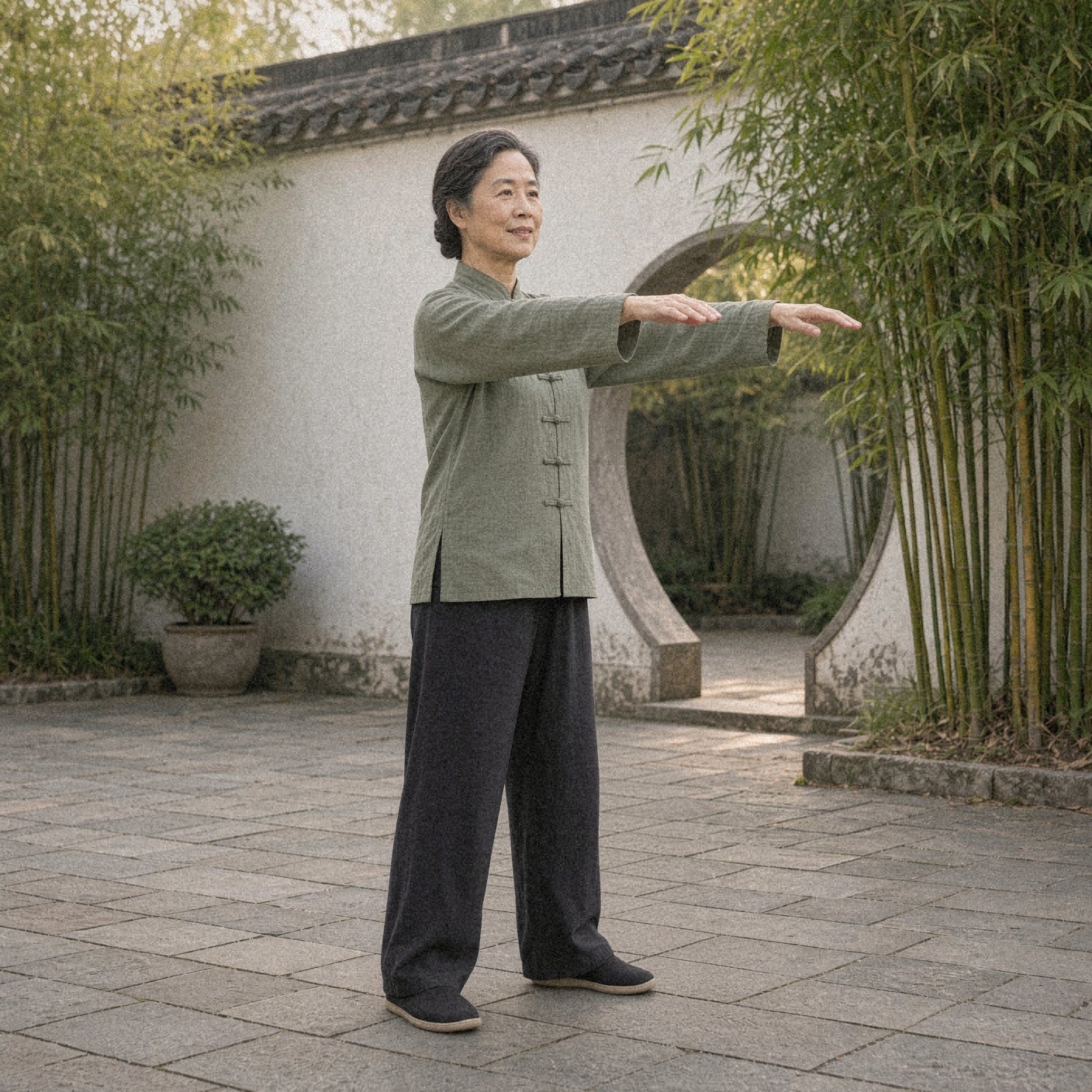
This is the opening move of most tai chi forms. It links your breath to your movement and gently loosens the shoulders.
How to do it:
- Stand with your feet hip width apart, arms relaxed by your sides.
- Breathe in and let both arms float up in front of you to shoulder height, wrists soft.
- Breathe out, bend your knees a little and let your arms sink slowly back down to your hips.
Make it easier: Only raise your arms to chest height, or do it sitting in a chair.
How much: 6 to 8 slow rounds.
3. Waist Turns
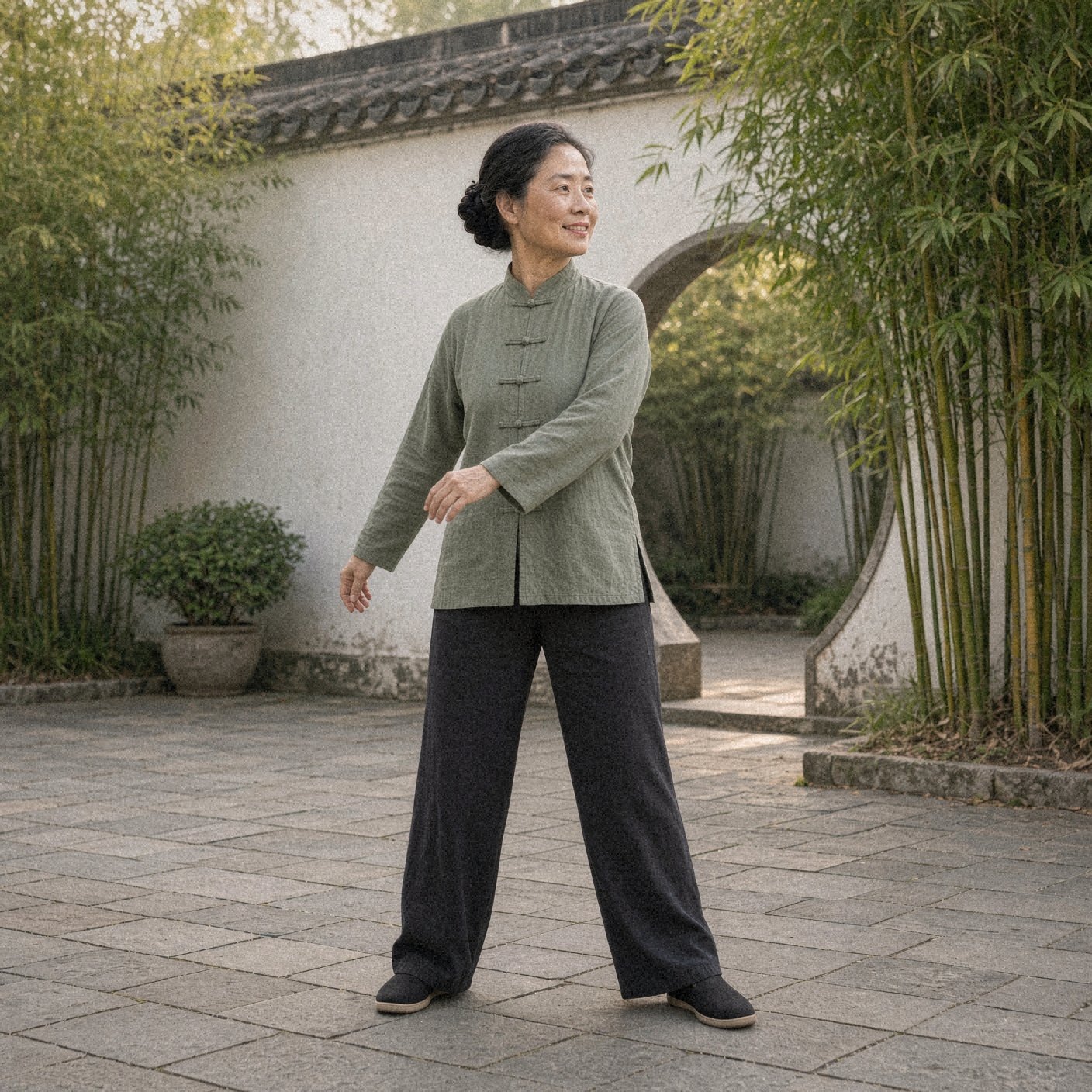
Turning from the waist is at the heart of tai chi. These loose, easy turns warm up the spine and hips before the other moves.
How to do it:
- Stand with your feet a little wider than your hips, knees soft.
- Let your arms hang loose. Slowly turn your upper body to one side, letting your arms swing with you.
- Turn slowly to the other side. Keep your hips mostly facing forward and let the turn come from your waist.
Make it easier: Make the turns smaller and keep one hand on a chair back.
How much: 10 slow turns each side.
4. Weight Shifting
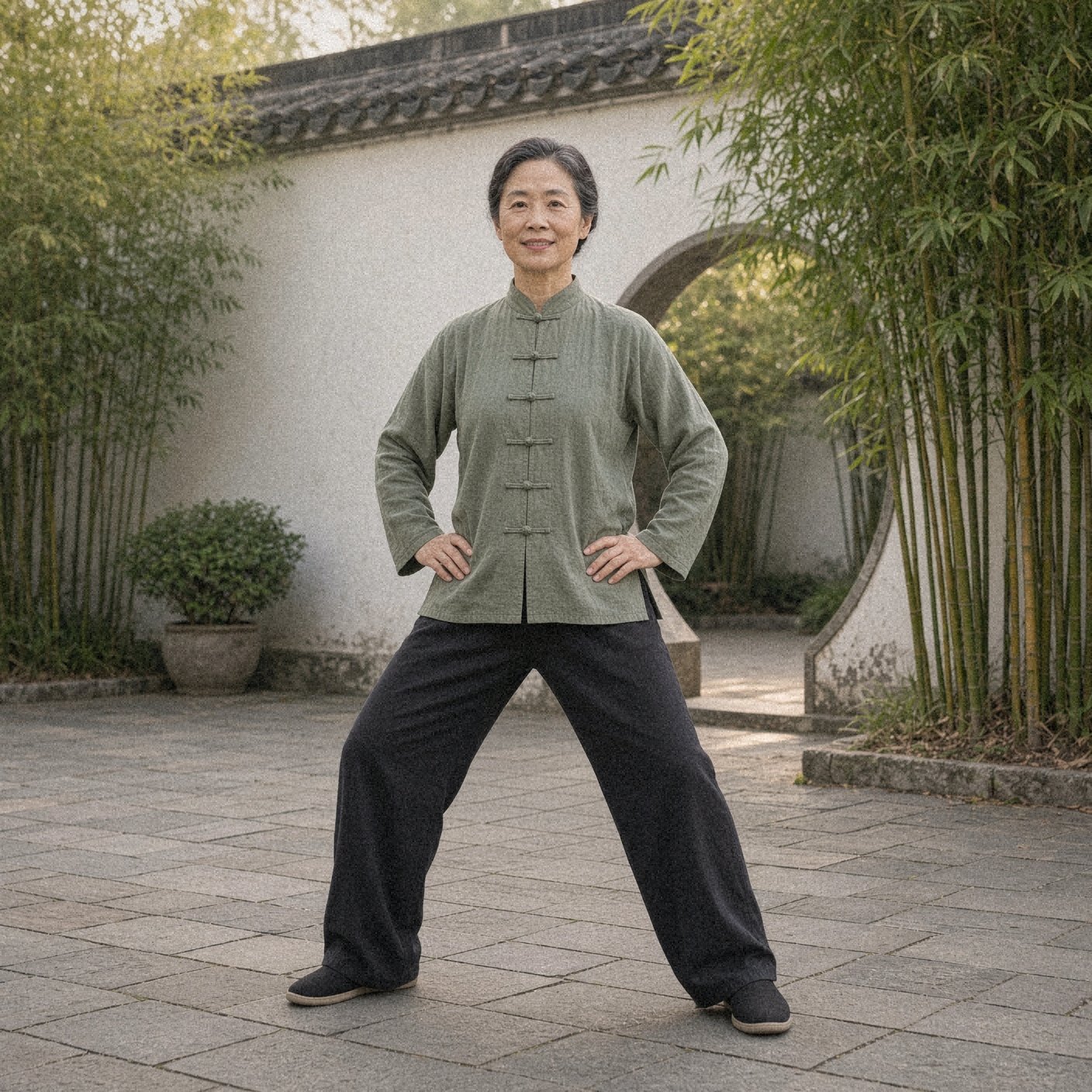
Tai chi is really a long series of weight shifts. Practising them slowly builds leg strength and teaches your body to find its balance.
How to do it:
- Stand with your feet a little wider than your hips, knees bent, hands on your hips.
- Slowly shift your weight over your right leg until it holds most of your weight. Keep your body upright.
- Shift slowly back through the middle and over to your left leg.
Make it easier: Hold the back of a chair with one hand and make the shift smaller.
How much: 8 to 10 shifts each side.
5. Wave Hands Like Clouds
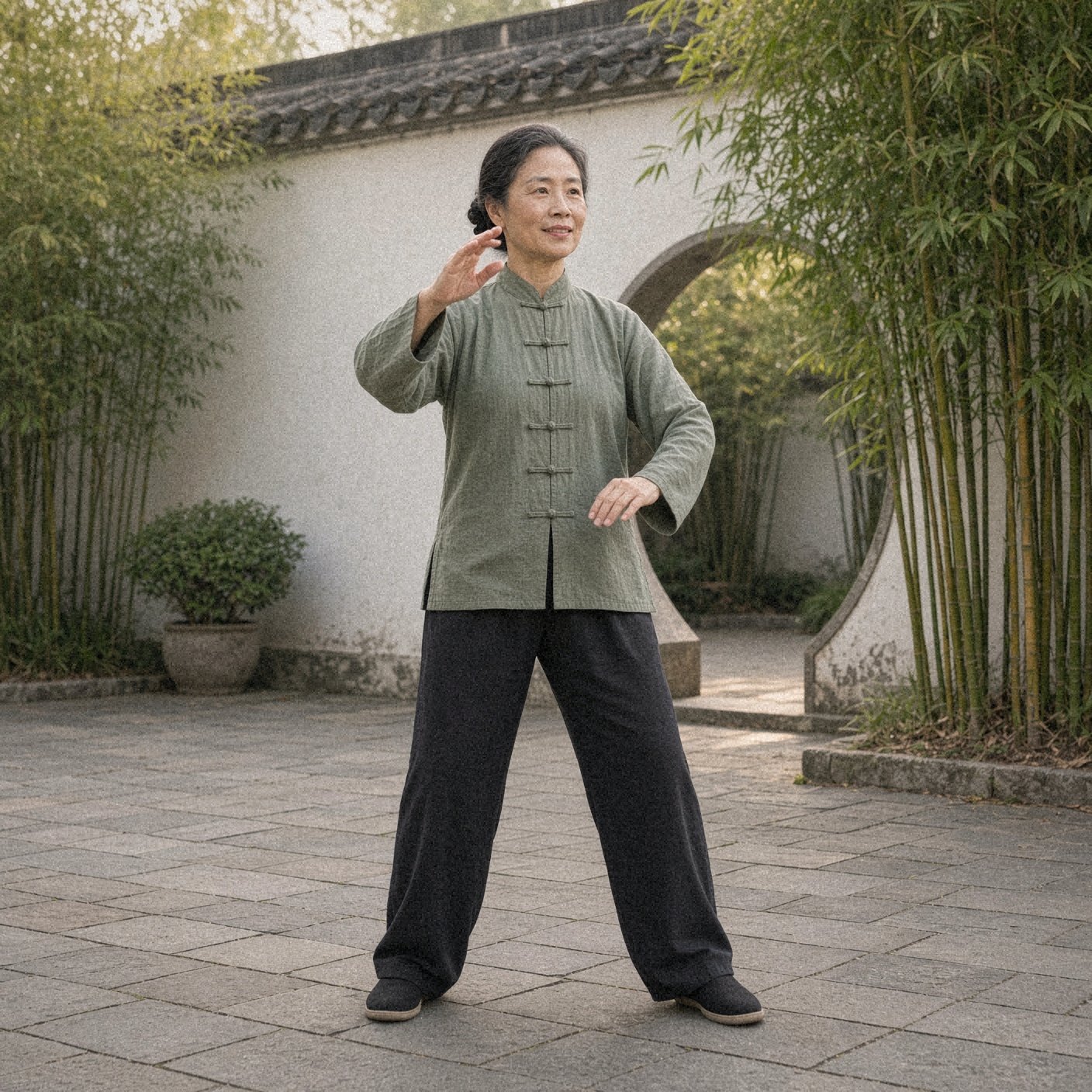
Cloud hands is one of the best known tai chi moves. The slow turning and swapping hands trains coordination and balance at the same time.
How to do it:
- Stand with your feet a little wider than your hips, knees soft.
- Raise one hand in front of your face, palm facing you, and hold the other hand low in front of your belly, palm down.
- Turn slowly from your waist toward the side of the upper hand. Then swap hands, so the low hand floats up and the high hand sinks, and turn to the other side.
Make it easier: Keep your feet still and do the arm movement only, or do it seated.
How much: 6 to 8 slow turns each side.
6. Part the Wild Horse’s Mane
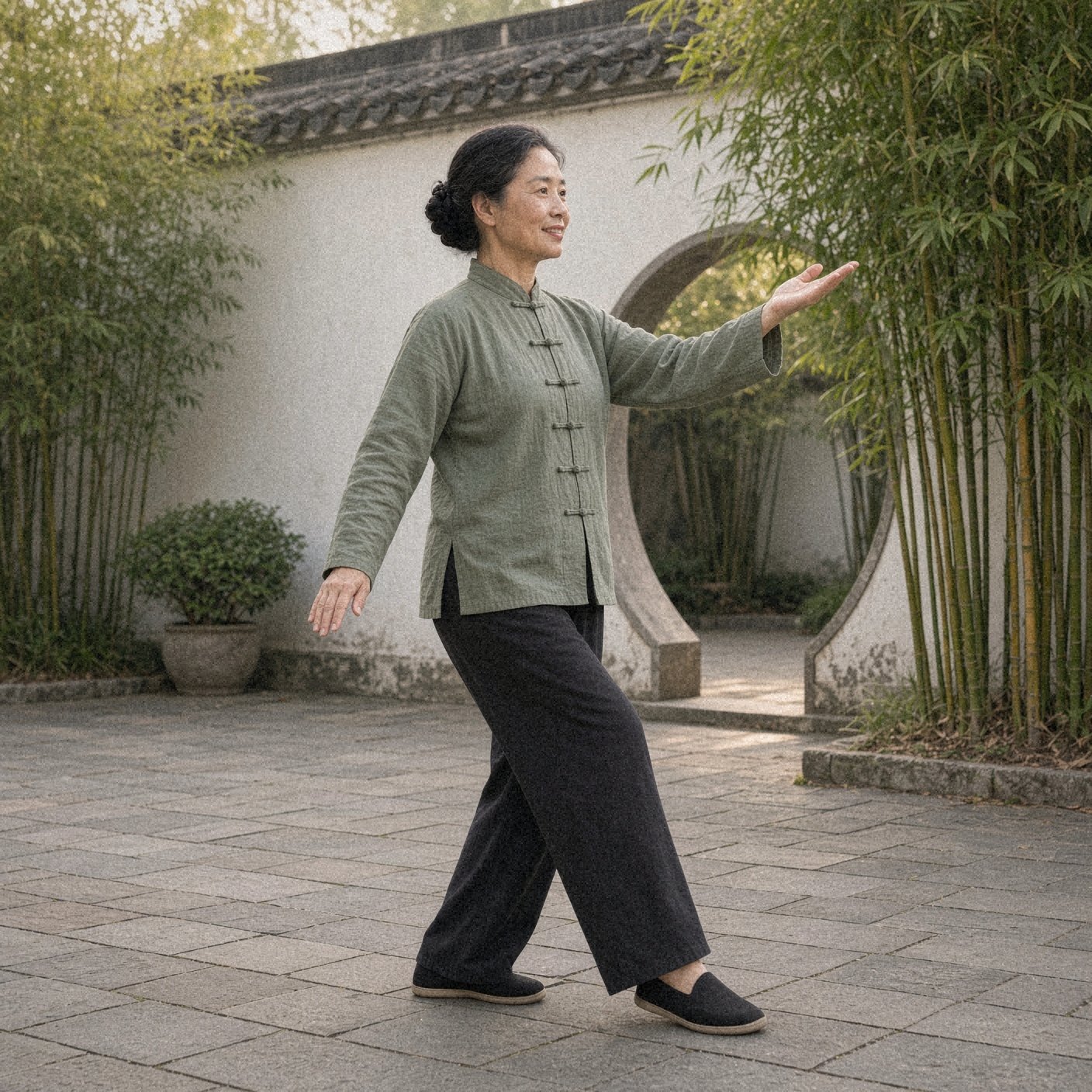
This classic move adds a gentle step and a forward weight shift. It strengthens the legs and gently opens the chest and shoulders.
How to do it:
- From a soft standing position, step your left heel forward and slowly roll onto the whole foot, bending your front knee.
- As you shift forward, let your left arm sweep forward and up to shoulder height, palm up, while your right hand sinks down by your right hip.
- Shift back, bring your hands together and repeat on the other side.
Make it easier: Take a very short step, or hold a chair with one hand and do the arms with only a small weight shift.
How much: 4 to 6 each side.
7. Brush Knee
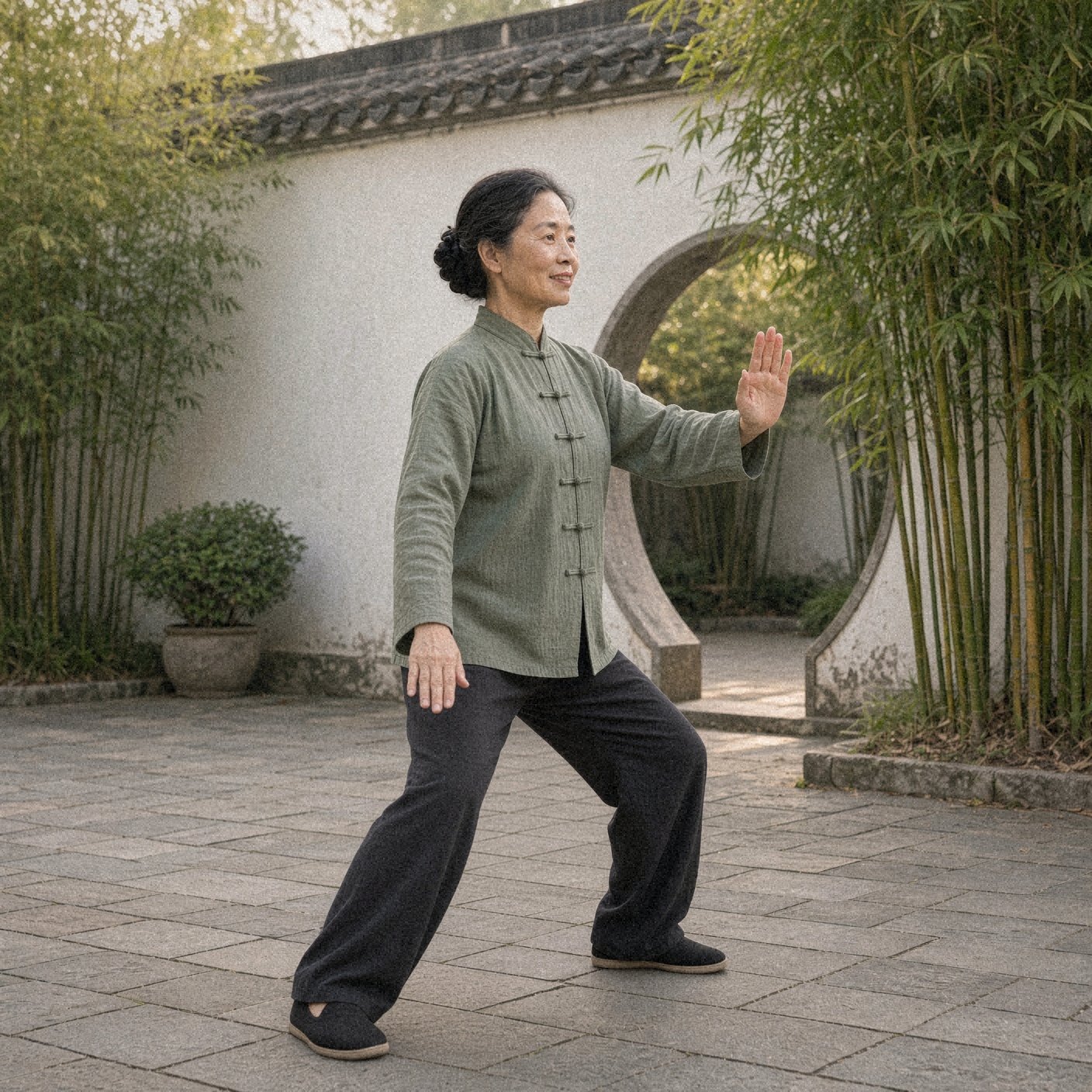
Brush knee teaches the two halves of the body to work together while you shift your weight, which is great practice for steady everyday walking.
How to do it:
- Step your left heel forward and slowly roll onto the whole foot, bending your front knee.
- As you shift forward, let your left hand brush slowly past the front of your left knee, palm down.
- At the same time, push your right hand gently forward at chest height, palm forward. Shift back and repeat on the other side.
Make it easier: Skip the step and practise the arm movement from a steady standing position.
How much: 4 to 6 each side.
8. Tai Chi Walking
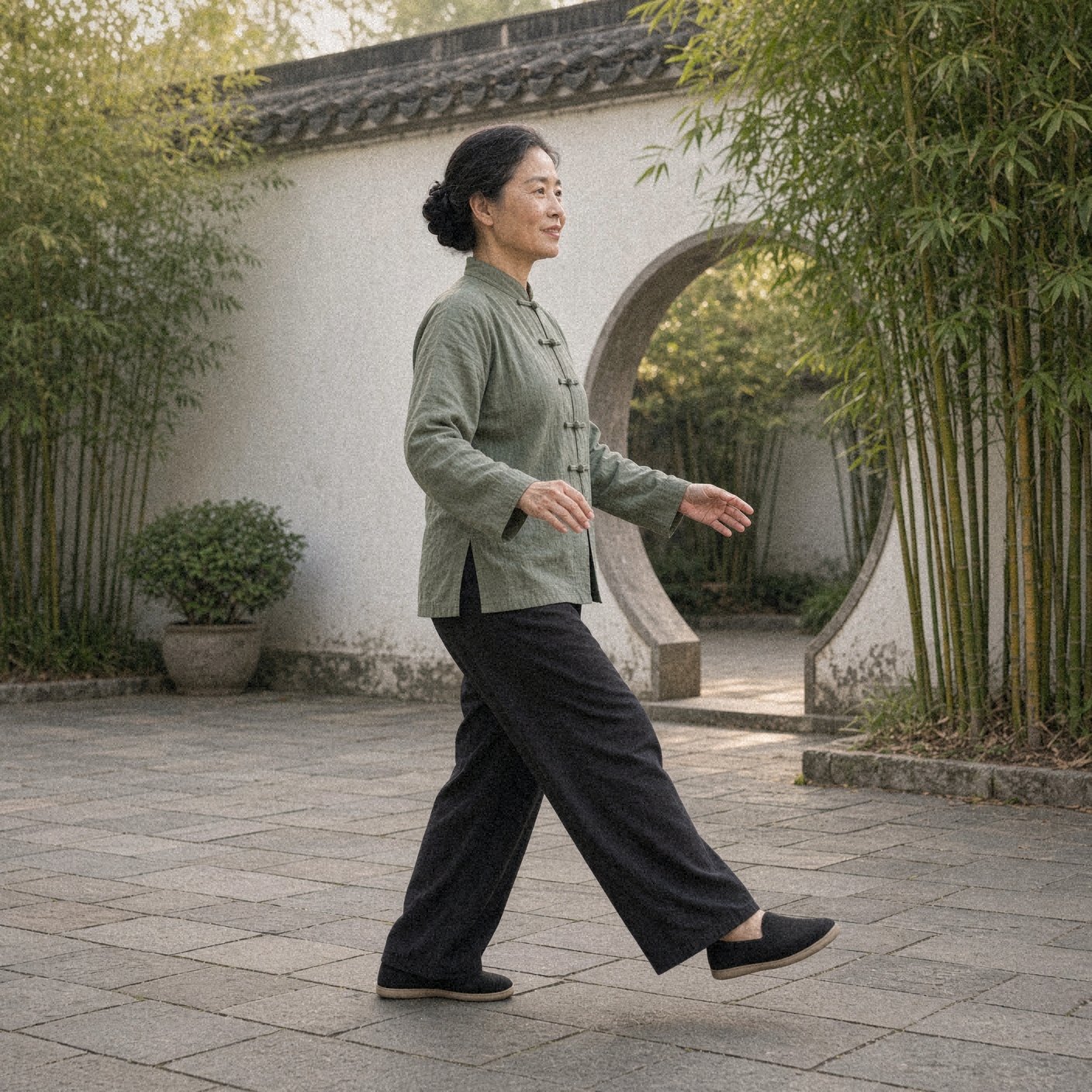
Tai chi walking turns an ordinary step into slow, careful practice. Placing the heel first and shifting weight slowly is excellent balance training.
How to do it:
- Stand with your knees soft and your weight on your right leg.
- Slowly step your left heel forward, keeping most of your weight on the back leg.
- Roll slowly onto the whole front foot, shift your weight forward, then bring the back foot through and repeat.
Make it easier: Walk slowly along a kitchen counter or wall with one hand on it for support.
How much: 10 to 20 slow steps.
9. Golden Rooster Stands on One Leg
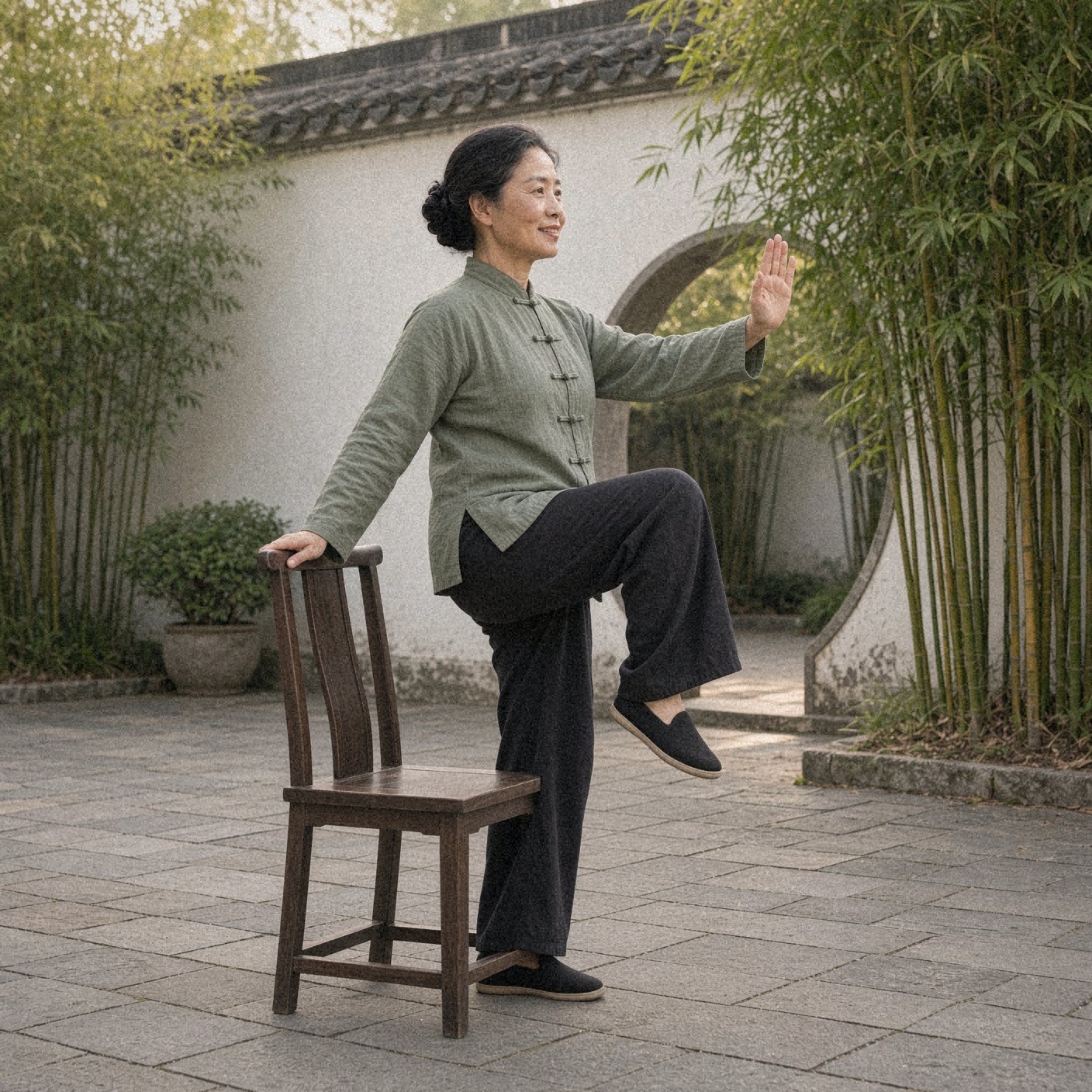
This is a classic tai chi balance posture. Using a chair makes it safe while your standing leg and ankle get stronger.
How to do it:
- Stand next to a sturdy chair and rest one hand lightly on the chair back.
- Shift your weight onto the leg nearest the chair and slowly lift the other knee as high as is comfortable.
- Hold for a few breaths, lower the foot slowly, then turn around and repeat on the other side.
Make it easier: Lift just the heel and keep your toes on the floor, holding the chair with both hands.
How much: Hold 3 to 5 breaths, 3 times each side.
10. Closing Form
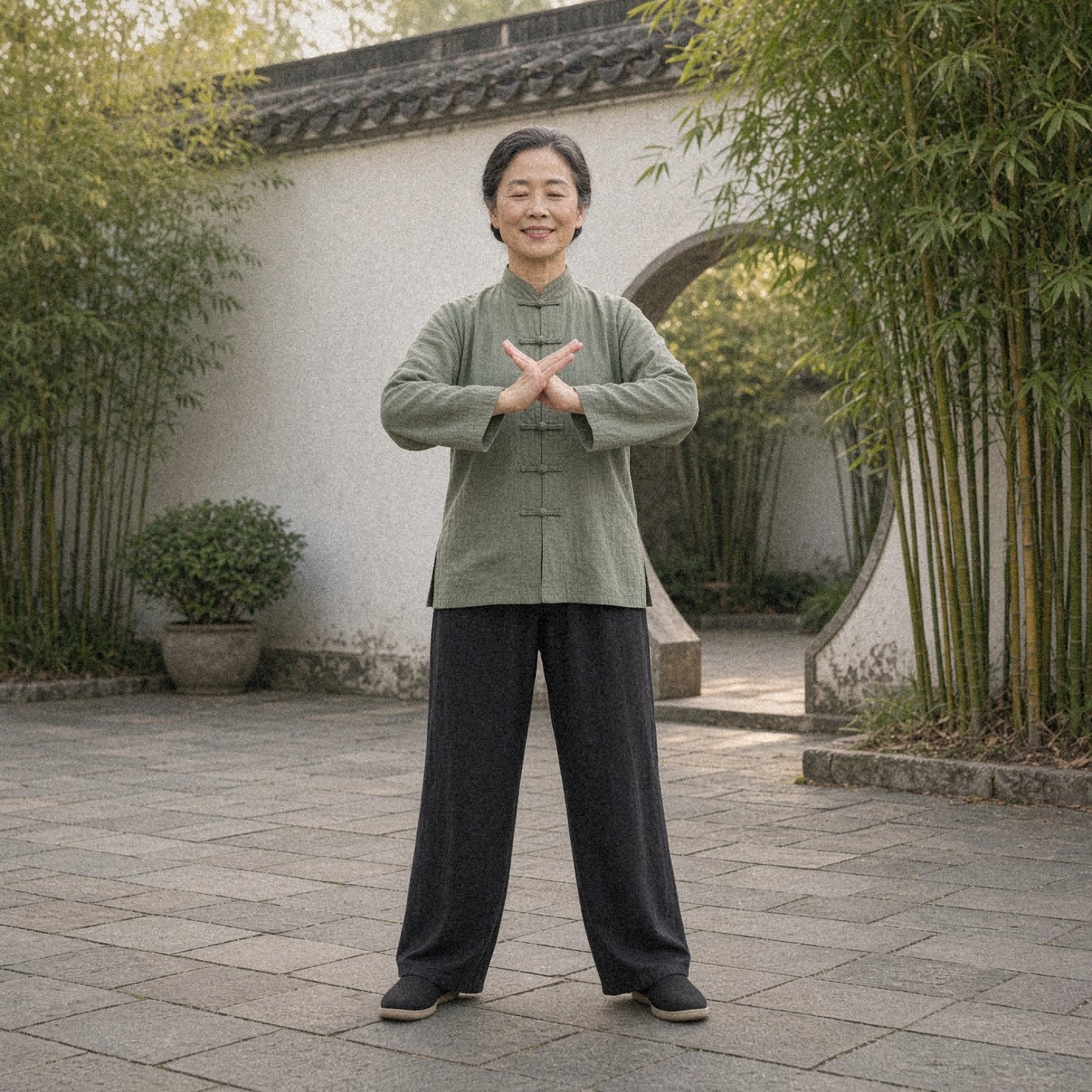
Tai chi always ends quietly. The closing form lets your breathing settle and gives you a calm moment before you get on with your day.
How to do it:
- Stand with your feet hip width apart and your knees soft.
- Breathe in and let your hands float up and cross loosely in front of your chest.
- Breathe out and let your hands slowly separate and sink down to your sides. Stand still for a few breaths.
Make it easier: Do it sitting, or simply rest your hands on your belly and take a few slow breaths.
How much: 3 slow rounds.
A simple 10 minute tai chi routine
Once the moves feel familiar, put them together in this order. Move slowly, breathe through your nose if you can, and let each move flow into the next. The whole routine takes about 10 minutes.
| Step | Exercise | Amount |
|---|---|---|
| 1 | Tai Chi Breathing | 1 minute |
| 2 | Commencing Form | 6 rounds |
| 3 | Waist Turns | 10 each side |
| 4 | Weight Shifting | 8 each side |
| 5 | Wave Hands Like Clouds | 6 each side |
| 6 | Part the Wild Horse’s Mane | 4 each side |
| 7 | Tai Chi Walking | 10 steps |
| 8 | Golden Rooster Stands on One Leg | 3 each side |
| 9 | Closing Form | 3 rounds |
Your 4 week plan
Tai chi is learned a little at a time. A few minutes most days will teach your body more than one long session a week.
| Week | What to do |
|---|---|
| Week 1 | Tai chi breathing, commencing form and waist turns, once a day. Focus on slow breathing and soft knees. |
| Week 2 | Add weight shifting and cloud hands. Keep a chair close by. Still once a day. |
| Week 3 | Add part the wild horse’s mane, brush knee and tai chi walking. Try the full routine on 3 to 5 days. |
| Week 4 | Add golden rooster with the chair and the closing form. Do the full 10 minute routine on most days. |
When to check with your doctor
Tai chi is one of the gentlest kinds of exercise, but it still asks your legs and balance to work. Talk to your doctor or a physical therapist before you start if any of these apply to you:
- You have fallen in the past year, or often feel unsteady on your feet.
- You have had a hip or knee replacement, or recent surgery.
- You have osteoporosis, arthritis that flares easily, or ongoing back pain.
- You take medicine that can make you dizzy or light headed.
- You feel chest pain, shortness of breath or dizziness during exercise. Stop and get help.
Frequently asked questions
Is tai chi good for beginners over 50?
Yes. Tai chi is low impact, slow and easy to adapt, which is why it is so popular with older adults. Mayo Clinic describes it as generally safe for all ages, and you can hold a chair for support while you learn.
How long does it take to learn tai chi?
You can learn simple moves like the ones on this page in a few sessions. Learning a full form takes much longer. Harvard Health suggests giving a beginner program at least 12 weeks to see how you enjoy it and notice changes.
How often should I practise tai chi?
A short practice most days works best. Start with 5 minutes and build up to the 10 minute routine above. Many people also enjoy a weekly class for feedback from a teacher.
Can tai chi help with balance?
Research suggests it can. NCCIH reports evidence that tai chi may reduce the rate of falls in older adults by about 19 percent, and a 2023 review of randomized trials looked closely at tai chi for both fall prevention and balance in older adults.
Should I take a class or learn at home?
Both work. A class gives you feedback on your posture and a friendly group, while home practice is easy to fit in. In the US there is no national certification for tai chi teachers, so ask about a teacher’s training and experience.
What should I wear for tai chi?
Loose, comfortable clothes and flat shoes with thin, flexible soles. Avoid thick running shoes that make it hard to feel the floor.
Keep going
The hardest part of tai chi is not the moves, it is coming back to them. Pick a time that already exists in your day, like after your morning tea, and do just the first three moves. On days you have more time, add the rest. If you would like a slow, steady way to build balance on your walks too, try our tai chi walking guides, and for stiff shoulders see our 12 simple posture exercises.

Written by June Ashby
June writes the Limber Years guides to posture, tai chi, mobility and gentle strength for people over 50. She keeps every routine short, gentle and easy to follow at home. June is not a doctor or physical therapist, so please check with yours before starting something new. More about Limber Years
Sources
- National Center for Complementary and Integrative Health (NCCIH): Tai Chi: What You Need To Know
- Harvard Health Publishing: The health benefits of tai chi
- Mayo Clinic News Network: Tai chi is a gentle way to fight stress
- Frontiers in Public Health (2023): Tai Chi for fall prevention and balance improvement in older adults, a systematic review and meta-analysis
This article is general information, not medical advice. Read our full disclaimer.