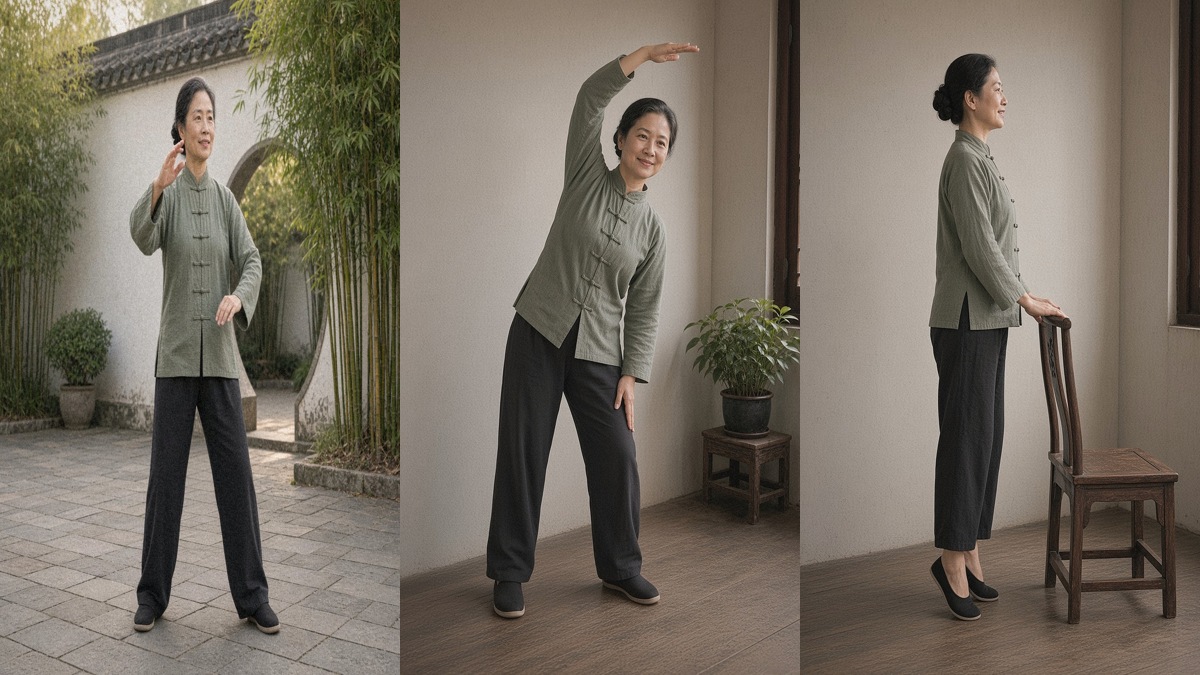
Gentle exercise is movement that raises your heart rate a little, keeps your joints moving and does not leave you sore or worn out. It suits people over 50 who are new to exercise, coming back after a break, or simply want something kind to the body.
You do not need a gym, special clothes or any equipment. A sturdy chair, a wall and a pair of comfortable shoes are enough to start.
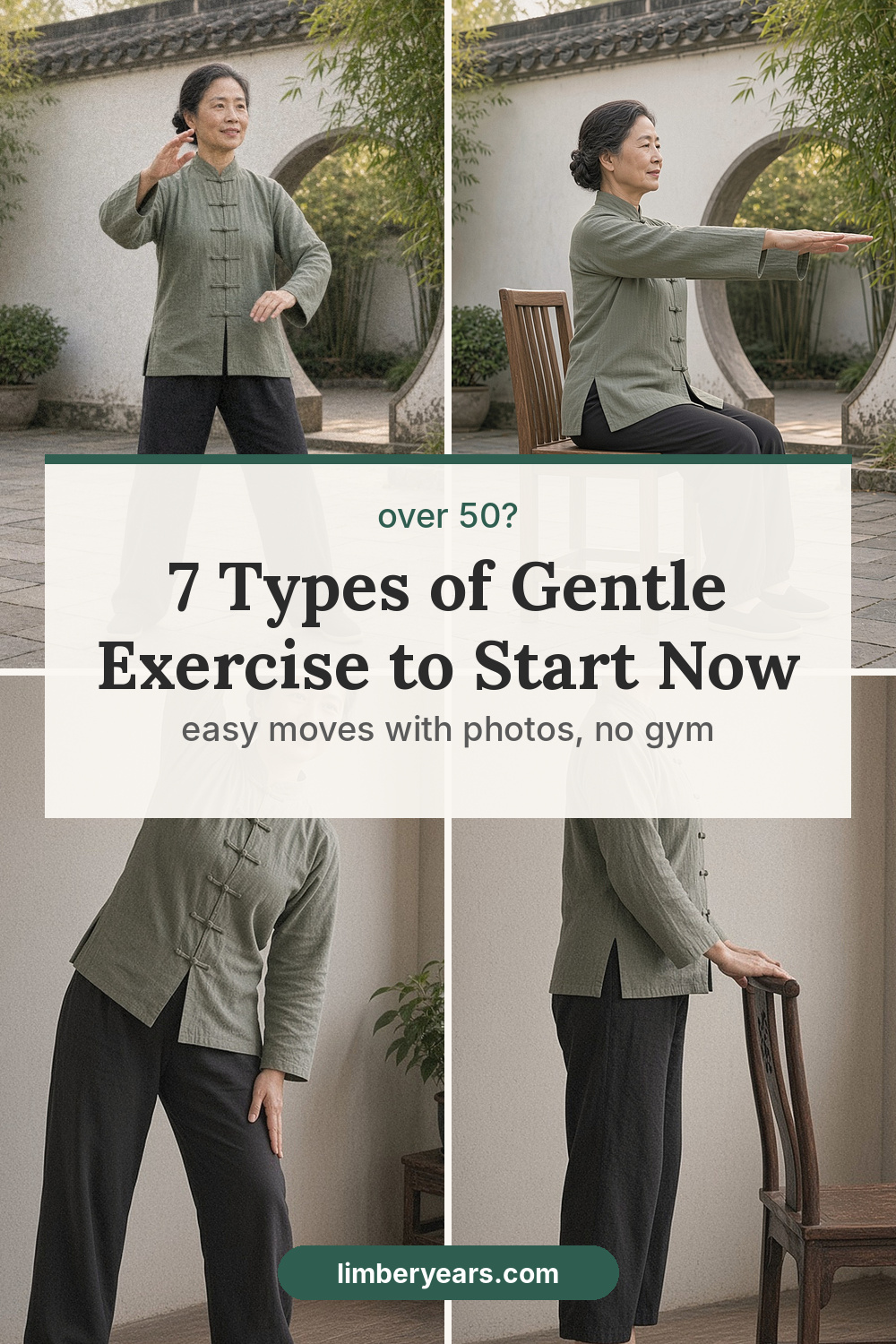
Below you will find the 7 main types of gentle exercise, what each one is good for, how hard it should feel, the weekly activity guidelines in plain English, and a simple first week plan.
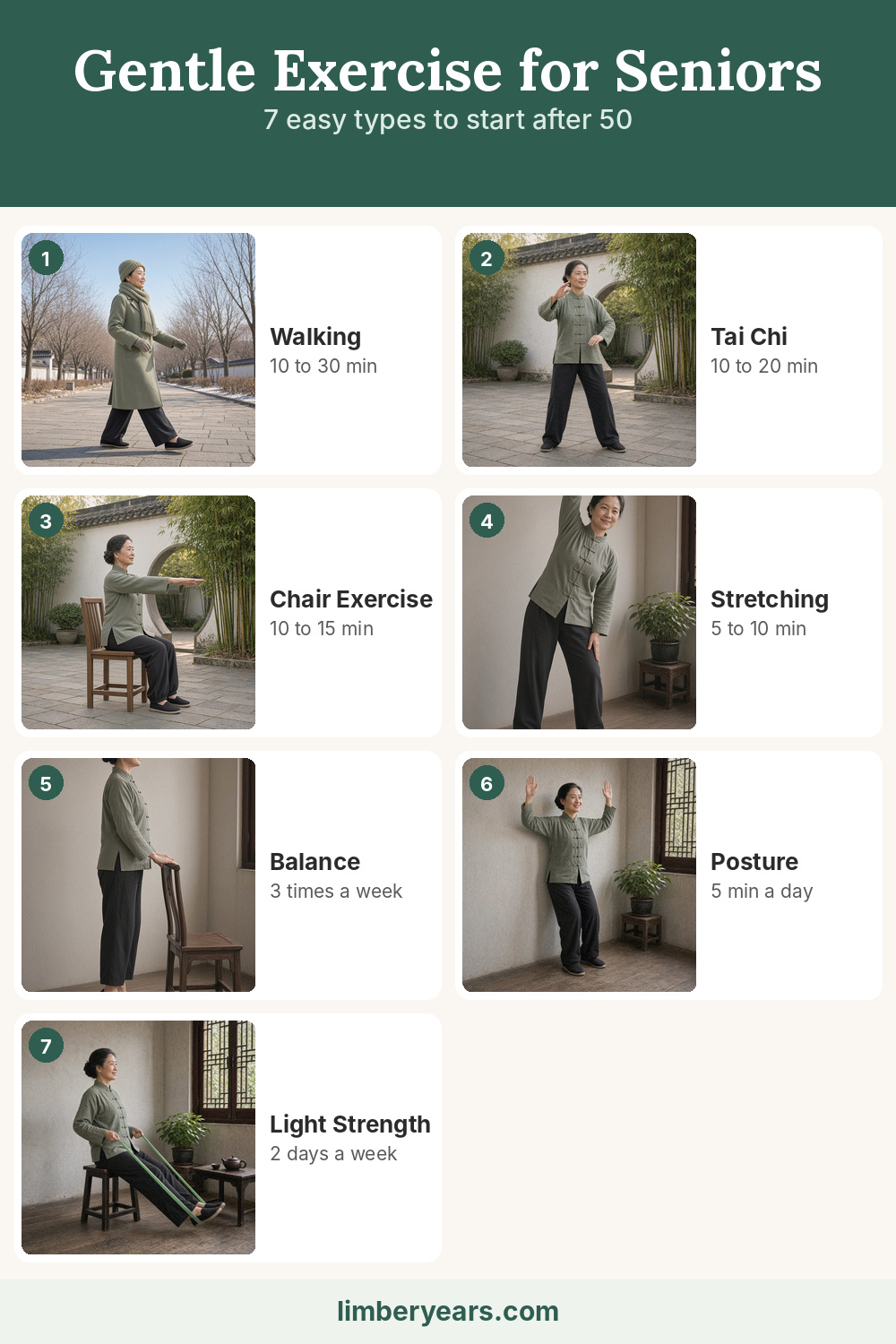
Save this chart to Pinterest or print it out and keep it near your favorite chair. Photos on this site are made with AI to show each move clearly.
Key takeaways
- Gentle exercise should feel easy to moderate. You should be able to talk while you move.
- A good week mixes moving, strength, balance and stretching.
- Short sessions count. Ten minutes at a time adds up.
- Start slowly and check with your doctor first if you have a health condition or have not exercised for a while.
Before you start
- Wear comfortable clothes and flat shoes with a good grip.
- Clear some space and keep a sturdy chair or a wall nearby to hold for balance.
- Warm up with 2 or 3 minutes of easy marching on the spot or gentle arm swings.
- Breathe normally. Do not hold your breath.
- Stop if you feel pain, dizziness, chest discomfort or unusual shortness of breath.
What counts as gentle exercise?
Gentle exercise is low impact, which means at least one foot stays on the ground or your body is supported, for example by a chair. It moves your whole body without jumping, sudden twists or heavy weights.
Even everyday movement counts. The NHS lists light activities such as these:
- Getting up to make a cup of tea
- Moving around your home
- Walking at a slow pace
- Cleaning and dusting
- Vacuuming
- Making the bed
- Standing up
Gentle exercise builds on that by adding a little more effort, a little more time, and some moves for strength and balance.
How hard should gentle exercise feel?
Use the talk test. While you move, try saying a short sentence out loud.
| Effort | Talk test | Examples |
|---|---|---|
| Light | You can sing or chat easily | Warm ups, stretching, slow walking |
| Moderate | You can talk but not sing, and you feel a little warmer | Brisk walking, tai chi, a longer chair routine |
| Too hard for now | You cannot finish a sentence | Ease off and slow down |
Most of your gentle exercise should sit in the light to moderate rows. If you feel sore the next day, do less next time.
How much exercise do you need after 50?
The CDC sets these weekly guidelines for older adults. You do not need to reach them in week one. They are a goal to build toward.
At least 150 minutes at moderate intensity. This could be 30 minutes a day, 5 days a week.
CDC: Physical activity guidelines for older adults
At least 2 days of activities that strengthen muscles.
CDC: Physical activity guidelines for older adults
The CDC also says that if you are 65 or older, your week should include aerobic, muscle strengthening and balance activities. The National Institute on Aging suggests you “aim for about three sessions of balance exercises a week.”
In plain terms: move most days, do something for your muscles on 2 days, and practice balance about 3 times a week. The 7 types below cover all of that.
The 7 types of gentle exercise at a glance
| # | Move | Works on | How much |
|---|---|---|---|
| 1 | Walking | Heart, legs, mood | 10 to 30 minutes |
| 2 | Tai Chi | Balance, calm, whole body | 10 to 20 minutes |
| 3 | Chair Exercise | Whole body, seated | 10 to 15 minutes |
| 4 | Stretching | Flexibility, stiffness | 5 to 10 minutes most days |
| 5 | Balance | Steadiness, confidence | About 3 times a week |
| 6 | Posture | Upper back, shoulders, neck | 5 minutes a day |
| 7 | Light Strength | Muscles, everyday strength | 2 days a week |
1. Walking
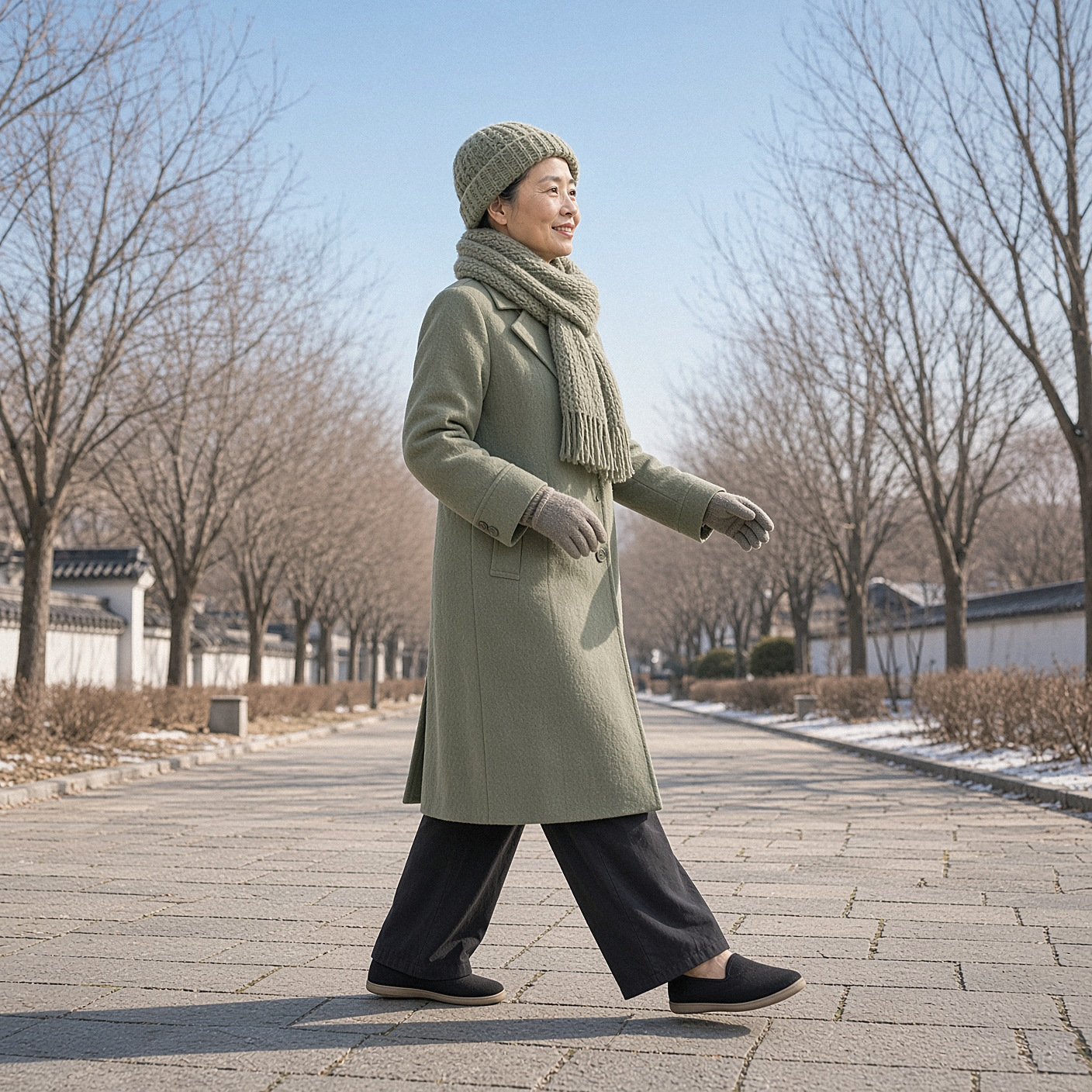
Walking is the easiest way to add moderate activity to your week. You can do it almost anywhere and pace it to suit you.
How to do it:
- Start with 5 to 10 minutes at an easy pace.
- Stand tall, let your arms swing and look ahead, not down.
- Add a few minutes each week until you reach 20 to 30 minutes.
Make it easier: Walk indoors along a hallway or around a shop, where the ground is flat and there is a place to rest.
How much: 10 to 30 minutes.
More ideas: tai chi walking for slow, steady steps, and how to keep walking when it is cold.
2. Tai Chi
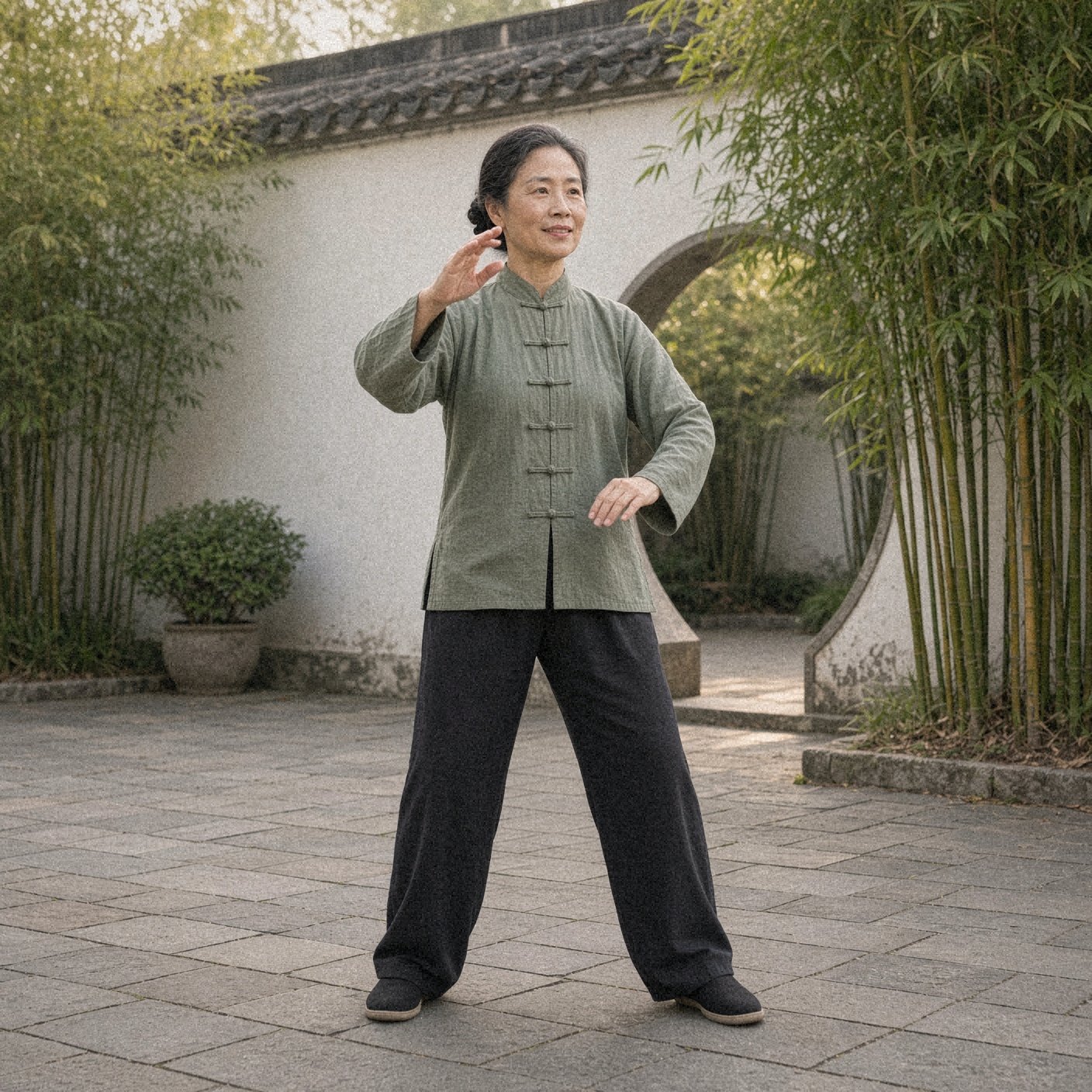
Tai chi is slow, flowing movement that works balance, leg strength and focus at the same time. Many people find it relaxing.
How to do it:
- Stand with your feet hip width apart and your knees soft.
- Move slowly and smoothly from one position to the next.
- Breathe in and out with the movements.
Make it easier: Do the arm movements while seated, or hold a chair with one hand.
How much: 10 to 20 minutes.
Start here: tai chi for beginners.
3. Chair Exercise
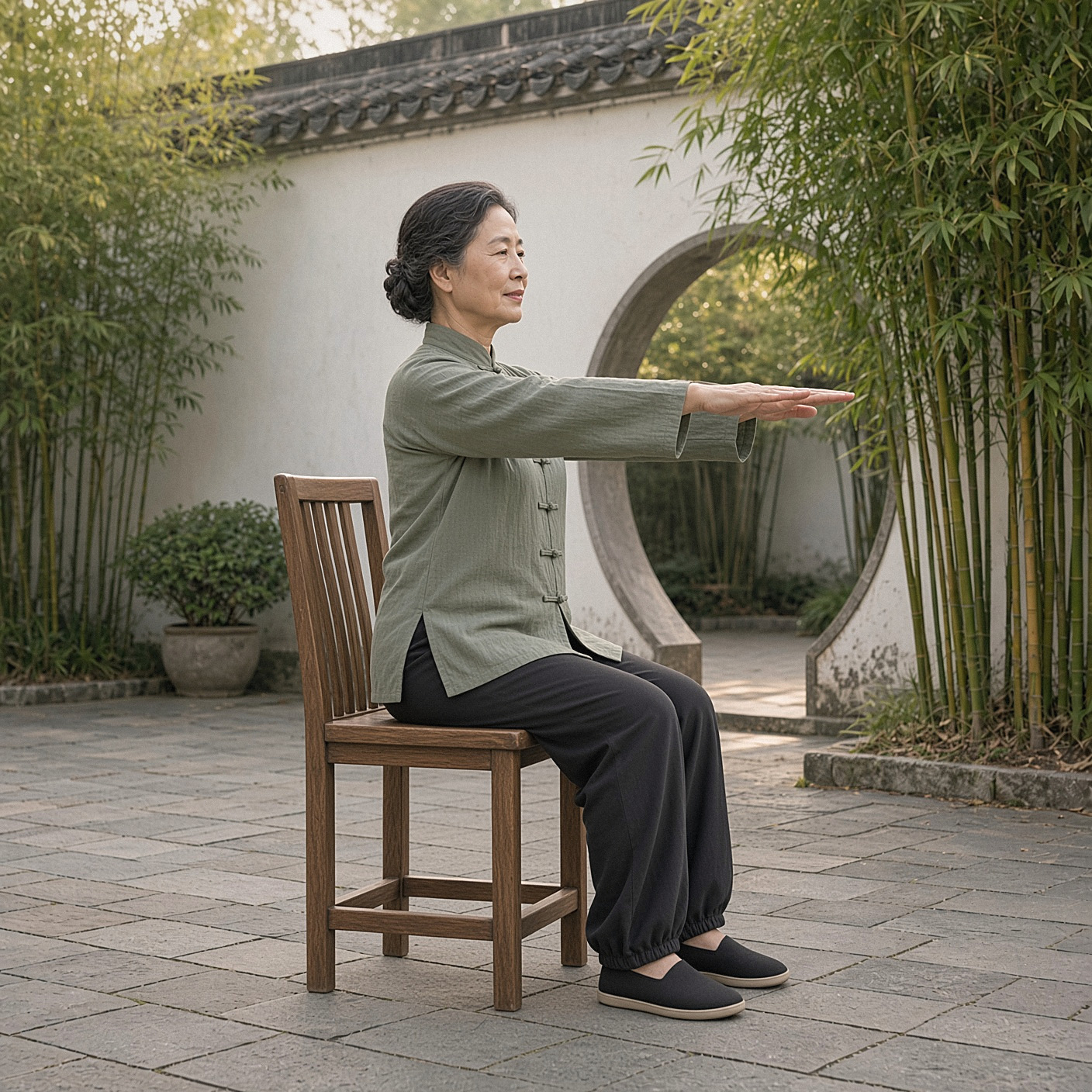
Chair exercise lets you move your whole body without worrying about balance. It is a good place to start if standing for long is hard.
How to do it:
- Sit near the front of a sturdy chair without wheels, feet flat on the floor.
- Sit tall and keep your back away from the backrest.
- Move your arms, legs and upper body through slow, comfortable ranges.
Make it easier: Keep the movements small and rest between each one.
How much: 10 to 15 minutes.
Try our full chair tai chi routine.
4. Stretching
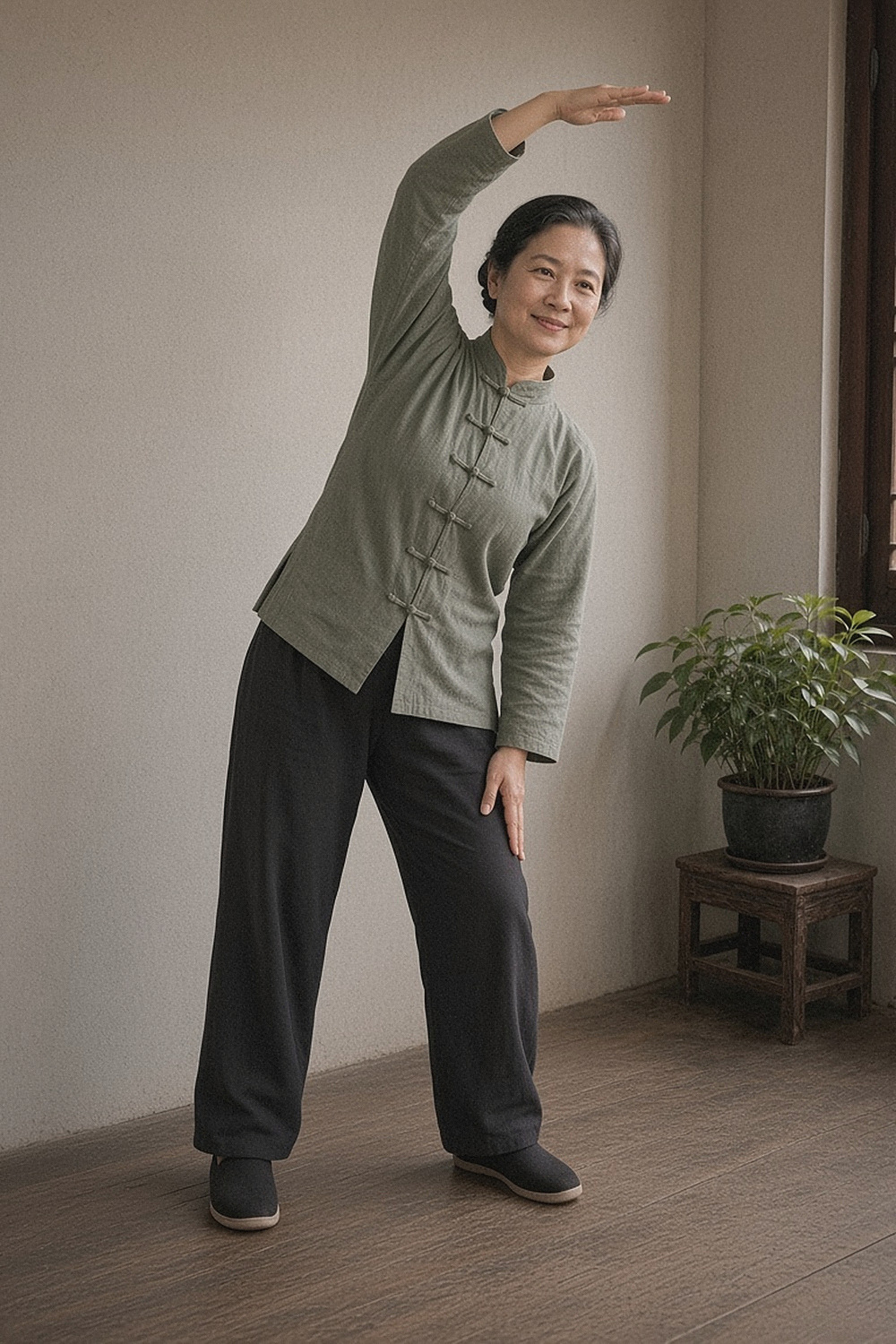
Stretching helps you keep the range of movement you need for everyday jobs like reaching a shelf, turning to look behind you or putting on shoes.
How to do it:
- Move into each stretch slowly until you feel a mild pull, not pain.
- Hold for 15 to 30 seconds and keep breathing.
- Come out of the stretch slowly and repeat on the other side.
Make it easier: Do stretches seated, or hold onto a chair while you stretch standing.
How much: 5 to 10 minutes most days.
5. Balance
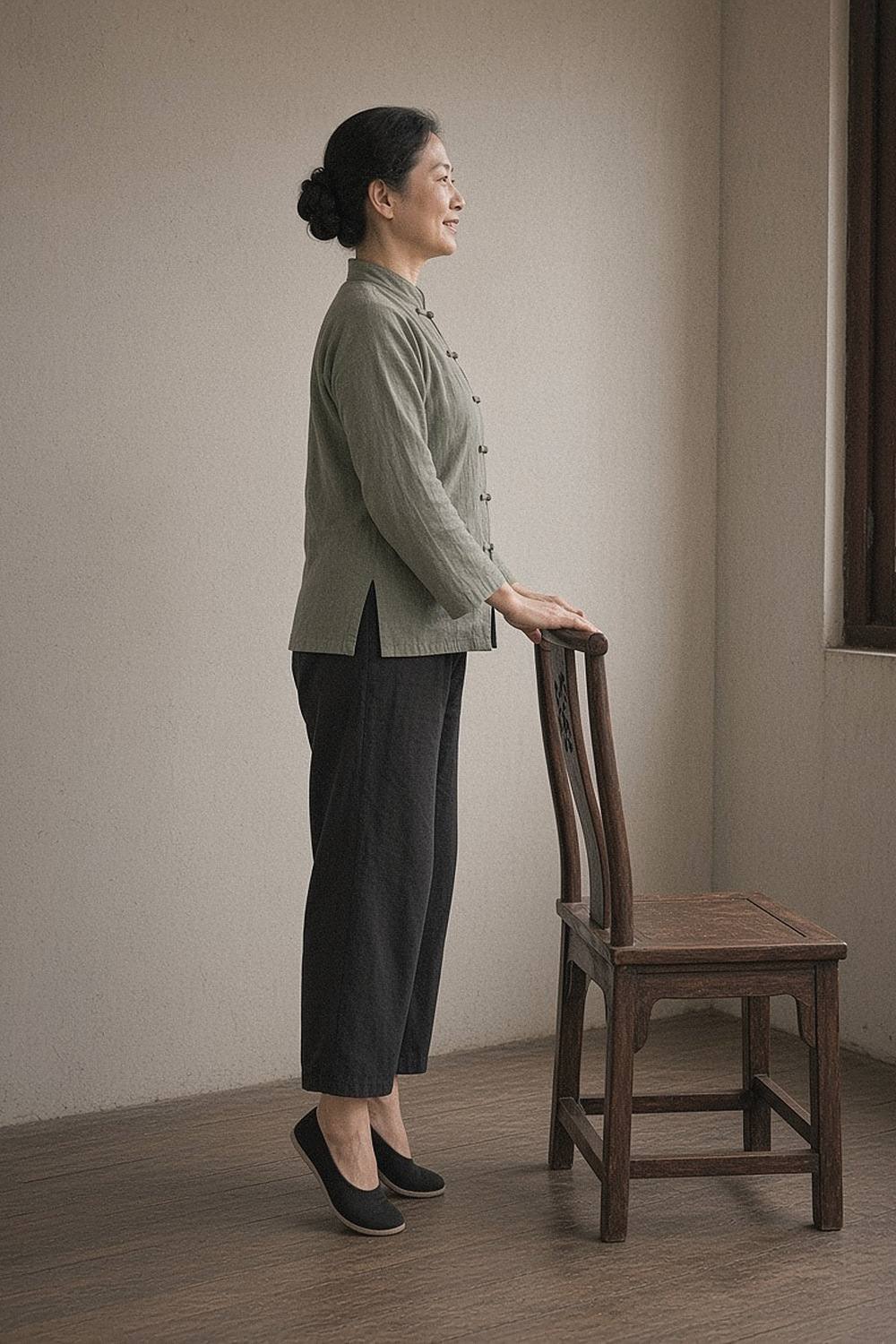
Balance tends to slip with age if we do not practice it. Simple moves like heel raises, standing on one leg near a chair and heel to toe walking can help you feel steadier on your feet.
How to do it:
- Stand beside or behind a sturdy chair and hold the back with one or both hands.
- Slowly rise up onto the balls of your feet.
- Hold for a second, then lower your heels slowly.
Make it easier: Hold the chair firmly and lift your heels only a little.
How much: About 3 times a week.
6. Posture
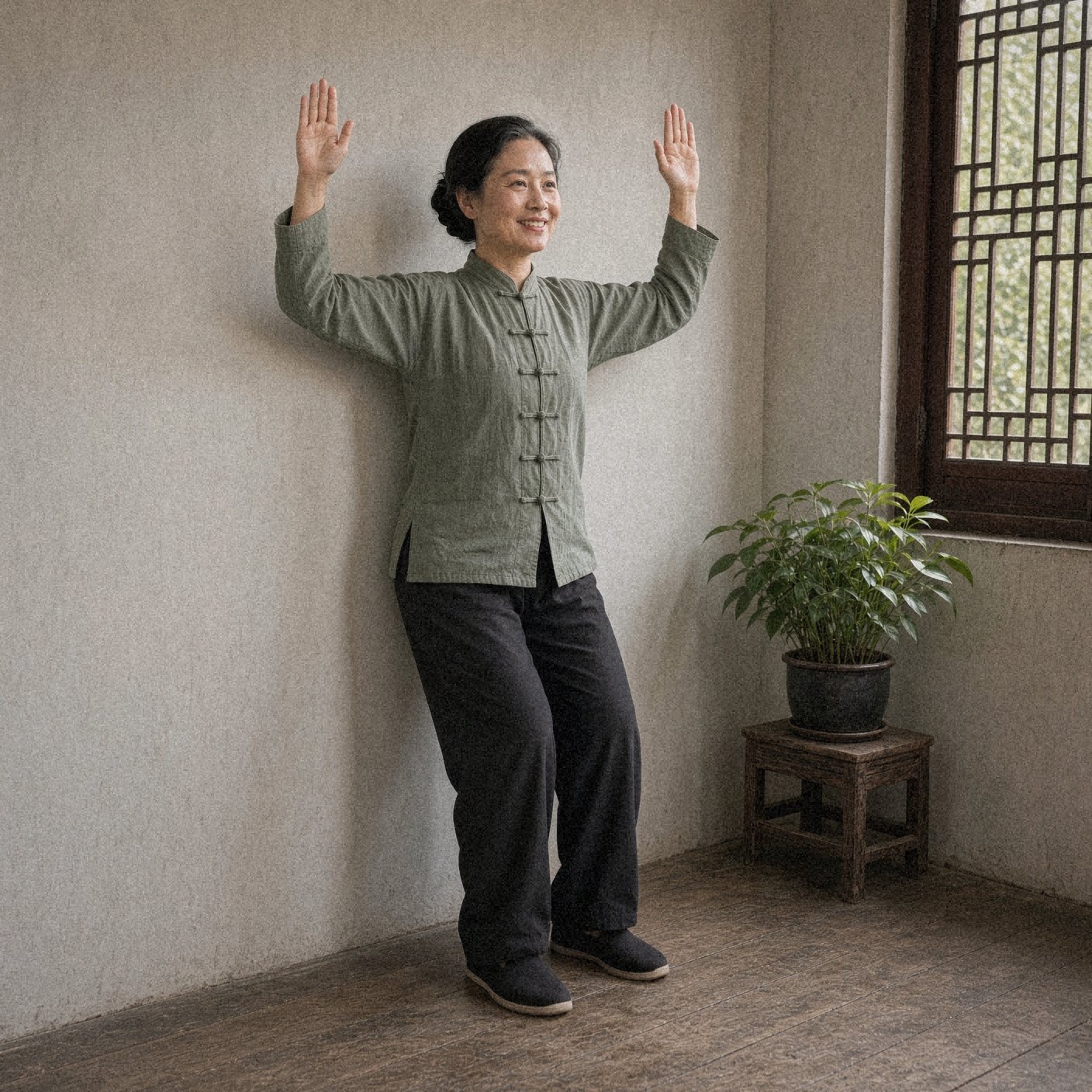
Many of us spend the day leaning forward over phones, books and tables. Short daily posture moves open the chest and wake up the muscles of the upper back.
How to do it:
- Stand with your back against a wall and your feet a little way out.
- Bring your arms up beside you with bent elbows, as close to the wall as feels comfortable.
- Slide your arms slowly up and down.
Make it easier: Slide only a short way, or do it sitting with your back against a wall.
How much: 5 minutes a day.
More moves: posture exercises and neck hump exercises.
7. Light Strength
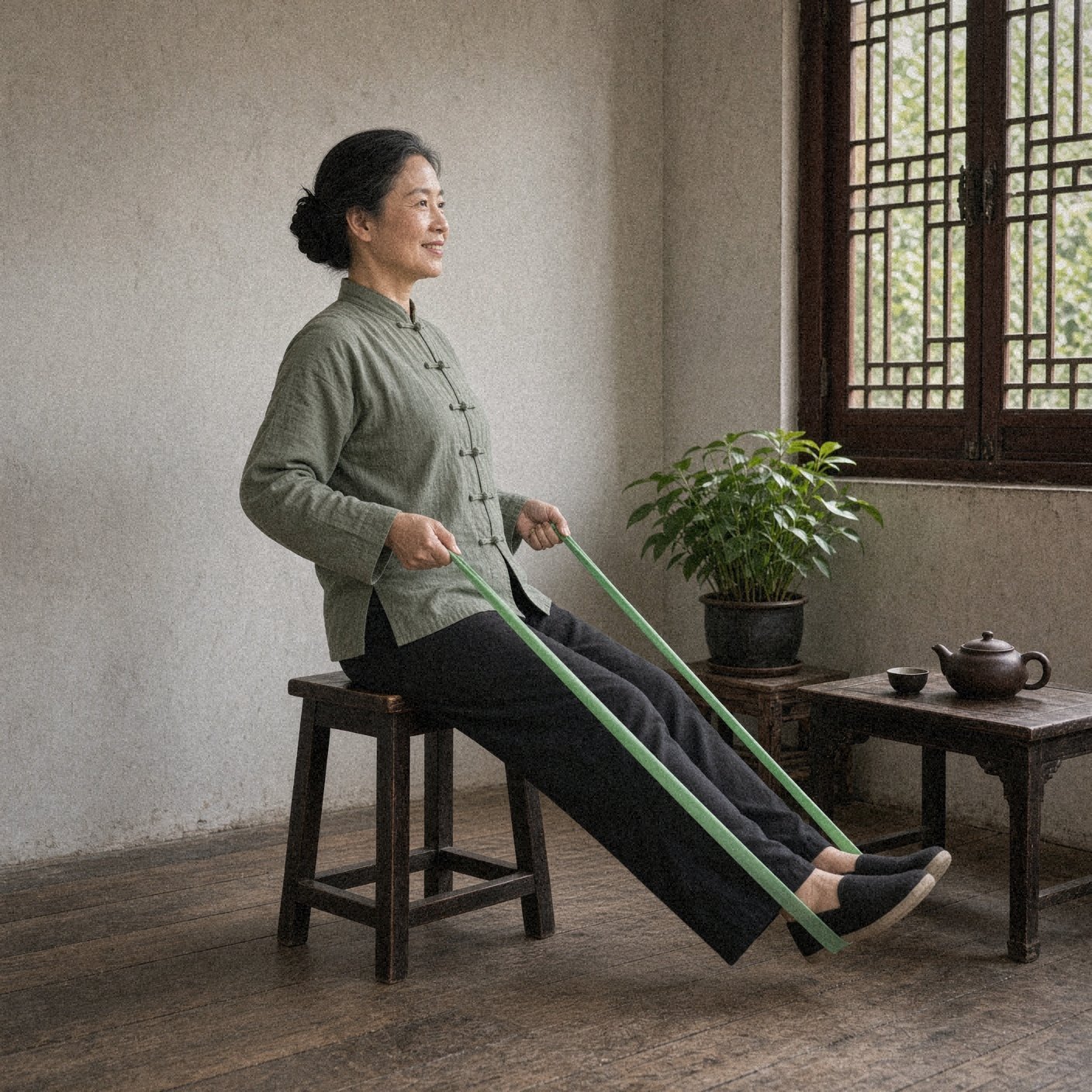
Strength work helps with everyday tasks like carrying shopping, climbing stairs and getting up from a chair. Sit to stand from a chair, wall push ups and band rows are good first moves.
How to do it:
- Choose a light resistance band, light hand weights or just your body weight.
- Do 8 to 12 slow repeats of each move.
- Rest for a minute and do a second round if it feels easy.
Make it easier: Use no band or weight at all and focus on slow, controlled movement.
How much: 2 days a week.
Which type of gentle exercise should you start with?
Pick one or two types that fit how you feel today. You can add the others later.
| If this sounds like you | Start with |
|---|---|
| You want something easy to start today | Walking or chair exercise |
| You feel unsteady on your feet | Balance moves at a chair, then tai chi |
| You feel stiff in the morning | Stretching |
| You spend a lot of time sitting or on a phone | Posture moves |
| You want everyday jobs to feel easier | Light strength |
| You want to feel calmer | Tai chi or slow walking |
| Standing for long is hard | Chair exercise |
Your first week plan
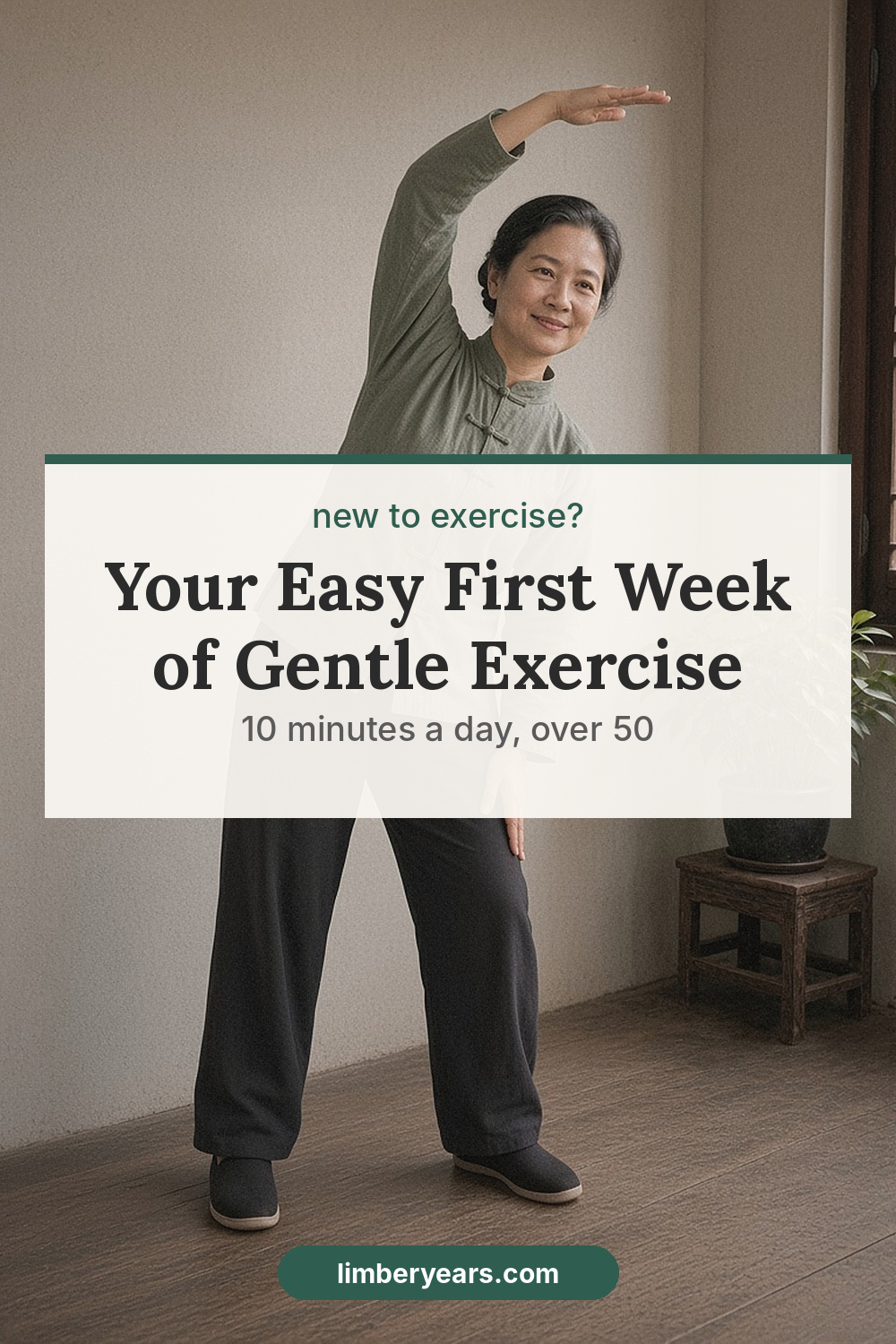
This plan mixes the types so you try a little of each. Keep every session short and easy. If a day feels like too much, do half.
| Day | What to do |
|---|---|
| Day 1 | 10 minute easy walk, then 5 minutes of stretching. |
| Day 2 | 10 minutes of chair exercise and balance moves at a chair. |
| Day 3 | Rest, or a slow 10 minute walk. |
| Day 4 | 10 minutes of tai chi and 5 minutes of posture moves. |
| Day 5 | Light strength: sit to stand and wall push ups, 2 rounds. Then stretch. |
| Day 6 | 15 minute walk at a pace where you can still talk. |
| Day 7 | Rest. Notice how your body feels and pick your favorite type for next week. |
When to check with your doctor
Gentle exercise is safe for most people, but check with your doctor first if any of these apply to you:
- You have not exercised for some time.
- You have a heart or lung condition, high blood pressure or diabetes.
- You have had a recent fall, injury or operation.
- You have joint pain, osteoporosis or a back problem.
- You get chest pain, dizziness or unusual breathlessness when you move.
Frequently asked questions
What is the best gentle exercise for seniors?
The best one is the one you will keep doing. Walking is the easiest to start, tai chi is great for balance, and chair exercise works well if standing is hard. A mix of types over the week works best.
How do I start exercising at 60 or 70 if I have never exercised?
Start with 5 to 10 minutes a day of walking or chair exercise and add a little each week. Check with your doctor first if you have health conditions. The NHS advises you to speak to a GP first if you have not exercised for some time.
Can gentle exercise really make a difference?
Many people find that regular gentle movement helps them feel looser, steadier and more energetic. Results vary from person to person, and the key is doing a little often.
Is walking enough exercise for seniors?
Walking is a great base, but the CDC guidelines also include muscle strengthening and balance activities for older adults. Add 2 short strength sessions and some balance practice to your week.
What exercises should seniors avoid?
Avoid anything that hurts, makes you dizzy or feels unsafe. Many people over 50 do better without high impact jumping, heavy lifting or deep twisting at first. If you have osteoporosis or a back condition, ask your doctor which moves are right for you.
How often should I do gentle exercise?
Aim to move a little on most days. Short sessions of 10 minutes count, and you can split your activity through the day.
Keep going
Start with the type that appeals to you most. For a calm full body routine, try our tai chi for beginners guide. If standing is hard, our chair tai chi routine is done fully seated. For a stiff upper back, see our posture exercises and neck hump exercises. For posture, also see posture exercises for seniors.

Written by June Ashby
June writes the Limber Years guides to posture, tai chi, mobility and gentle strength for people over 50. She keeps every routine short, gentle and easy to follow at home. June is not a doctor or physical therapist, so please check with yours before starting something new. More about Limber Years
Sources
- CDC: Physical activity guidelines for older adults
- National Institute on Aging (NIA): Four types of exercise that can improve your health and physical ability
- NHS: Physical activity guidelines for older adults
This article is general information, not medical advice. Read our full disclaimer.