Chair tai chi is tai chi done sitting down. You keep the slow, flowing arm and body moves, but your legs rest on the floor and your chair holds you steady. That makes it a good place to start if standing for long is hard, if your balance is not great, or if you simply want a calm few minutes in the middle of the day.
Tai chi is well studied. The US National Center for Complementary and Integrative Health (NCCIH) reports that tai chi may reduce the rate of falls in older people, and it can help with balance and leg strength. A seated version lets you start gently and build confidence before you try standing moves.
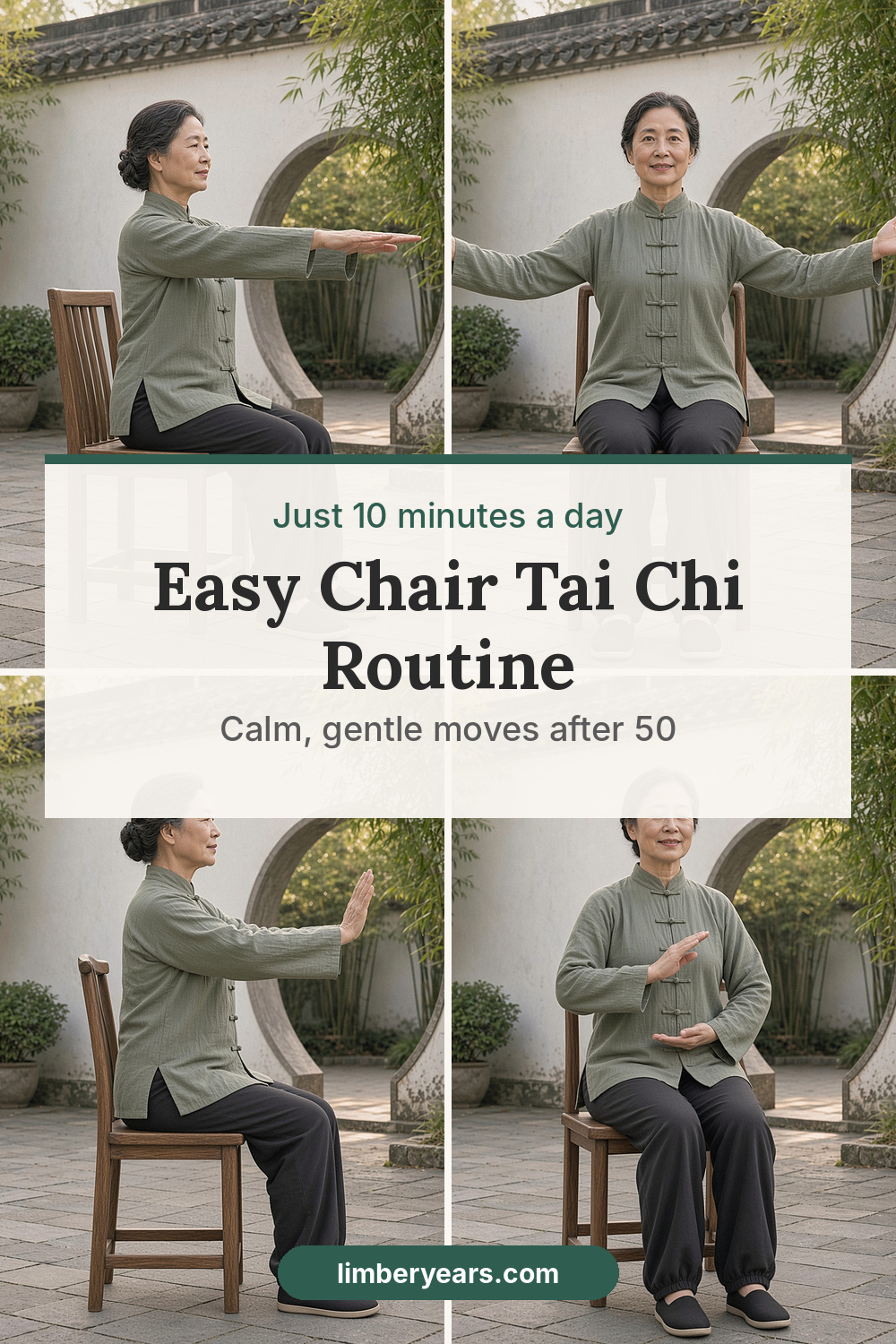
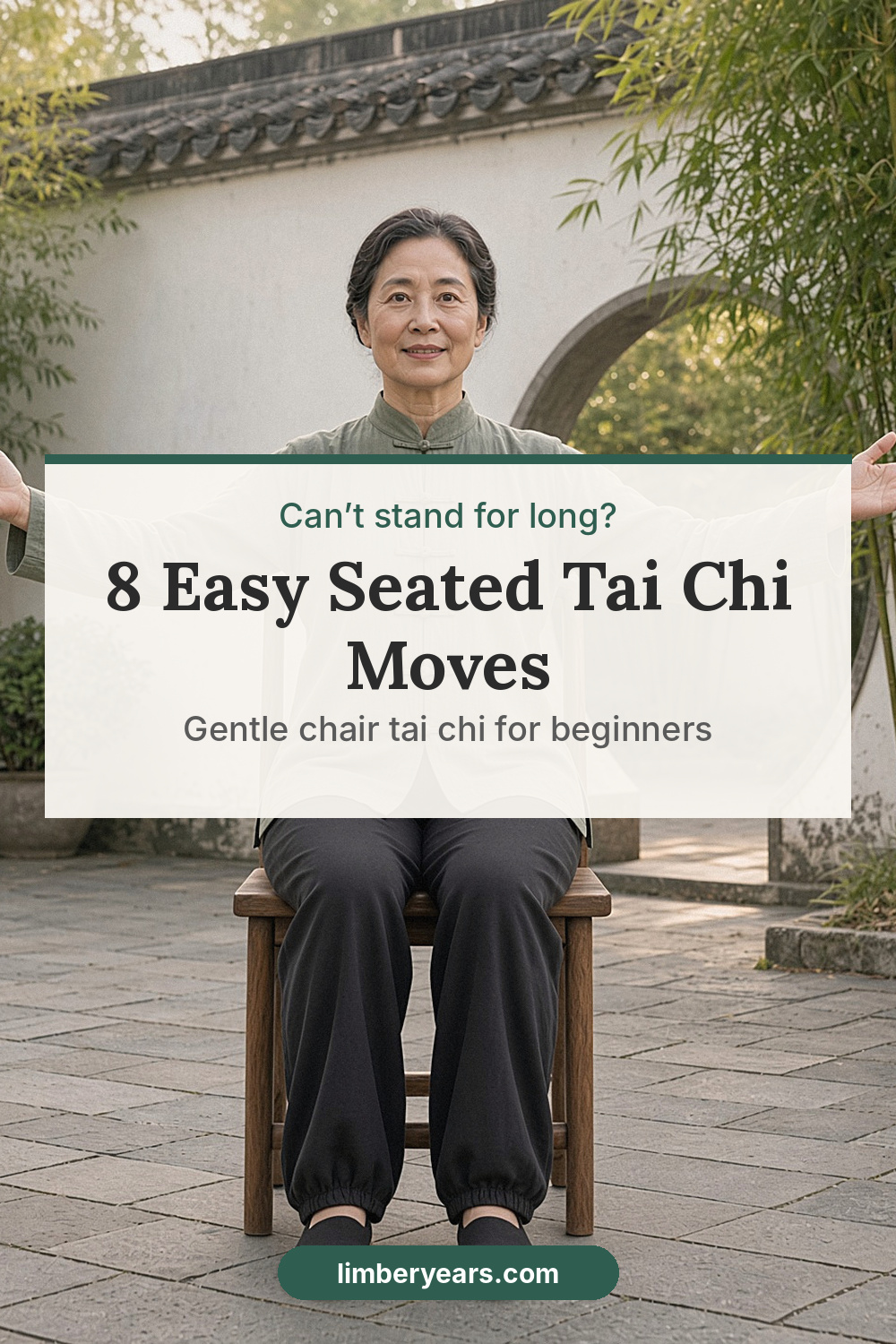
This guide gives you 8 easy chair tai chi moves, each with a photo, simple steps and an easier option. At the end you will find a 10 minute routine and a 4 week plan.
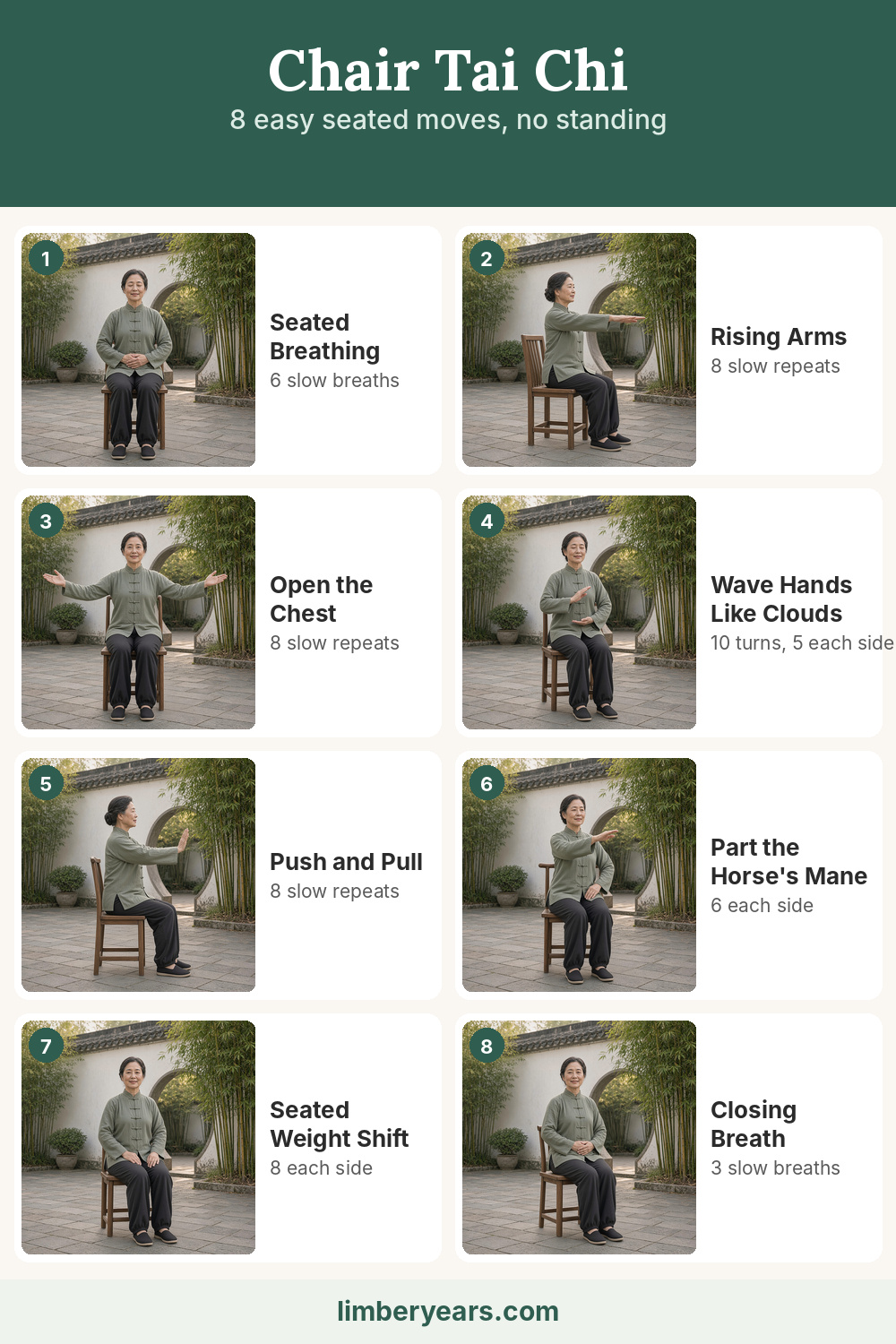
Save this chart to Pinterest or print it out and keep it near your favorite chair. Photos on this site are made with AI to show each move clearly.
Key takeaways
- Chair tai chi uses slow, flowing movements while you sit, so there is no risk of falling.
- Sit tall near the front of a sturdy chair, with both feet flat on the floor.
- Move slowly and breathe naturally. Stop if anything hurts.
- A few minutes most days works better than one long session.
Before you start
- Choose a sturdy chair without wheels. A kitchen or dining chair is ideal.
- Sit near the front of the seat with your back tall but not stiff. Your feet should be flat on the floor, about hip width apart.
- Leave room on both sides so your arms can move freely.
- Wear comfortable clothes and flat shoes, or go barefoot on a non slip floor.
- Breathe slowly and naturally. Do not hold your breath.
The 8 chair tai chi moves at a glance
| # | Exercise | Works on | How much |
|---|---|---|---|
| 1 | Seated Breathing | Calm and posture | 6 slow breaths |
| 2 | Rising Arms | Shoulders | 8 slow repeats |
| 3 | Open the Chest | Upper back and chest | 8 slow repeats |
| 4 | Wave Hands Like Clouds | Waist and arms | 10 turns, 5 each side |
| 5 | Push and Pull | Arms and upper body | 8 slow repeats |
| 6 | Part the Horse’s Mane | Shoulders and waist | 6 each side |
| 7 | Seated Weight Shift | Hips and core | 8 each side |
| 8 | Closing Breath | Calm | 3 slow breaths |
1. Seated Breathing
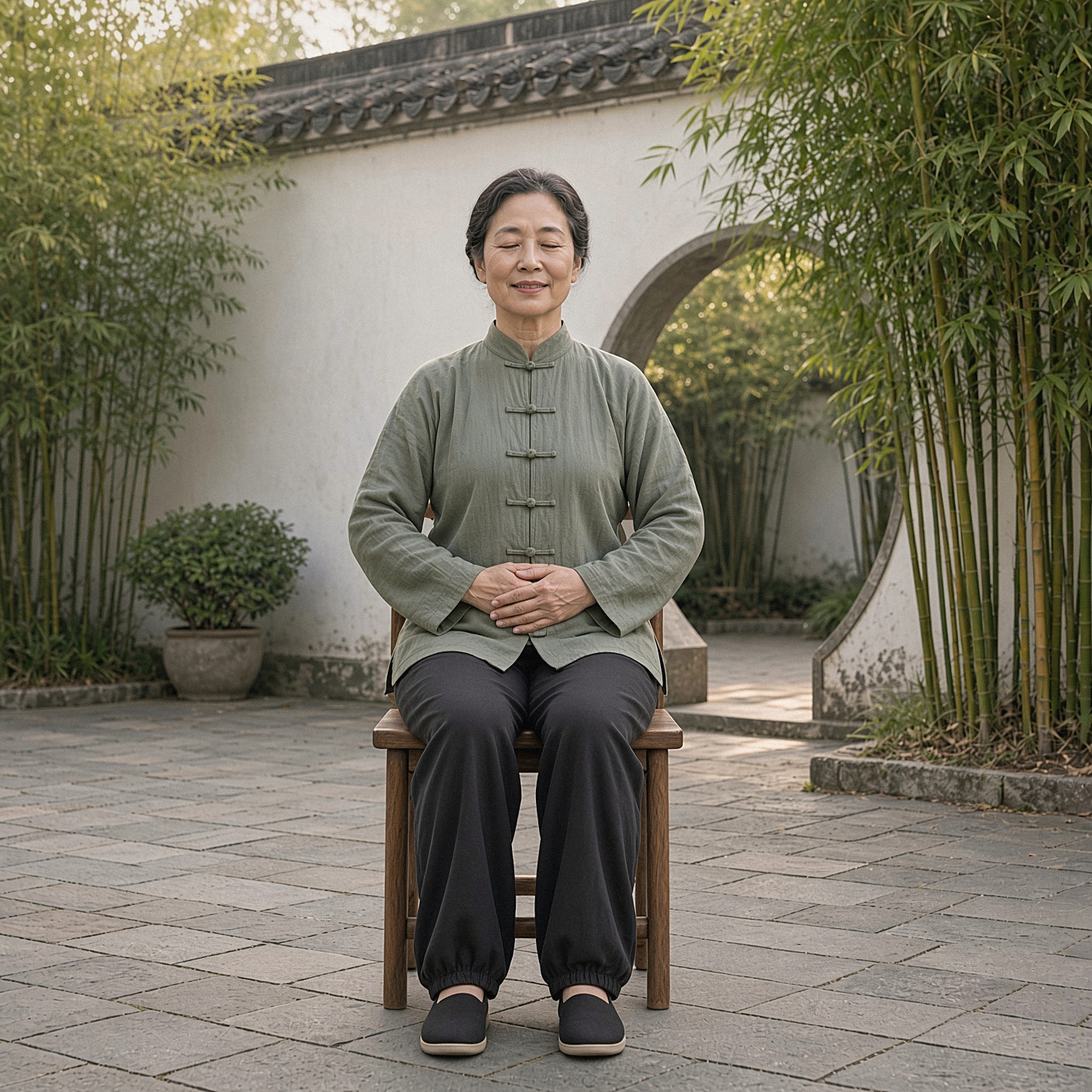
Every tai chi session starts with calm breathing. It settles your mind and sets a slow pace for the moves that follow.
How to do it:
- Sit tall near the front of the chair with your feet flat on the floor.
- Rest both hands on your lower belly.
- Breathe in slowly through your nose, feeling your belly rise, then breathe out softly.
Make it easier: Rest your hands on your thighs if holding them on your belly feels tiring.
How much: 6 slow breaths.
2. Rising Arms
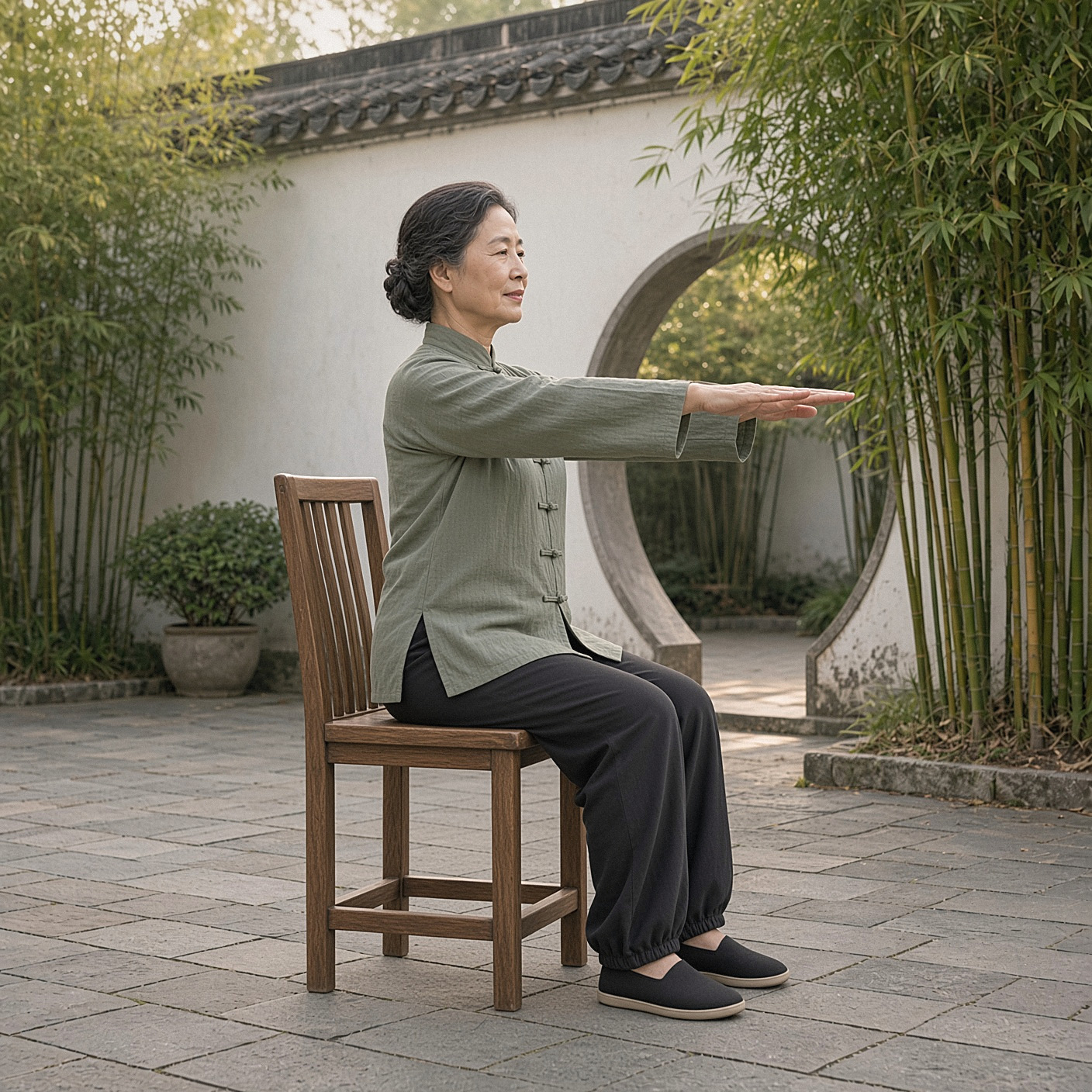
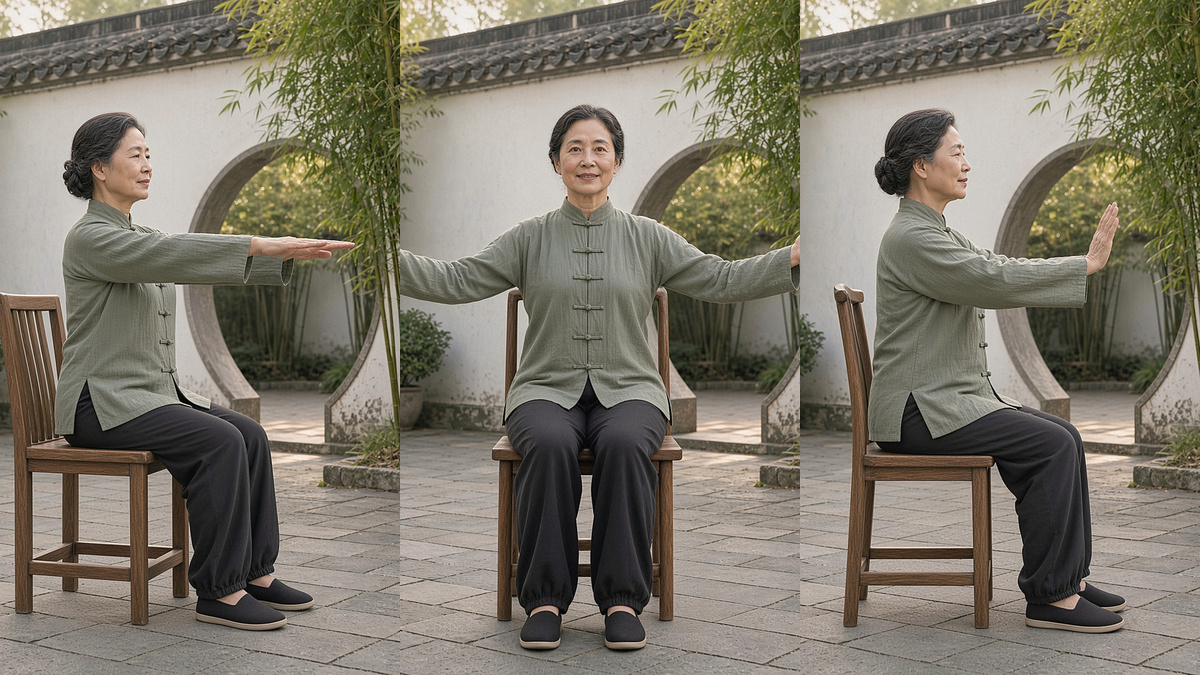
This is the opening move of many tai chi forms. It gently warms up your shoulders and teaches you to link breath and movement.
How to do it:
- Start with your hands resting on your thighs.
- Breathe in as your arms float up in front of you to shoulder height, palms facing down.
- Breathe out as your arms sink slowly back to your thighs.
Make it easier: Lift your arms only to chest height.
How much: 8 slow repeats.
3. Open the Chest
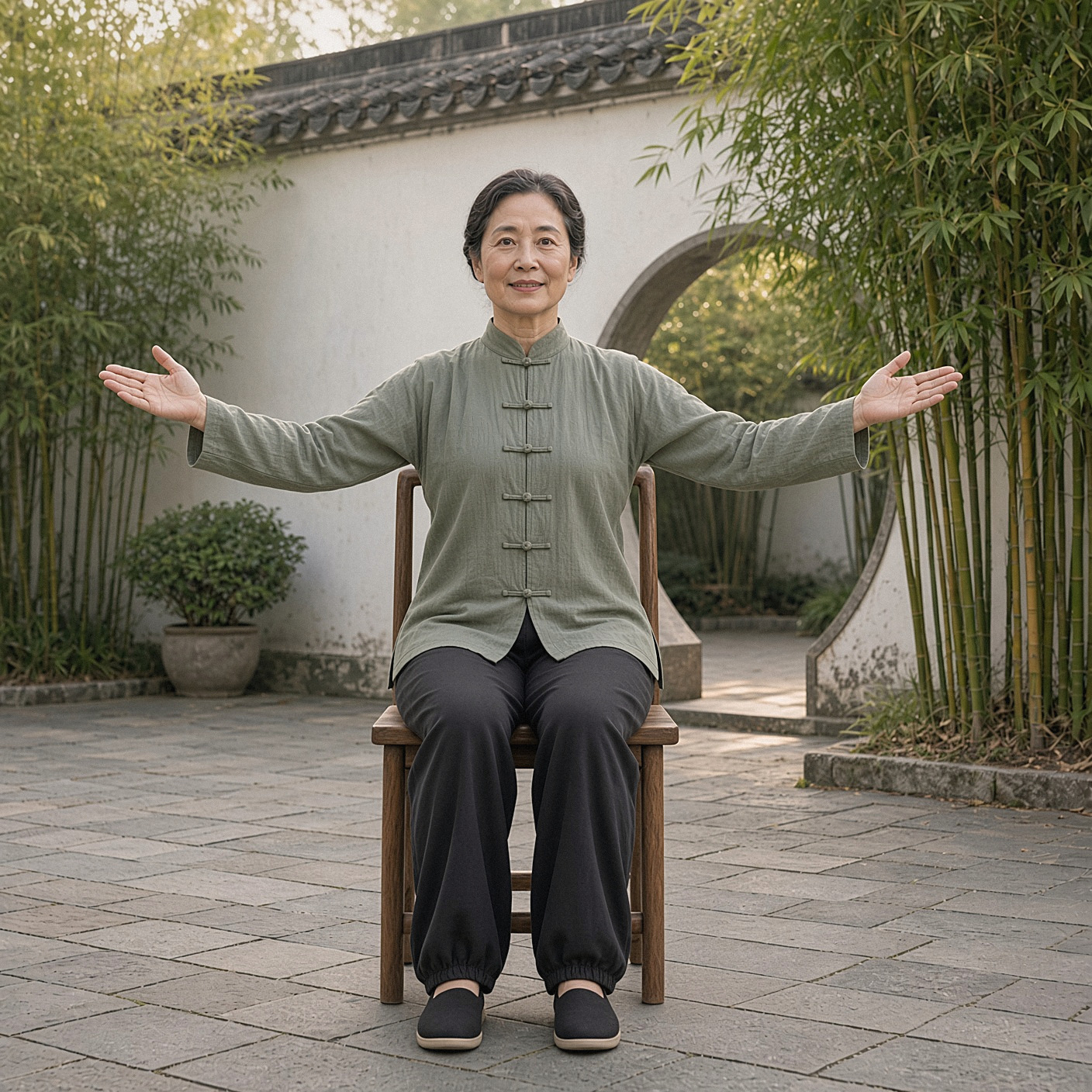
Many of us round our shoulders from sitting. This move opens the chest and helps you sit taller.
How to do it:
- Hold your hands in front of your chest as if holding a large ball.
- Slowly open your arms out to the sides as you breathe in.
- Breathe out and bring your hands back in front of you.
Make it easier: Open your arms only part of the way.
How much: 8 slow repeats.
4. Wave Hands Like Clouds
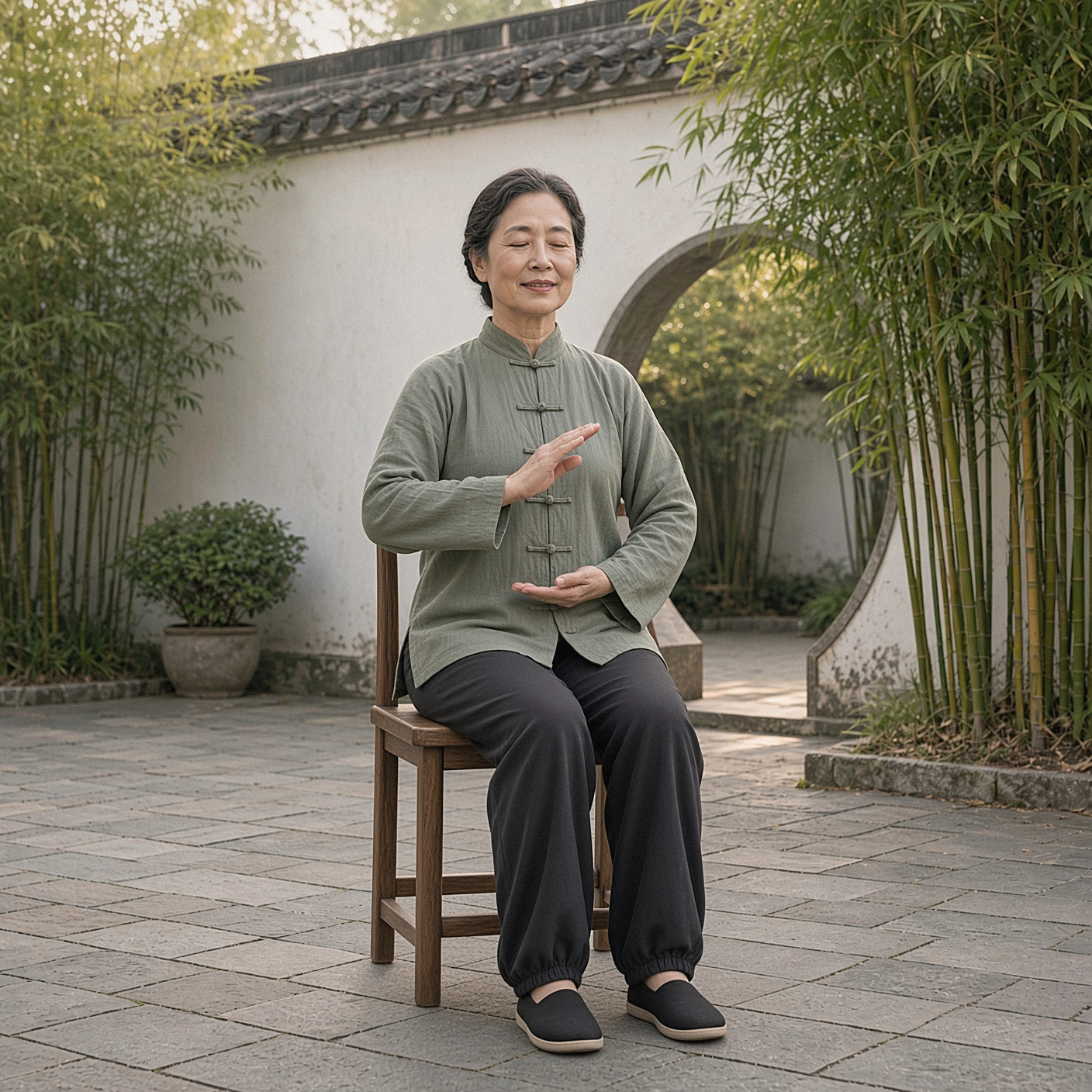
Gentle turning from the waist keeps your spine supple. Keep your hips facing forward on the chair.
How to do it:
- Hold one hand at chest height and the other at belly height, palms facing you.
- Slowly turn your upper body to one side, letting your hands float along with you.
- Switch your hands as you turn to the other side, like clouds drifting past.
Make it easier: Turn only a small amount and keep your hands lower.
How much: 10 turns, 5 each side.
5. Push and Pull
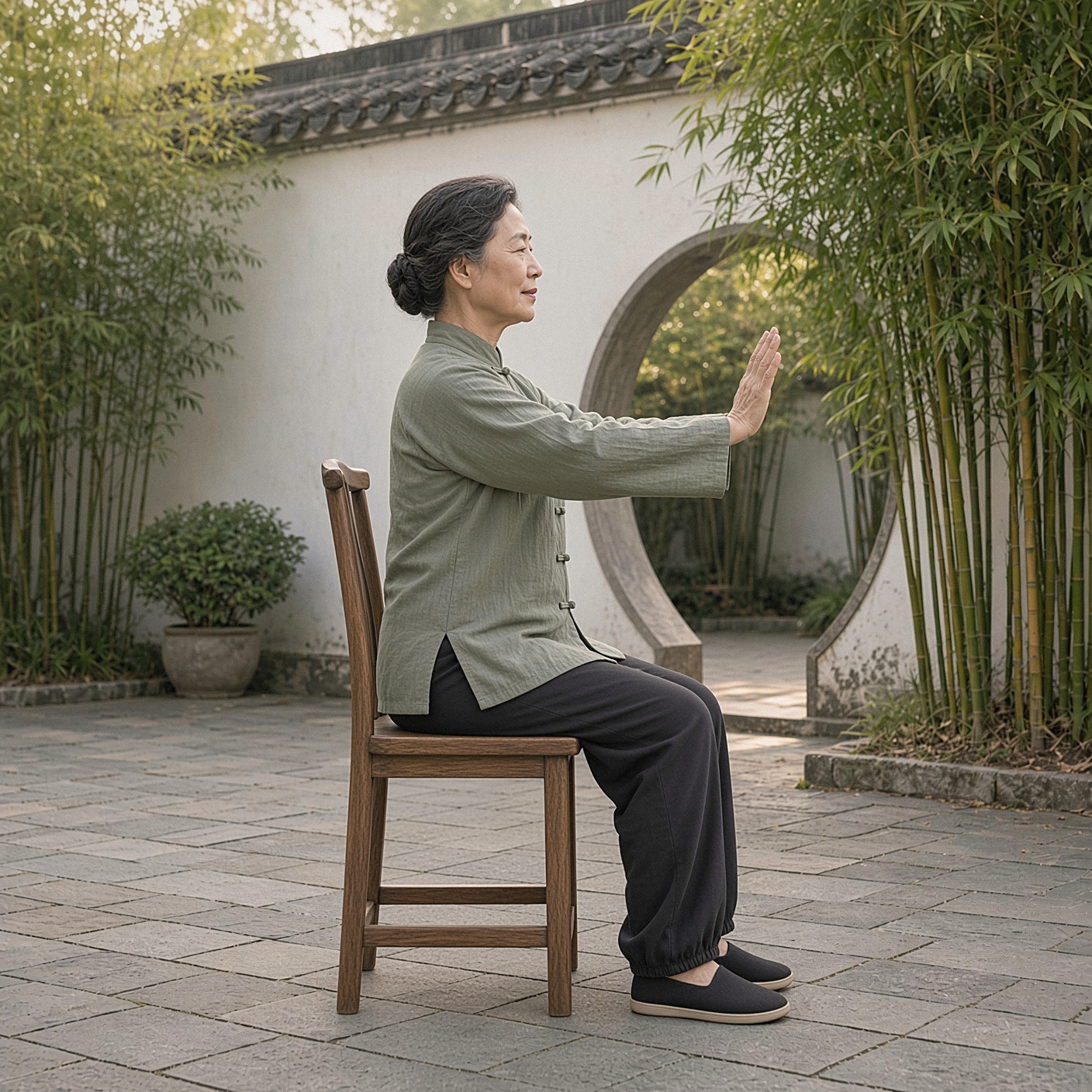
This move works your arms and upper back in a smooth, slow way that is kind to the joints.
How to do it:
- Bring both hands to your chest, palms facing forward.
- Slowly push your palms forward as you breathe out.
- Breathe in as you draw your hands back toward your chest.
Make it easier: Push only halfway and keep your elbows bent.
How much: 8 slow repeats.
6. Part the Horse’s Mane
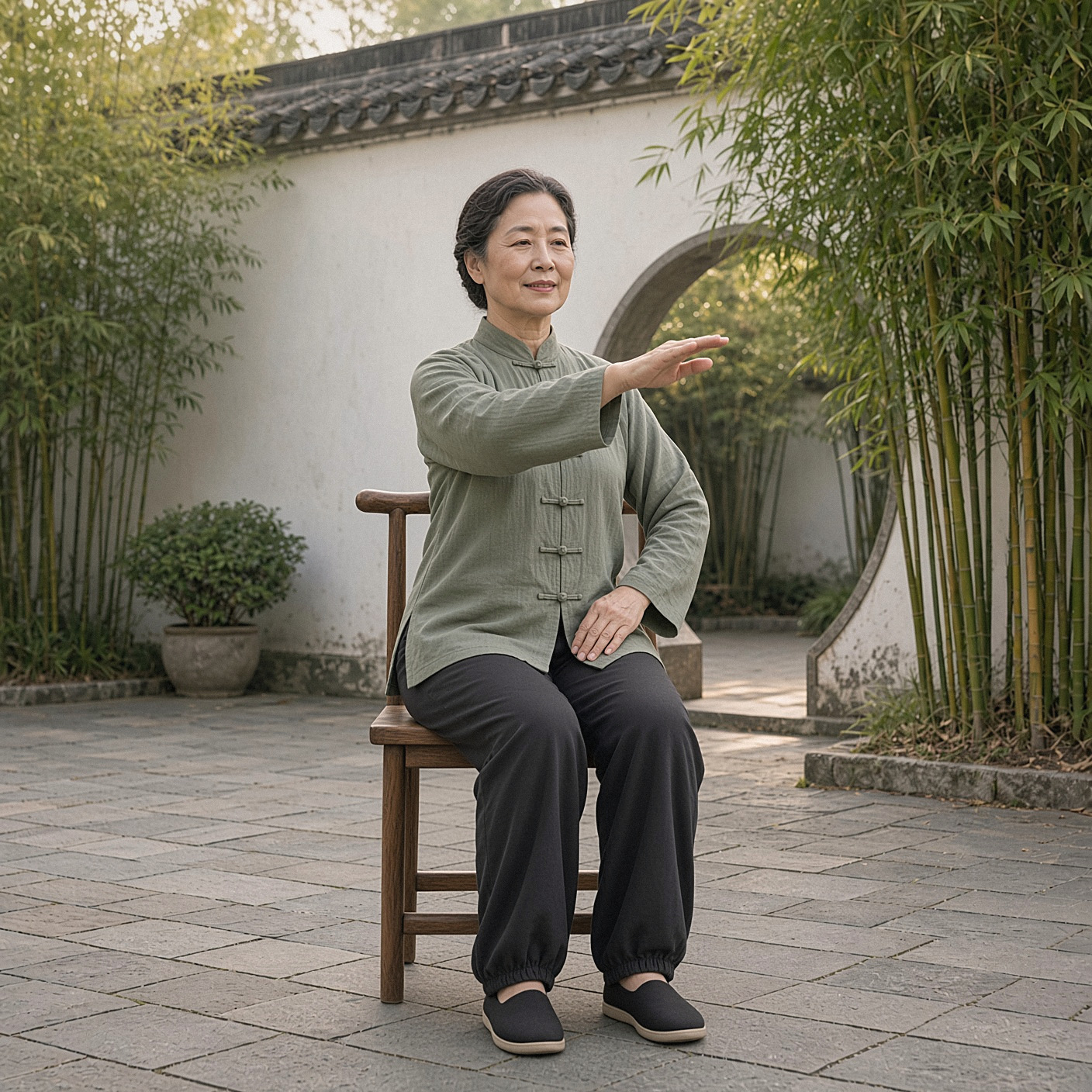
Seated, this classic move keeps the lovely flowing feel of tai chi while your chair keeps you steady.
How to do it:
- Turn your upper body slightly to one side.
- Float one hand forward and up to chest height while the other hand presses gently down by your hip.
- Return to the centre and repeat on the other side.
Make it easier: Keep your arm movements small and your turn gentle.
How much: 6 each side.
7. Seated Weight Shift
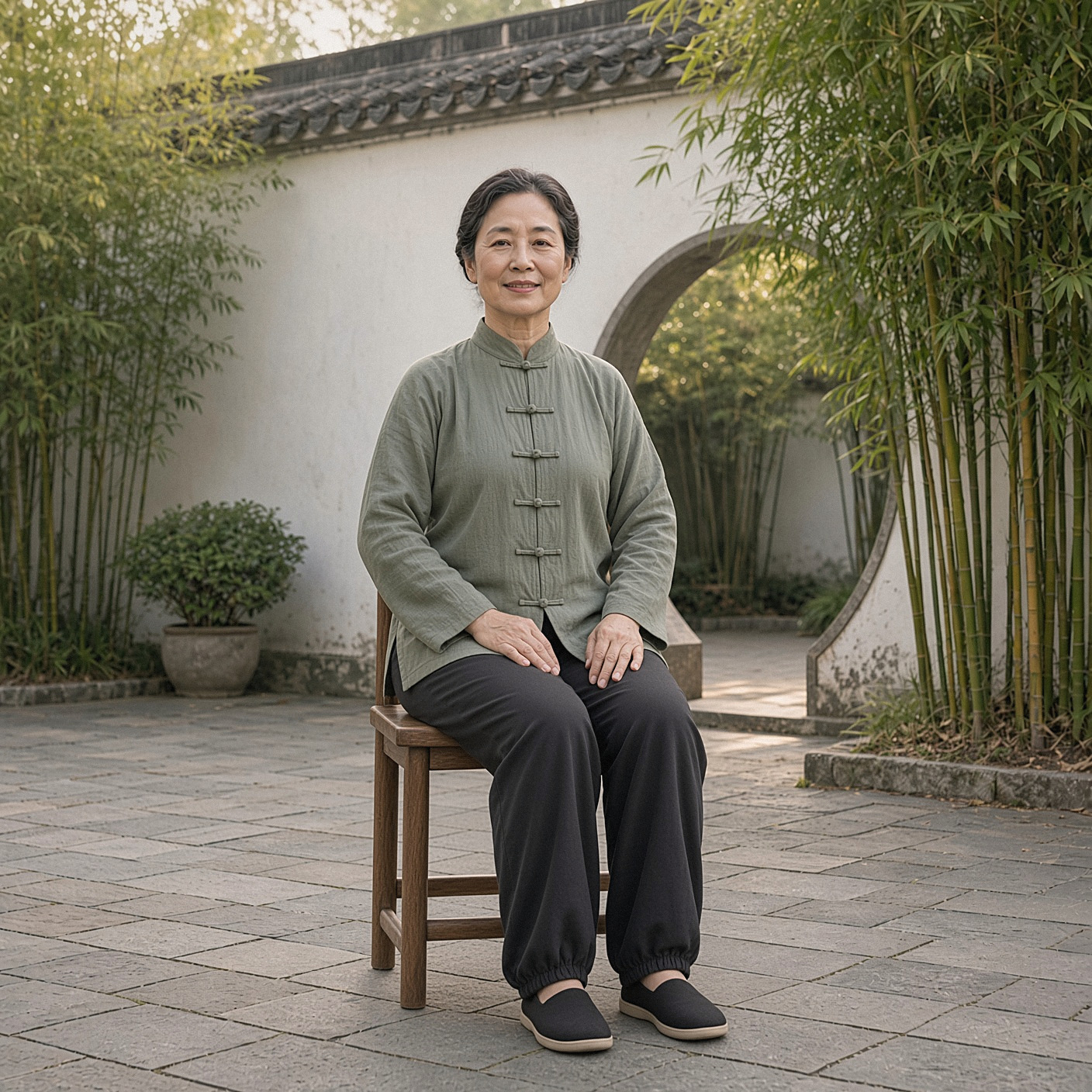
Shifting weight is the heart of tai chi. Practising it seated trains the same muscles you use when you stand and walk.
How to do it:
- Sit tall with your hands on your thighs.
- Slowly shift your weight onto your right sitting bone, keeping your back straight.
- Come back to the centre and shift to the left.
Make it easier: Make the shift very small, like a gentle sway.
How much: 8 each side.
8. Closing Breath
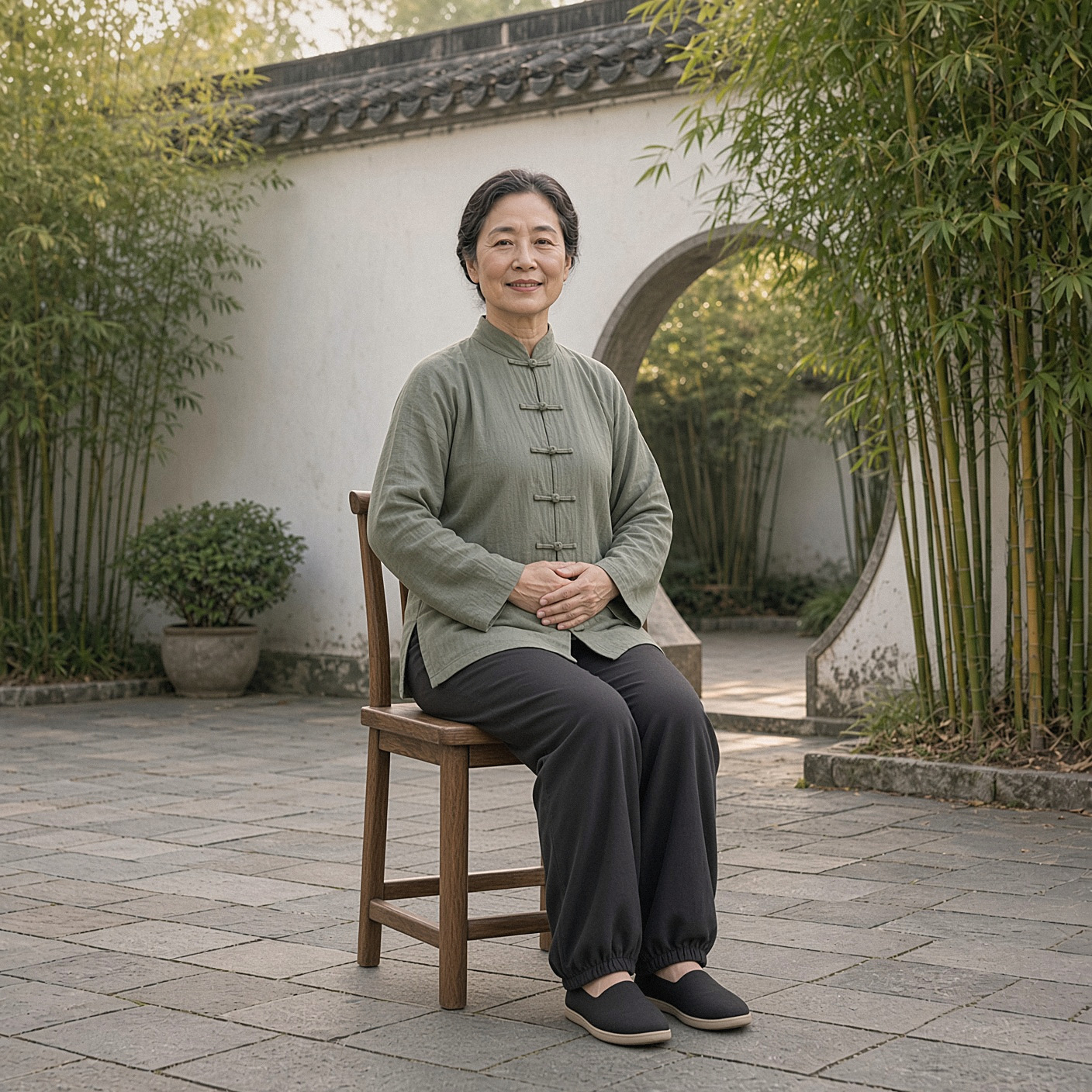
A calm finish helps your body settle and leaves you feeling relaxed and ready for the rest of your day.
How to do it:
- Sit tall and bring both hands to your lower belly.
- Breathe in slowly and let your shoulders drop as you breathe out.
- Sit quietly for a moment before you get up.
Make it easier: Rest your hands on your thighs instead.
How much: 3 slow breaths.
A simple 10 minute chair tai chi routine
Once you know the moves, put them together in this order. Sit on a sturdy chair without wheels or arms, and take your time.
| Step | Exercise | Amount |
|---|---|---|
| 1 | Seated Breathing | 6 breaths |
| 2 | Rising Arms | 8 repeats |
| 3 | Open the Chest | 8 repeats |
| 4 | Wave Hands Like Clouds | 10 turns |
| 5 | Push and Pull | 8 repeats |
| 6 | Part the Horse’s Mane | 6 each side |
| 7 | Seated Weight Shift | 8 each side |
| 8 | Closing Breath | 3 breaths |
Your 4 week plan
Chair tai chi is easy on the body, so you can do a little most days. Build up slowly over four weeks.
| Week | What to do |
|---|---|
| Week 1 | Seated breathing, rising arms and open the chest, once a day. Go slowly. |
| Week 2 | Add wave hands like clouds and push and pull. Practise on 4 or 5 days. |
| Week 3 | Add part the horse’s mane and the seated weight shift. Try the full 10 minute routine on 3 days. |
| Week 4 | Do the full routine most days. Notice how you feel, and think about trying standing moves next. |
When to check with your doctor
Chair tai chi is gentle, but it is still exercise. Talk to your doctor or a physical therapist first if any of these apply to you:
- You have had a recent surgery, or have a hip, knee or shoulder problem.
- You get dizzy or light headed when you move your head or body.
- You have heart or blood pressure problems and are not sure what exercise is safe.
- You feel pain, chest tightness or shortness of breath. Stop and get help.
Frequently asked questions
What is chair tai chi?
It is tai chi done sitting on a chair. You keep the slow, flowing arm and body movements, but your legs and hips are supported, so it is easy on the joints and safe if standing is hard.
Is chair tai chi good for seniors?
Yes. It is low impact and you can do it at your own pace. NCCIH reports that tai chi may help reduce falls in older people, and a seated version is a gentle way to start.
How long should I do chair tai chi?
Start with 5 minutes and build up to the 10 minute routine above. A few minutes most days is better than one long session.
Do I need special equipment?
No. A sturdy chair without wheels is all you need. Wear comfortable clothes.
Can chair tai chi help my balance?
It can help build the core strength and weight shifting skills that support balance. For more balance practice, try our tai chi walking guide when you feel ready.
Want a one page version? Get our free mini tai chi chart with 5 easy moves and clear photos. Download the free chart.
Keep going
A few minutes in your chair is a good start. When you feel steady, try our 10 easy tai chi moves for beginners standing, or our tai chi walking guide for better balance. For more, see our tai chi moves picture guide, tai chi for balance, tai chi for seniors and tai chi benefits.

Written by June Ashby
June writes the Limber Years guides to posture, tai chi, mobility and gentle strength for people over 50. She keeps every routine short, gentle and easy to follow at home. June is not a doctor or physical therapist, so please check with yours before starting something new. More about Limber Years
Sources
- National Center for Complementary and Integrative Health (NCCIH): Tai Chi: What You Need To Know
- CDC: Physical activity guidelines for older adults
- Harvard Health Publishing: The health benefits of tai chi
This article is general information, not medical advice. Read our full disclaimer.