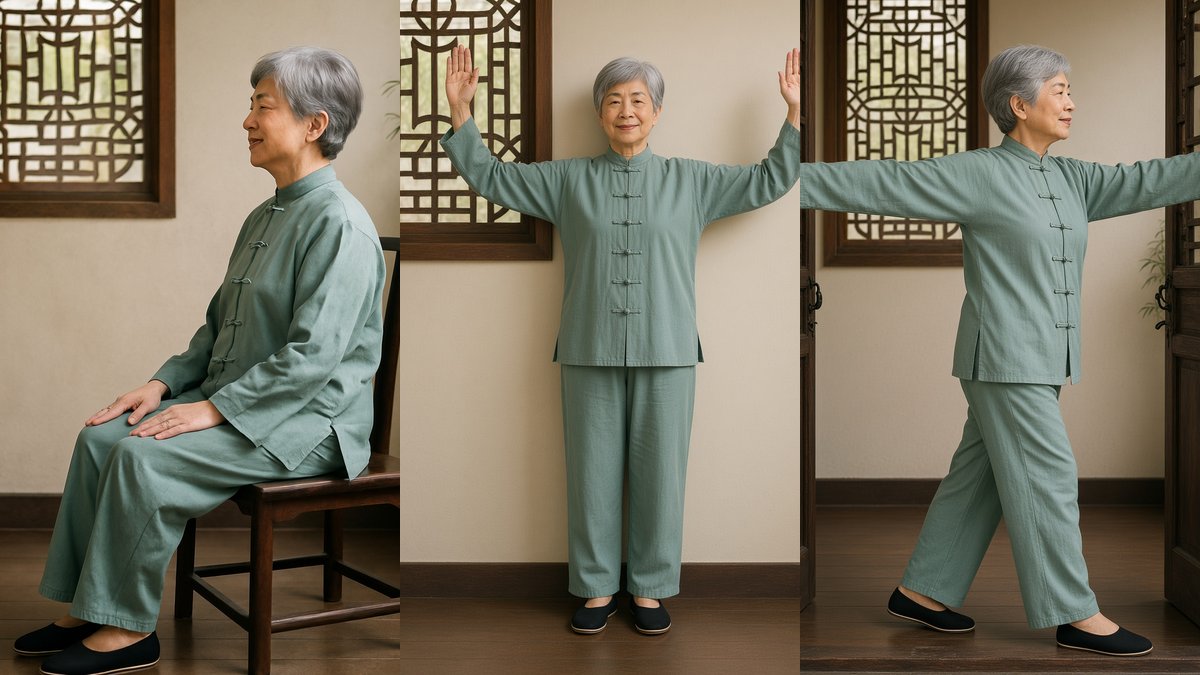
Rounded shoulders and a head that drifts forward are some of the most common posture changes after 50. Hours of sitting, reading, phones and driving all pull the body into the same forward curl, and over time the muscles that hold you upright get weaker.
The good news is that posture responds to gentle, regular practice. Harvard Health points to weak muscles in the upper back, chest and core as a leading reason people slump as they age, and those muscles can be trained at any age.
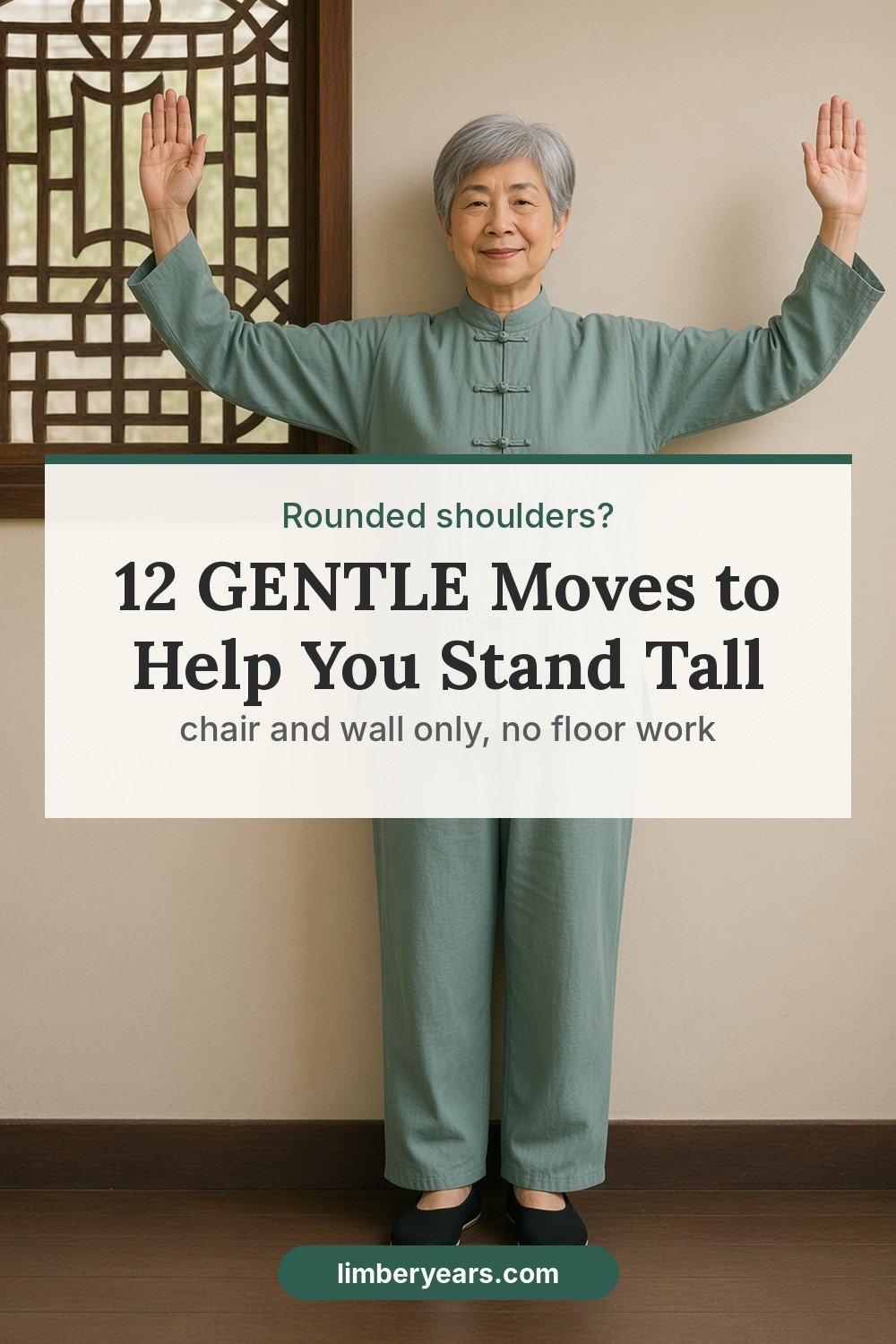
Below are 12 simple posture exercises you can do with a chair, a wall and a door frame. Each one has a photo, clear steps, an easier option and how many to do. At the end you will find a 10 minute routine and a 4 week plan to tie it all together.
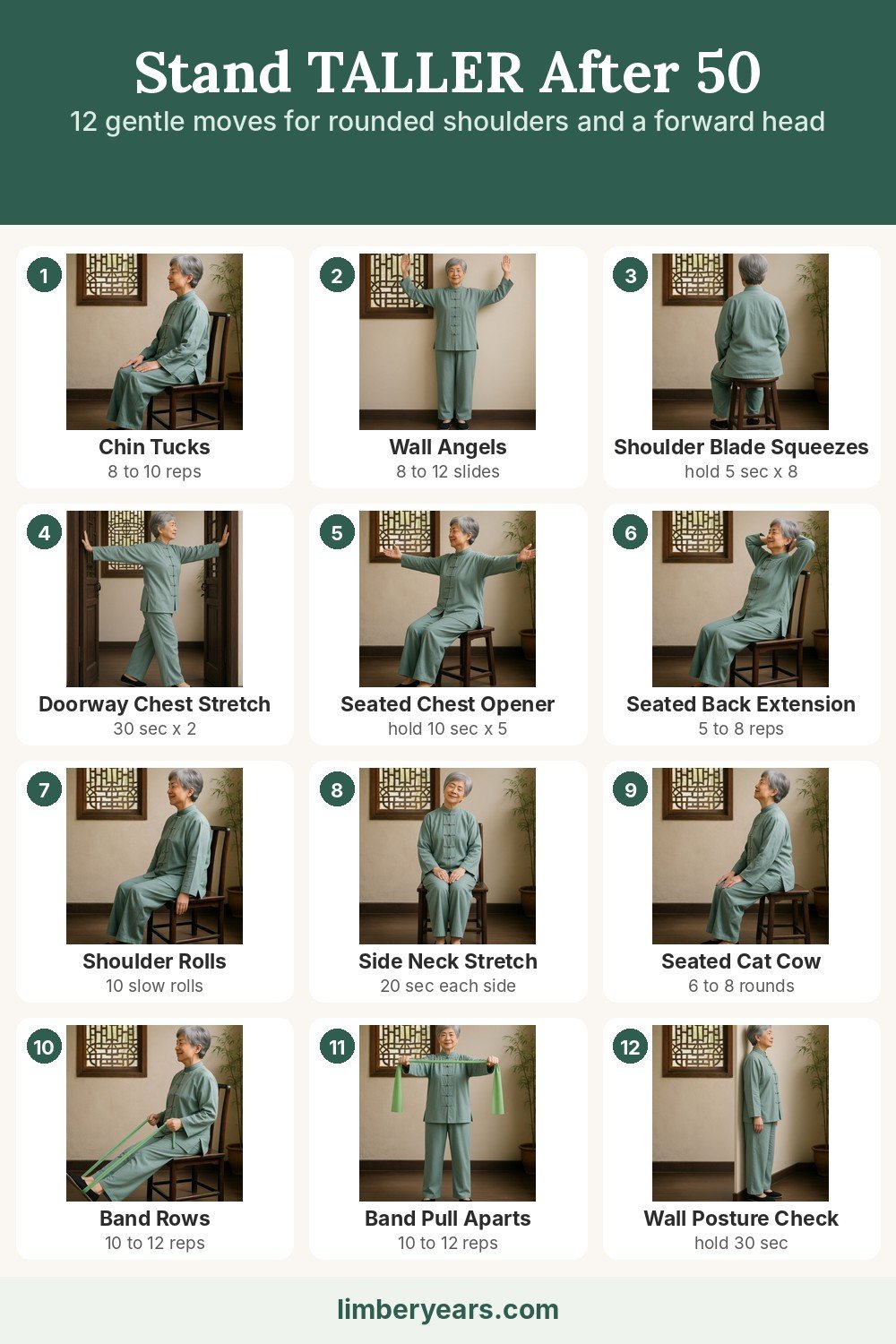
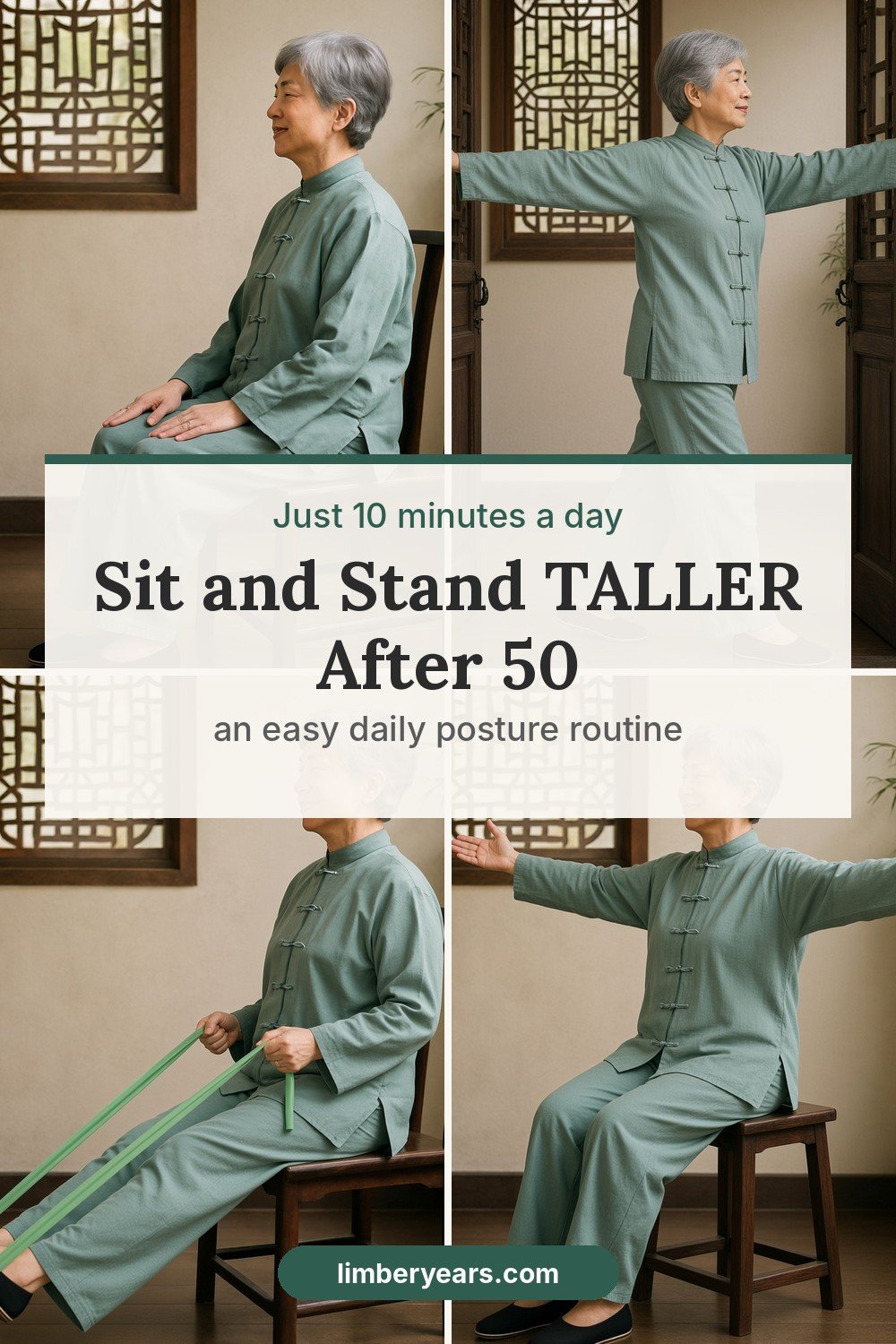
Save this chart to Pinterest or print it out and keep it near your favorite chair.
Key takeaways
- Rounded shoulders and a forward head usually come from weak upper back muscles and a tight chest.
- Gentle daily practice works better than one long session a week.
- All 12 moves can be done with a chair, a wall or a door frame. No floor work needed.
- Start with 2 or 3 moves, go slowly, and stop if anything hurts.
Before you start
- Use a sturdy chair without wheels or arms, and sit with your feet flat on the floor.
- Move slowly and breathe normally. Never hold your breath.
- Stay in a comfortable range. A gentle stretch is fine. Pain is not.
- If you have osteoporosis, a recent injury, a joint replacement or ongoing neck or back pain, check with your doctor or physical therapist first.
The 12 posture exercises at a glance
| # | Exercise | Works on | How much |
|---|---|---|---|
| 1 | Chin Tucks | Neck | 8 to 10 times, once or twice a day |
| 2 | Wall Angels | Upper back | 8 to 12 slow slides |
| 3 | Shoulder Blade Squeezes | Upper back | 8 to 10 squeezes |
| 4 | Doorway Chest Stretch | Chest | 2 to 3 times |
| 5 | Seated Chest Opener | Chest | 5 times |
| 6 | Seated Back Extension | Upper back | 5 to 8 slow reps |
| 7 | Shoulder Rolls | Shoulders | 10 slow rolls |
| 8 | Side Neck Stretch | Neck | 2 times each side |
| 9 | Seated Cat Cow | Spine | 6 to 8 slow rounds |
| 10 | Band Rows | Upper back | 10 to 12 reps, 1 or 2 sets |
| 11 | Band Pull Aparts | Upper back | 10 to 12 reps |
| 12 | Wall Posture Check | Whole posture | Once or twice a day |
1. Chin Tucks
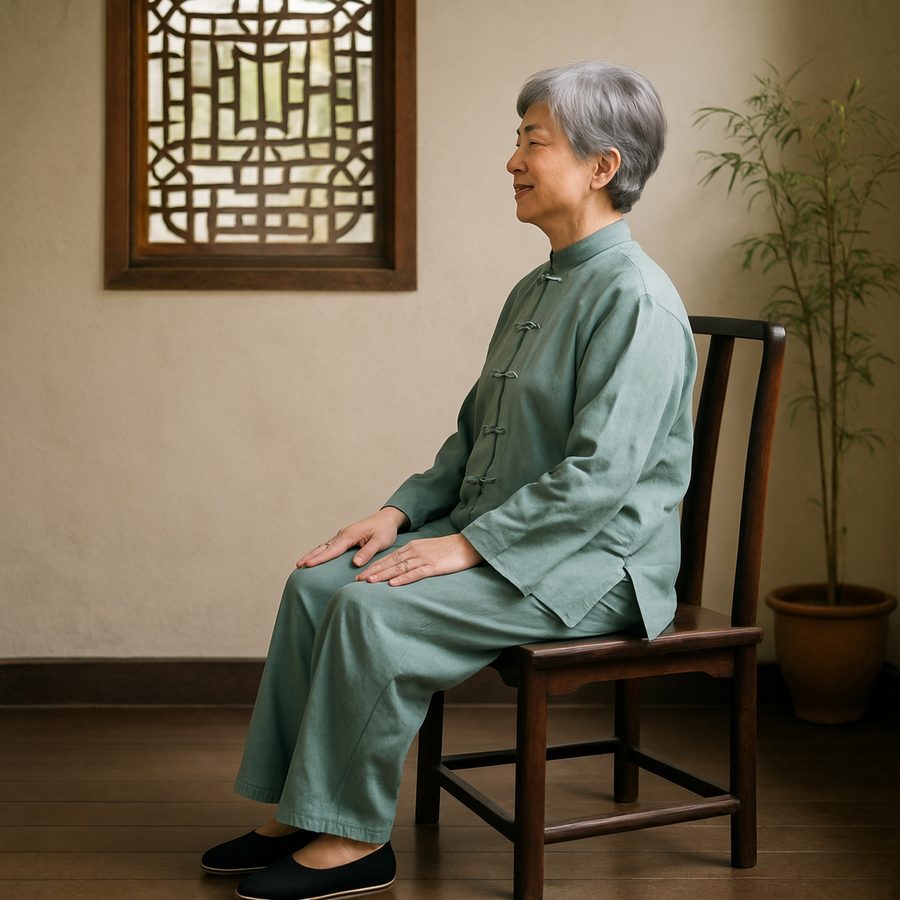
This is the classic move for a forward head. It wakes up the small muscles at the front of the neck that help hold your head over your shoulders.
How to do it:
- Sit tall with your feet flat and your eyes looking straight ahead.
- Gently glide your head straight back, as if making a double chin. Keep your chin level, do not tip it up or down.
- Hold for 3 to 5 seconds, then relax forward to neutral.
Make it easier: Do it lying on your back with a small pillow under your head, pressing the back of your head gently into the pillow.
How much: 8 to 10 times, once or twice a day.
2. Wall Angels
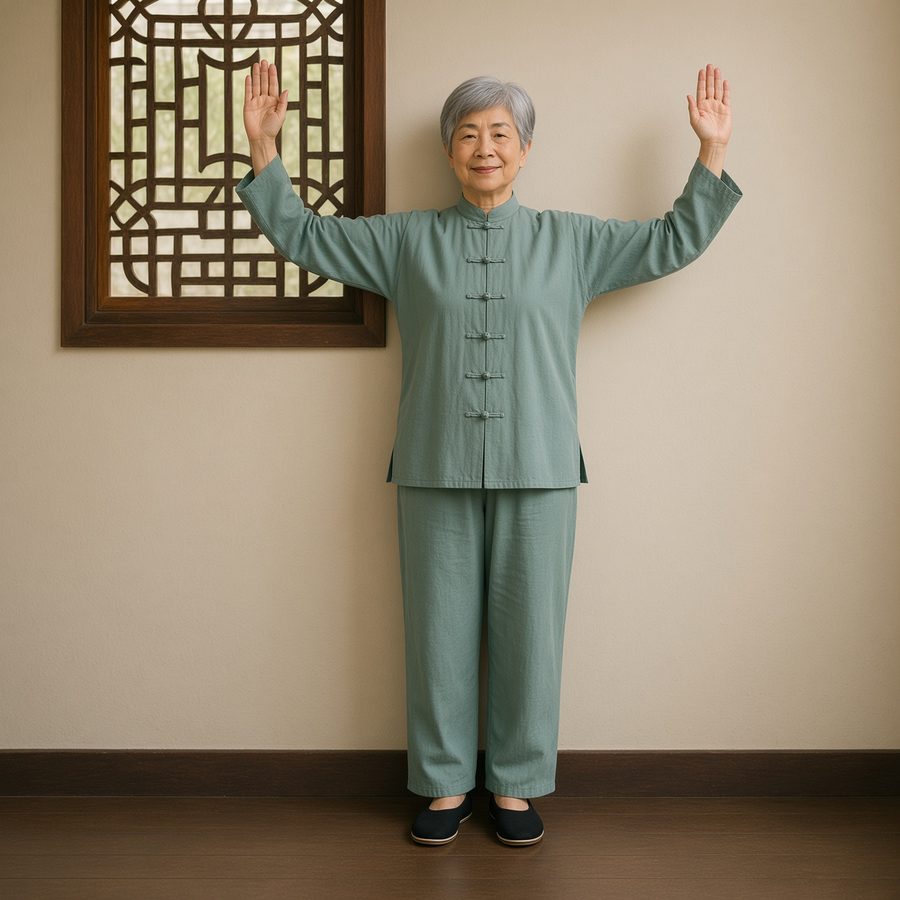
Wall angels train the upper back muscles that pull your shoulders back and open the front of the chest. Harvard Health lists a similar wall slide among its top posture moves.
How to do it:
- Stand with your back against a wall, feet a small step away, knees soft.
- Raise your arms into a goalpost shape with elbows bent, backs of your arms near or touching the wall.
- Slowly slide your arms up the wall as far as is comfortable, then slide them back down.
Make it easier: Do the same arm movement sitting in a chair with no wall, or only slide your arms halfway up.
How much: 8 to 12 slow slides.
3. Shoulder Blade Squeezes
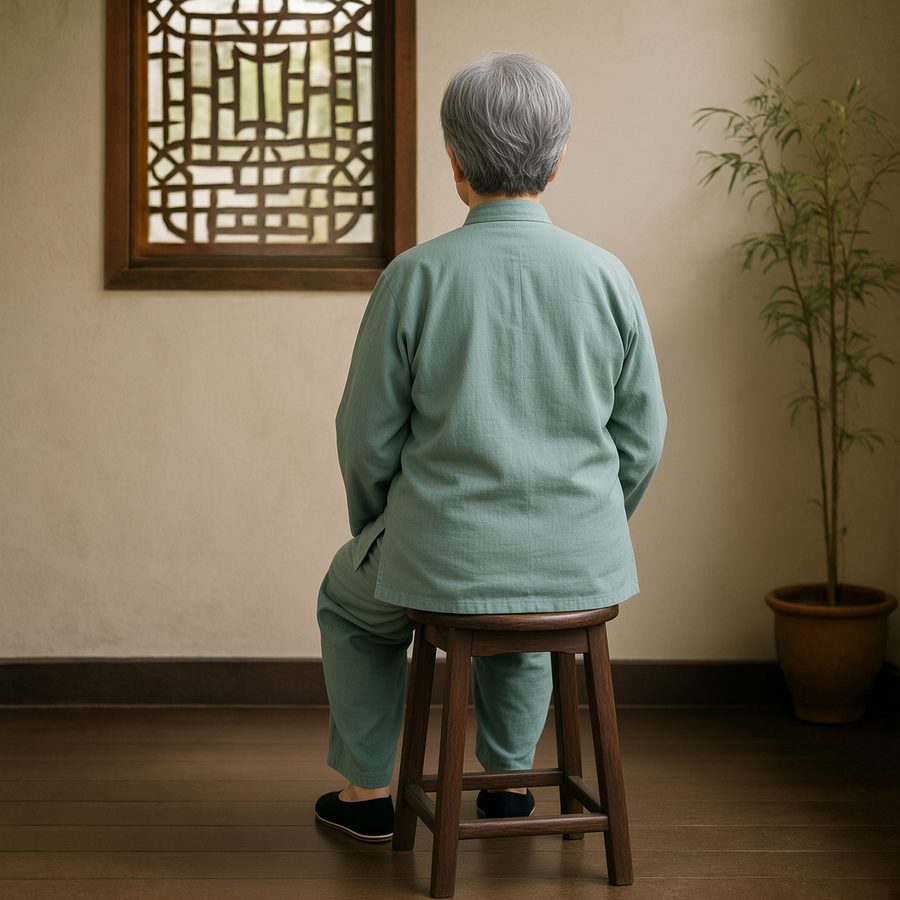
A simple way to switch on the muscles between your shoulder blades. Harvard Health recommends 5 second holds for this move.
How to do it:
- Sit tall with your arms relaxed by your sides.
- Gently squeeze your shoulder blades together and slightly down, as if holding a pencil between them.
- Hold for 5 seconds, then relax.
Make it easier: Squeeze more gently and hold for just 2 to 3 seconds.
How much: 8 to 10 squeezes.
4. Doorway Chest Stretch
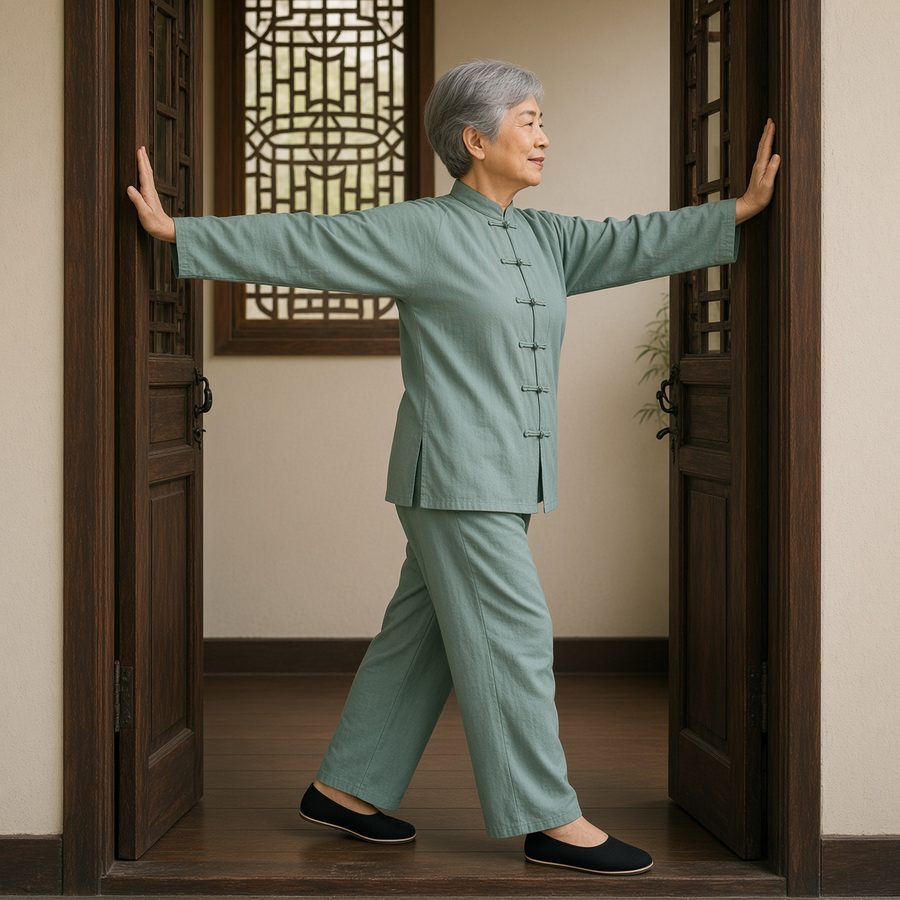
A tight chest pulls the shoulders forward. Stretching it makes it easier for your back muscles to hold you upright.
How to do it:
- Stand in an open doorway and place your hands on the frame on each side, arms out at about shoulder height.
- Slowly step one foot forward until you feel a gentle stretch across the front of your chest and shoulders.
- Hold for 20 to 30 seconds, breathing slowly. Step back, switch your front foot and repeat.
Make it easier: Place your hands lower on the frame, or do one arm at a time, and take a smaller step.
How much: 2 to 3 times.
5. Seated Chest Opener
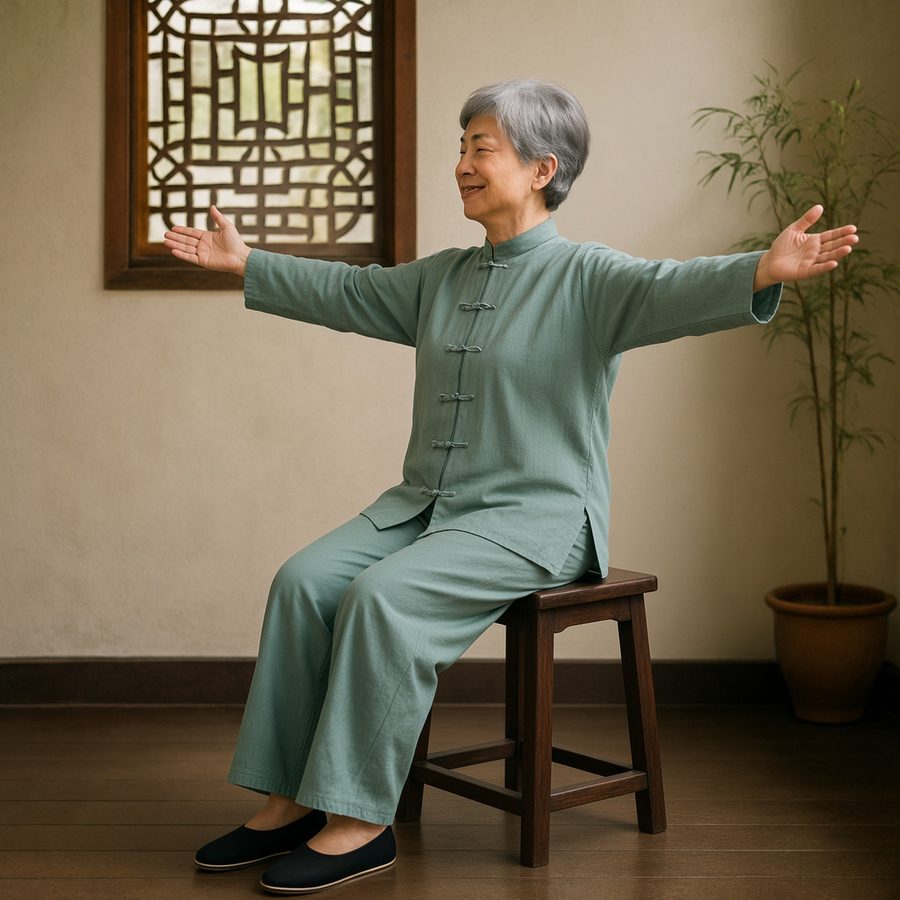
This is the NHS chest stretch for posture, and it is easy to do anywhere you sit.
How to do it:
- Sit upright, away from the back of the chair.
- Pull your shoulders back and down, then take your arms out to the sides.
- Gently lift your chest forward and up until you feel a stretch. Hold for 5 to 10 seconds.
Make it easier: Keep your hands on your hips and simply draw your elbows back.
How much: 5 times.
6. Seated Back Extension
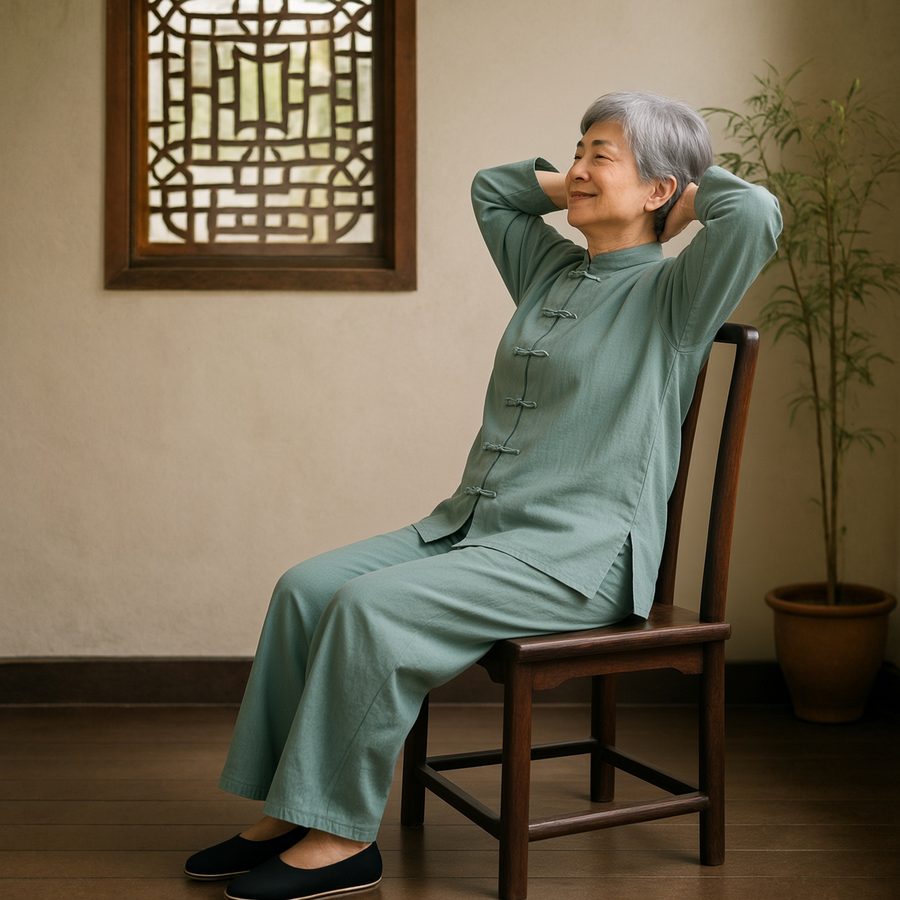
Your upper back tends to stiffen into a forward curve. This gently moves it the other way.
How to do it:
- Sit in a chair whose backrest ends around the middle of your back.
- Place your hands lightly behind your head with elbows out wide.
- Gently lean your upper back over the top of the chair, look slightly up, then come back to sitting tall.
Make it easier: Cross your arms over your chest instead of putting your hands behind your head, and make the movement smaller.
How much: 5 to 8 slow reps.
7. Shoulder Rolls
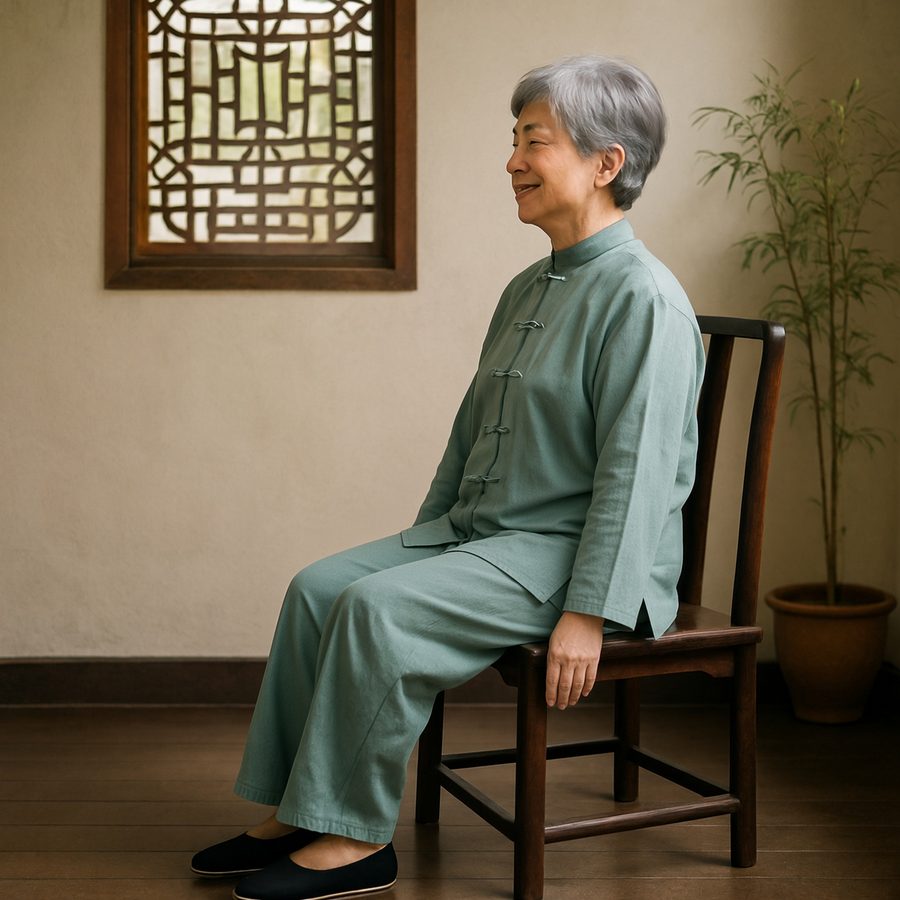
A gentle warm up that loosens tight shoulders and reminds them where they belong: back and down.
How to do it:
- Sit tall with your arms relaxed.
- Lift your shoulders up toward your ears, roll them back, then let them drop down.
- Make slow, smooth circles, always rolling backward.
Make it easier: Make smaller circles, or do one shoulder at a time.
How much: 10 slow rolls.
8. Side Neck Stretch
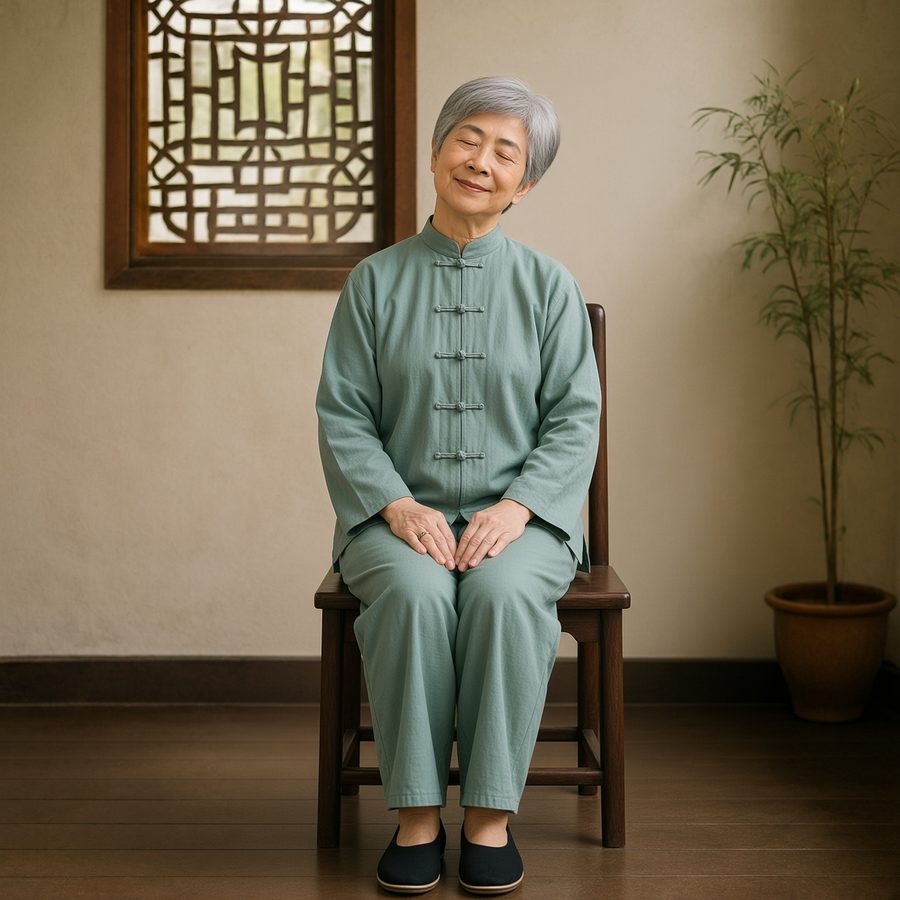
Rounded shoulders often go with tight muscles along the sides of the neck. This releases them gently.
How to do it:
- Sit tall and let your shoulders relax down.
- Slowly tilt your ear toward your shoulder until you feel a gentle stretch on the other side of your neck. Do not lift your shoulder.
- Hold for 15 to 20 seconds, come back to center, and switch sides.
Make it easier: Tilt only a little, or hold for 10 seconds.
How much: 2 times each side.
9. Seated Cat Cow
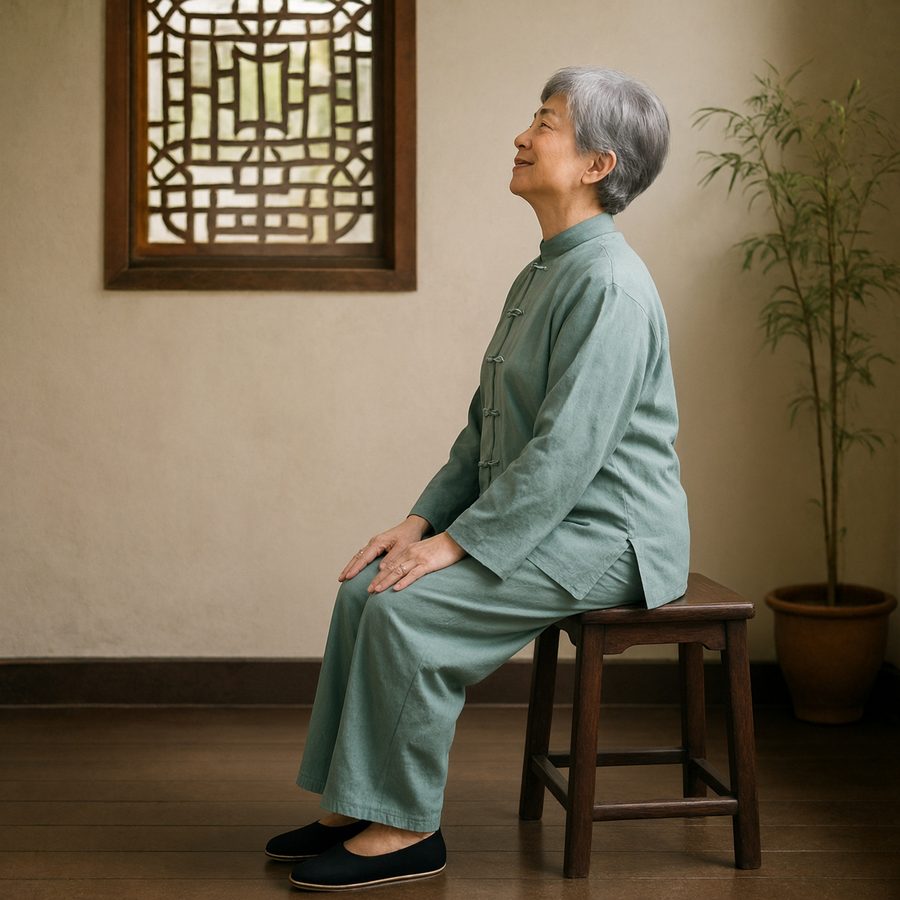
Moves your whole spine through its natural range, which helps it feel less stiff and stuck.
How to do it:
- Sit with your hands on your knees and feet flat.
- Breathe in and gently arch your back, lifting your chest and looking slightly up.
- Breathe out and round your back, tucking your chin and drawing your belly in. Keep moving slowly between the two.
Make it easier: Make the movement smaller and keep your eyes looking forward.
How much: 6 to 8 slow rounds.
10. Band Rows
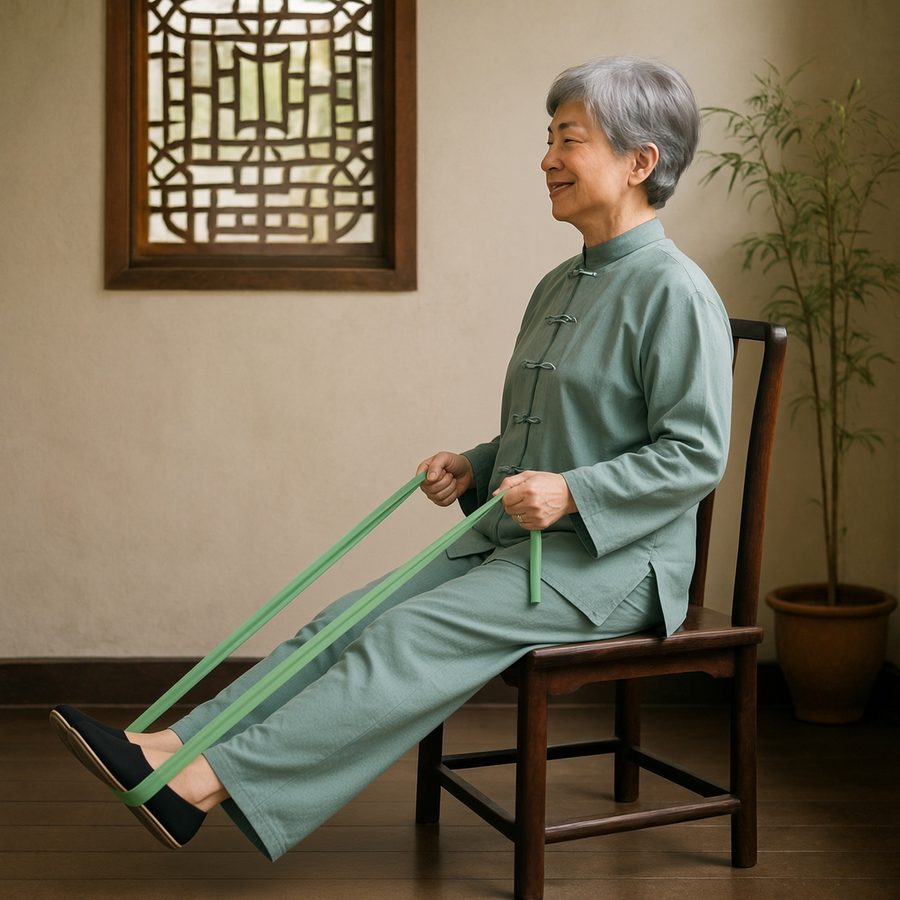
Rows build the upper back muscles that hold your shoulders back. CDC guidelines advise muscle strengthening at least 2 days a week for older adults.
How to do it:
- Sit tall with a light resistance band looped around your feet (or tied to a sturdy door handle in front of you).
- Hold one end in each hand with arms out in front.
- Pull your elbows back, squeezing your shoulder blades together, then slowly let your arms return.
Make it easier: Use the lightest band, or do the same movement with no band at all.
How much: 10 to 12 reps, 1 or 2 sets.
11. Band Pull Aparts
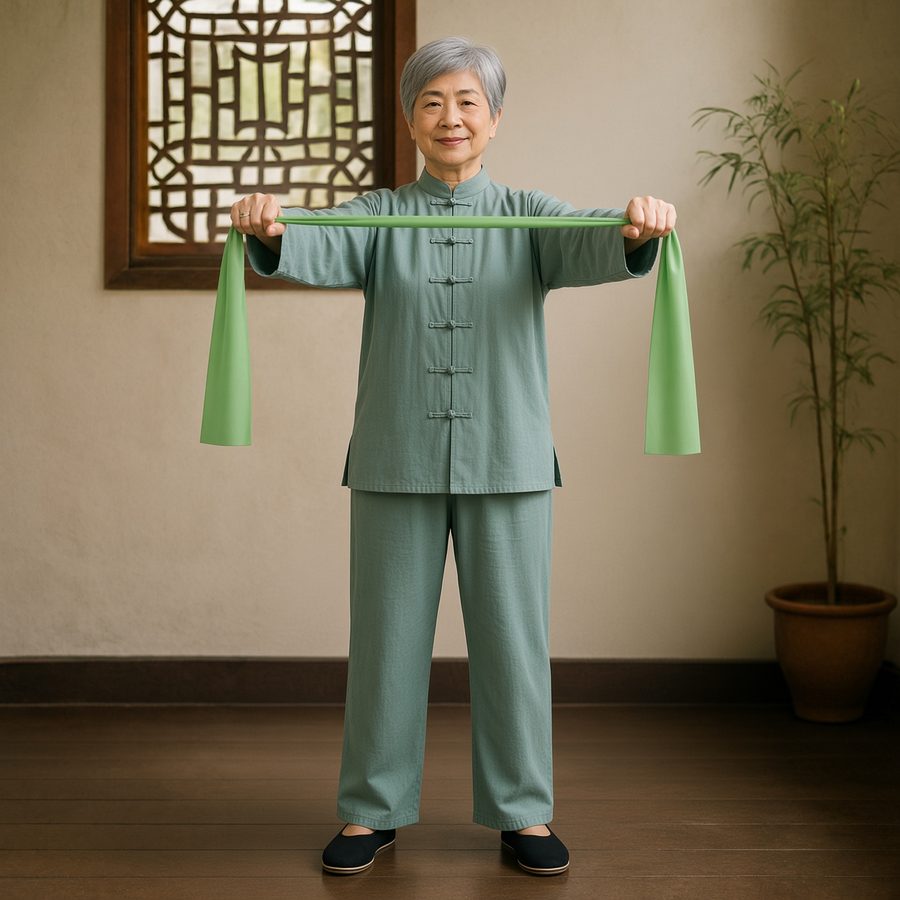
Strengthens the back of the shoulders, which helps balance out a tight chest.
How to do it:
- Stand or sit tall holding a light band in front of your chest, hands about shoulder width apart.
- Keeping your arms long, pull the band apart by moving your hands out to the sides.
- Squeeze your shoulder blades at the end, then slowly return.
Make it easier: Hold the band with your hands wider apart so there is less tension.
How much: 10 to 12 reps.
12. Wall Posture Check
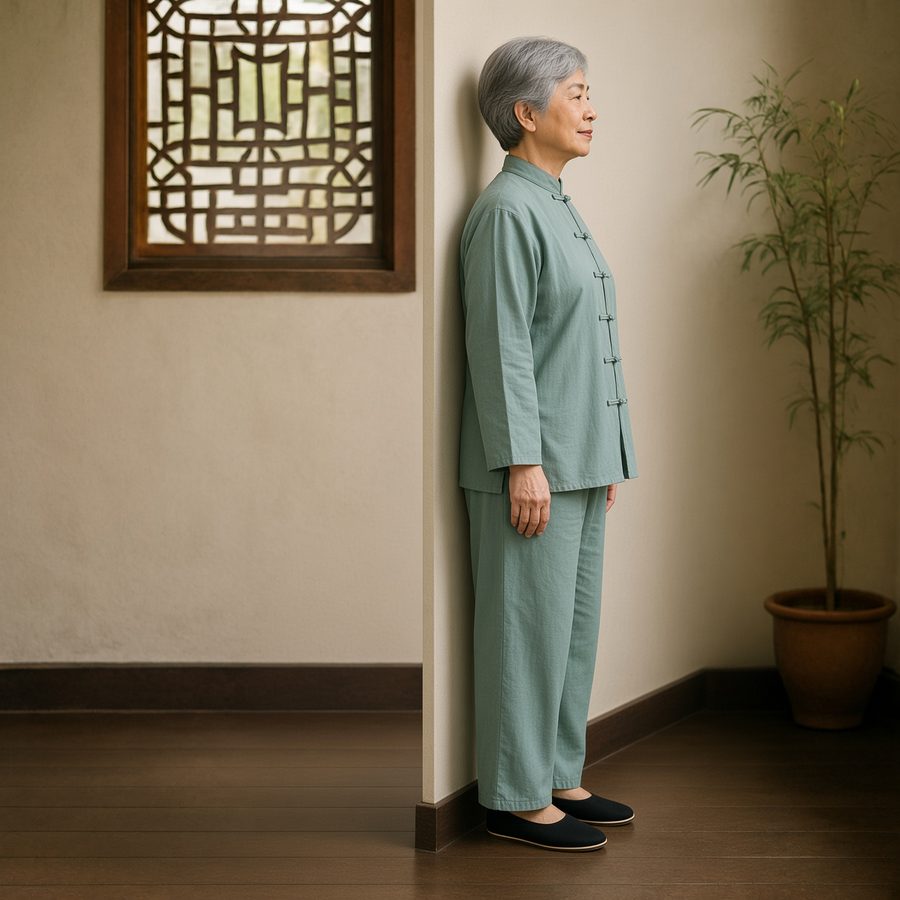
A quick reset that teaches your body what upright feels like, so it is easier to find during the day.
How to do it:
- Stand with your heels a few inches from a wall.
- Let your bottom, shoulder blades and the back of your head touch the wall. Keep your chin level.
- Hold this tall position for 30 seconds while breathing normally, then step away and try to keep it.
Make it easier: If your head does not reach the wall, do not force it. Stand as tall as you comfortably can.
How much: Once or twice a day.
A simple 10 minute posture routine
Once you know the moves, string these 8 together. It takes about 10 minutes and works well in the morning or after a long stretch of sitting.
| Step | Exercise | Amount |
|---|---|---|
| 1 | Shoulder Rolls | 10 rolls |
| 2 | Chin Tucks | 8 reps |
| 3 | Shoulder Blade Squeezes | 8 reps |
| 4 | Seated Chest Opener | 5 reps |
| 5 | Wall Angels | 8 reps |
| 6 | Band Rows | 10 reps |
| 7 | Side Neck Stretch | 1 each side |
| 8 | Wall Posture Check | 30 seconds |
Your 4 week plan
Build up slowly. It is better to do a few moves well every day than everything once a week.
| Week | What to do |
|---|---|
| Week 1 | Shoulder rolls, chin tucks and shoulder blade squeezes, once a day. Learn the moves and go gently. |
| Week 2 | Add the seated chest opener and the wall posture check. Still once a day. |
| Week 3 | Add wall angels and band rows. Do the full 10 minute routine on 3 to 5 days. |
| Week 4 | Do the full routine on most days, and add the doorway chest stretch after long sitting. |
When to check with your doctor
Posture exercises should feel gentle. Stop and talk to your doctor or a physical therapist if you notice any of these:
- Pain that spreads down an arm or leg, or numbness, tingling or weakness in your hands.
- Neck or back pain after a fall or injury.
- A sudden change in your posture, or a curve that seems to be getting worse quickly.
- Pain that wakes you at night or does not ease with rest.
- Dizziness when you move your head.
Frequently asked questions
Can you improve posture after 50?
Yes. Muscles respond to training at any age. Gentle exercises that strengthen the upper back and stretch the chest can help you sit and stand taller, especially when you do them regularly.
How long does it take to see a difference?
Many people feel looser within a week or two. Visible changes in how you stand usually take several weeks of regular practice. Keep going: a 2023 study of adults over 60 found that gains from posture exercise faded once people stopped.
How often should I do posture exercises?
A short routine most days works better than one long session a week. The 10 minute routine above is a good daily goal once you know the moves.
Are these exercises safe with osteoporosis?
Many gentle posture moves are often recommended for people with osteoporosis, but avoid deep forward bending and twisting unless your doctor or physical therapist says it is fine. Check with them first.
Is tai chi good for posture?
Harvard Health lists yoga and tai chi as ideal activities for posture because they strengthen the muscles that hold you up and teach good alignment.
Keep going
Good posture is a habit, not a one off fix. Pick two or three moves you enjoy, do them every day, and add more as they get easy. If you like slow, mindful movement, our tai chi guides are a gentle next step, since tai chi also trains the muscles that keep you upright.

Written by June Ashby
June writes the Limber Years guides to posture, tai chi, mobility and gentle strength for people over 50. She keeps every routine short, gentle and easy to follow at home. June is not a doctor or physical therapist, so please check with yours before starting something new. More about Limber Years
Sources
- Harvard Health Publishing: Get out of your slump
- NHS: Sitting exercises
- CDC: Physical activity for adults 65 and older
- Randomized controlled trial (2023): forward head posture correction in adults over 60, PubMed Central
This article is general information, not medical advice. Read our full disclaimer.