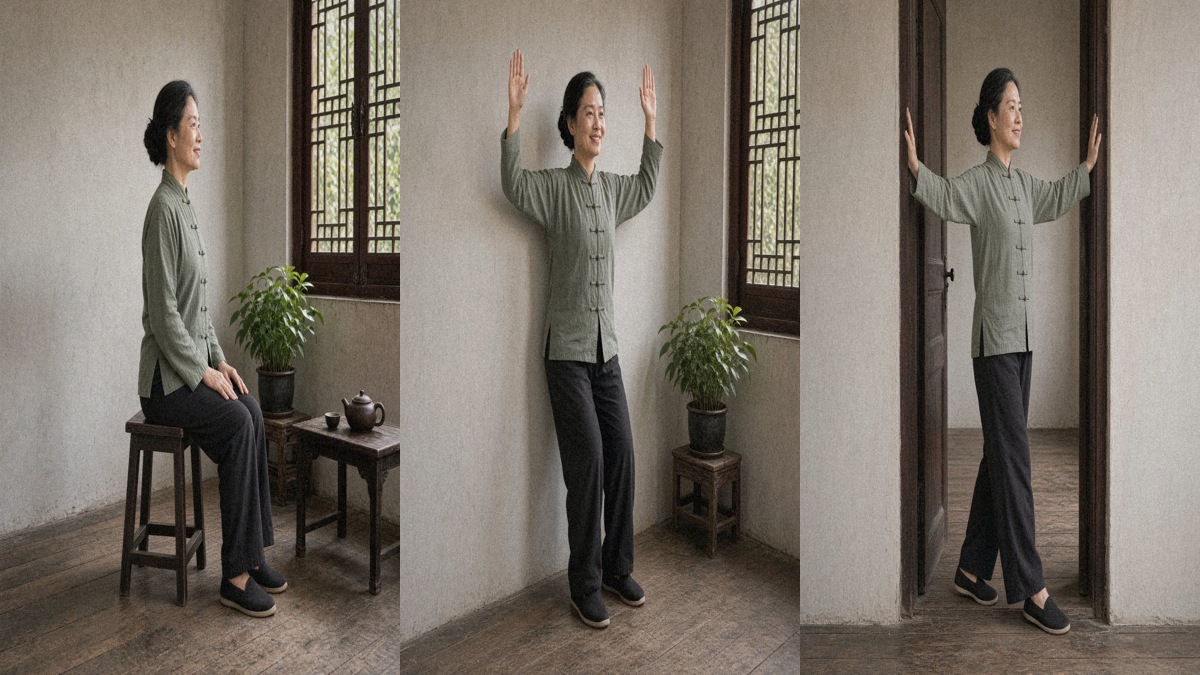
A neck hump is the rounded bump some people notice at the base of the neck. It often shows up together with a head that sits forward of the shoulders, which many people call forward head posture. Long hours on a phone, a tablet or a sofa, and a body that gets a little stiffer with age, can all play a part.
The good news is that gentle daily movement can help you feel and stand taller. These exercises are slow and low effort. They aim to loosen tight chest and neck muscles and wake up the muscles of the upper back that hold you upright. They will not change your bones, and results vary from person to person.
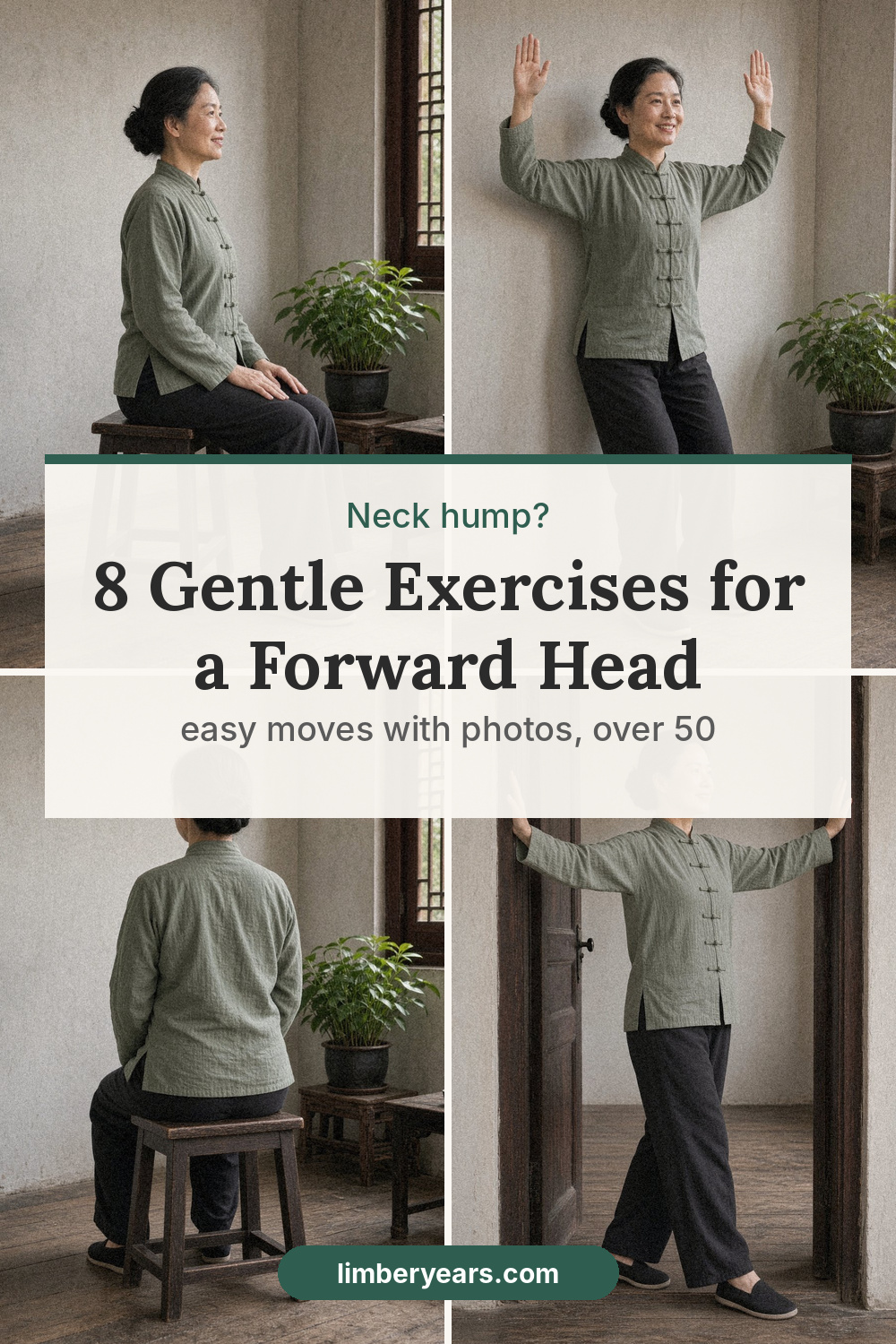
Below you will find 8 gentle neck hump exercises, each with a photo, simple steps and an easier option. At the end there is a 5 minute routine and a 4 week plan.
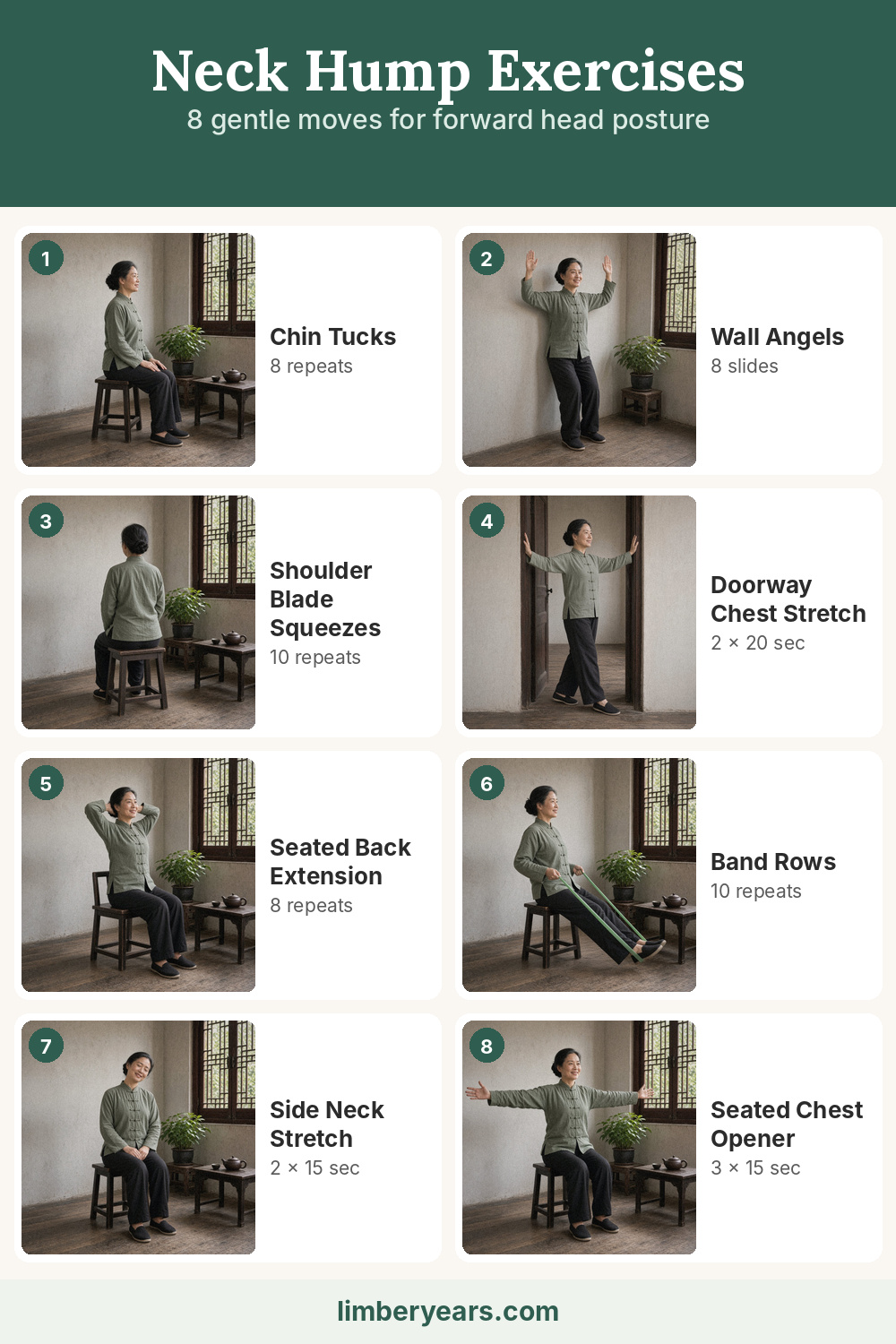
Save this chart to Pinterest or print it out and keep it near your favorite chair. Photos on this site are made with AI to show each move clearly.
Key takeaways
- A neck hump and a forward head often come together, and the same gentle moves help both.
- Move slowly, breathe normally and never push into pain.
- A few minutes every day works better than one long session.
- Check with your doctor first if you have neck pain, numbness, dizziness or a bone condition.
Before you start
- Wear comfortable clothes that let your shoulders move freely.
- Use a sturdy chair without wheels, and a clear section of wall.
- Keep your chin level. Do not tip your head up or down.
- Breathe slowly. Do not hold your breath.
- Stop if you feel pain, tingling, numbness or dizziness.
The 8 neck hump exercises at a glance
| # | Move | Works on | How much |
|---|---|---|---|
| 1 | Chin Tucks | Neck | 8 slow repeats |
| 2 | Wall Angels | Upper back and shoulders | 8 slow slides |
| 3 | Shoulder Blade Squeezes | Upper back | 10 repeats |
| 4 | Doorway Chest Stretch | Chest | 2 holds on each side |
| 5 | Seated Back Extension | Upper back | 8 slow repeats |
| 6 | Band Rows | Back and arms | 10 repeats |
| 7 | Side Neck Stretch | Neck | 2 holds on each side |
| 8 | Seated Chest Opener | Chest and shoulders | 3 holds of 15 seconds |
1. Chin Tucks
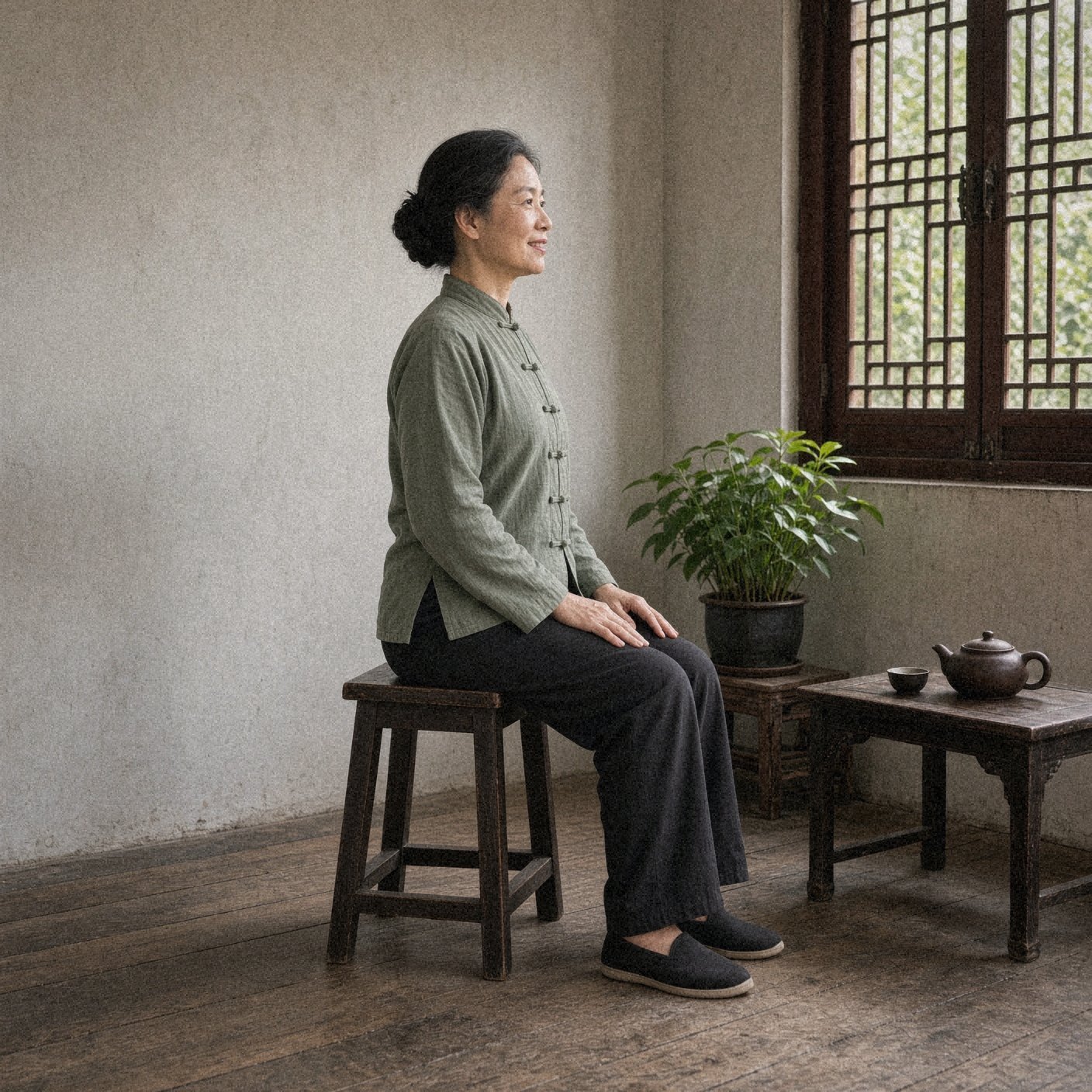
The chin tuck is the classic move for a forward head. It teaches your head to glide back over your shoulders.
How to do it:
- Sit or stand tall and look straight ahead.
- Gently draw your chin straight back, as if making a small double chin.
- Hold for 3 seconds, then relax.
Make it easier: Make the movement very small and rest your fingertips lightly on your chin.
How much: 8 slow repeats.
2. Wall Angels
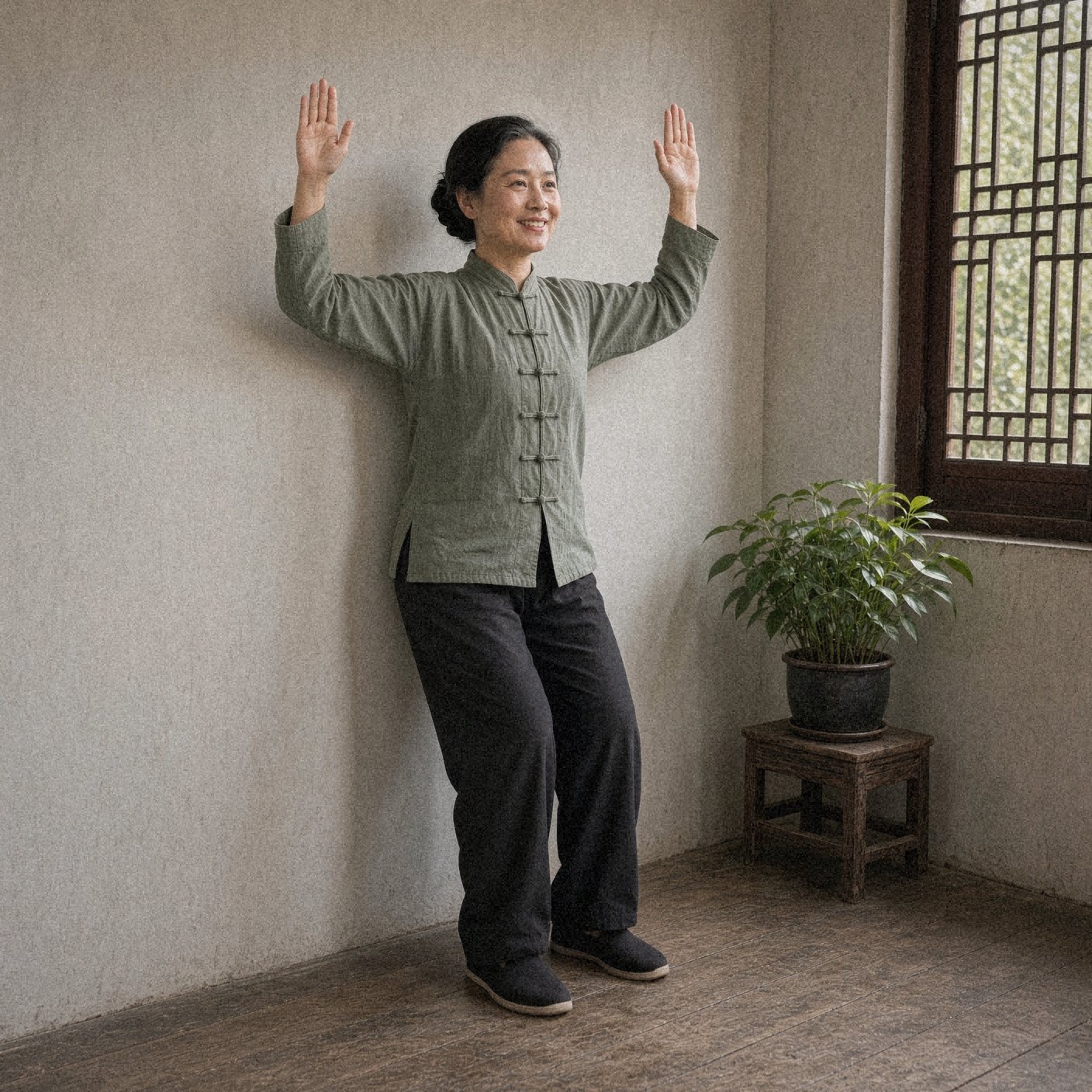
This move opens the chest and works the upper back while the wall gives you honest feedback about your posture.
How to do it:
- Stand with your back against a wall and your feet a little way out.
- Bring your arms up beside you with bent elbows, as close to the wall as feels comfortable.
- Slide your arms slowly up and down like a snow angel.
Make it easier: Slide only a short way, or do it sitting with your back against the wall.
How much: 8 slow slides.
3. Shoulder Blade Squeezes
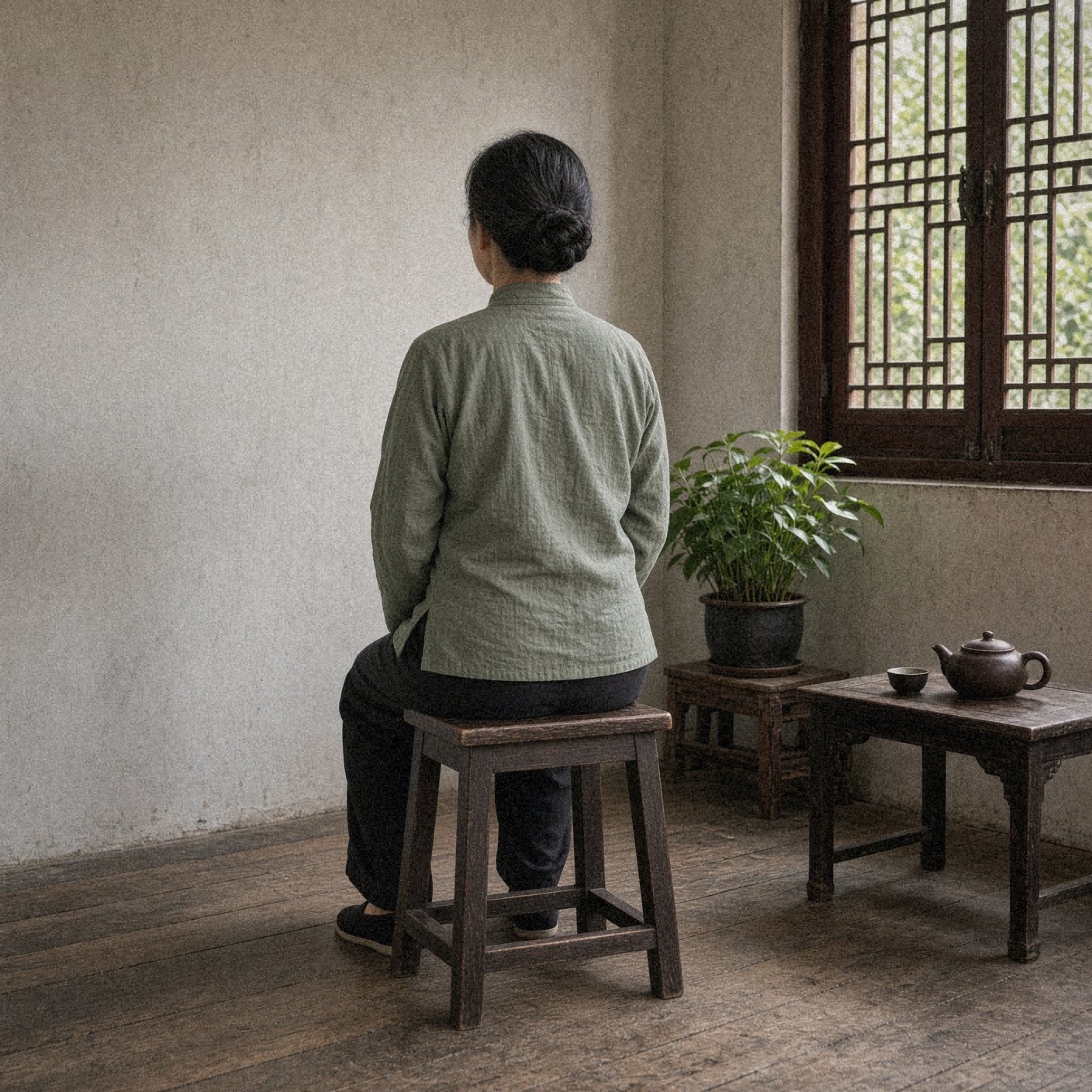
Strong upper back muscles help pull your shoulders back, which takes the load off your neck.
How to do it:
- Sit tall with your arms relaxed by your sides.
- Gently squeeze your shoulder blades together and slightly down.
- Hold for 3 seconds and release.
Make it easier: Squeeze at half effort and hold for just 1 or 2 seconds.
How much: 10 repeats.
4. Doorway Chest Stretch
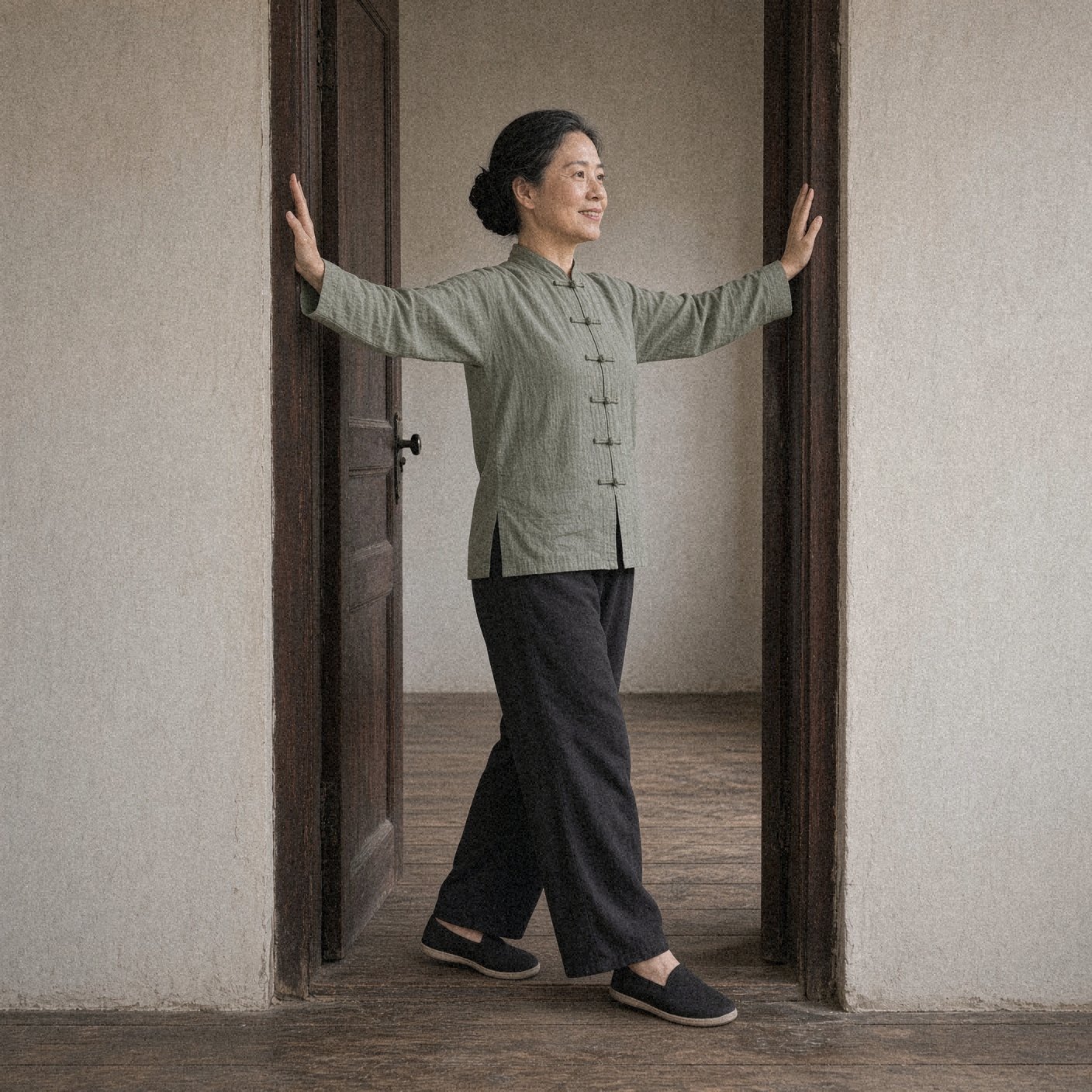
A tight chest pulls the shoulders forward. Stretching it gives your upper back room to straighten.
How to do it:
- Stand in a doorway with your forearm on the frame and your elbow bent.
- Step one foot forward and lean gently until you feel a mild stretch across your chest.
- Hold for 20 seconds, then switch arms.
Make it easier: Place your arm lower and lean only a little.
How much: 2 holds on each side.
5. Seated Back Extension
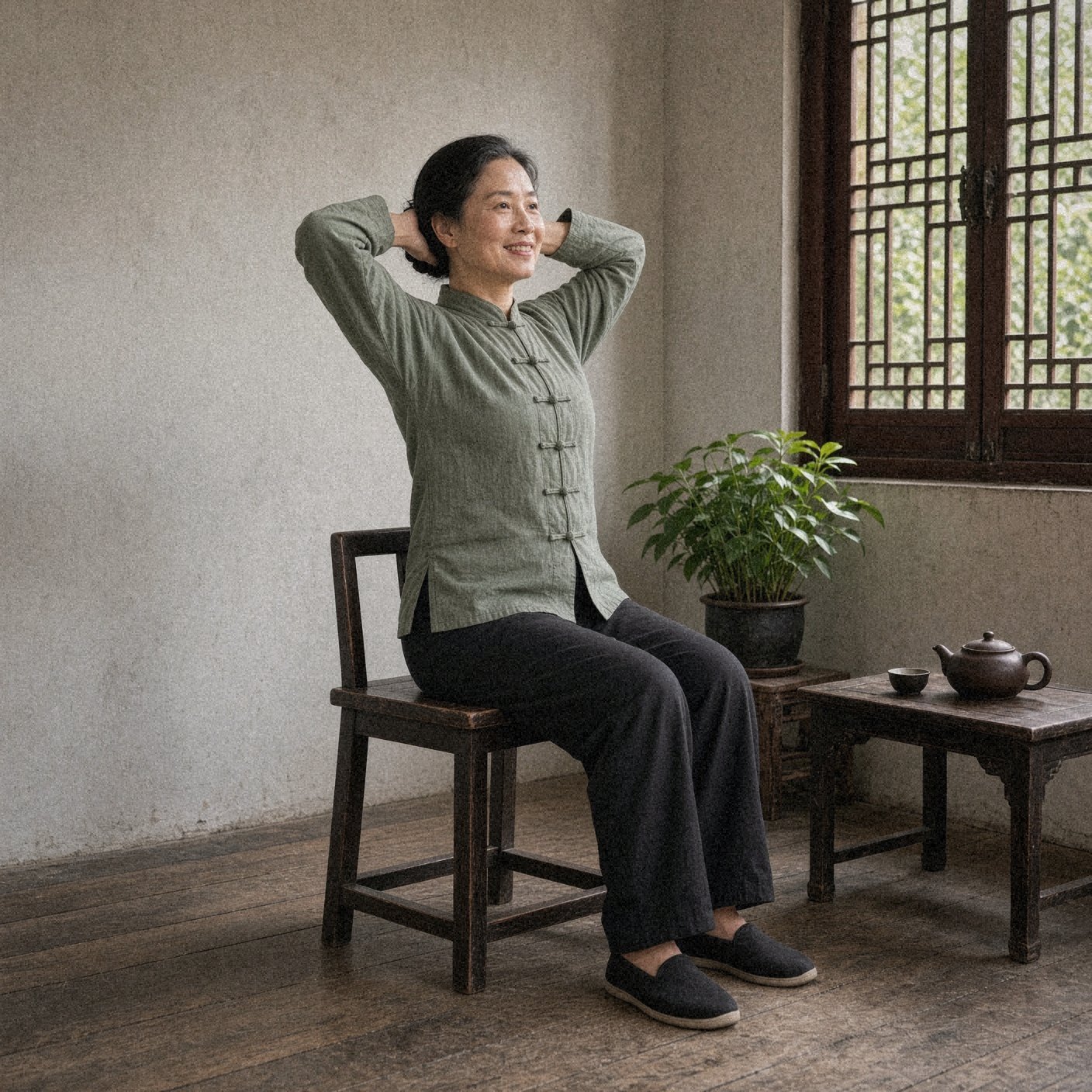
Most of us spend the day curling forward. This move gently stretches you the other way.
How to do it:
- Sit tall with your hands resting lightly behind your head.
- Breathe in and gently lift your chest, letting your upper back arch a little.
- Breathe out and return to a tall sit.
Make it easier: Cross your arms over your chest instead of holding your head.
How much: 8 slow repeats.
6. Band Rows
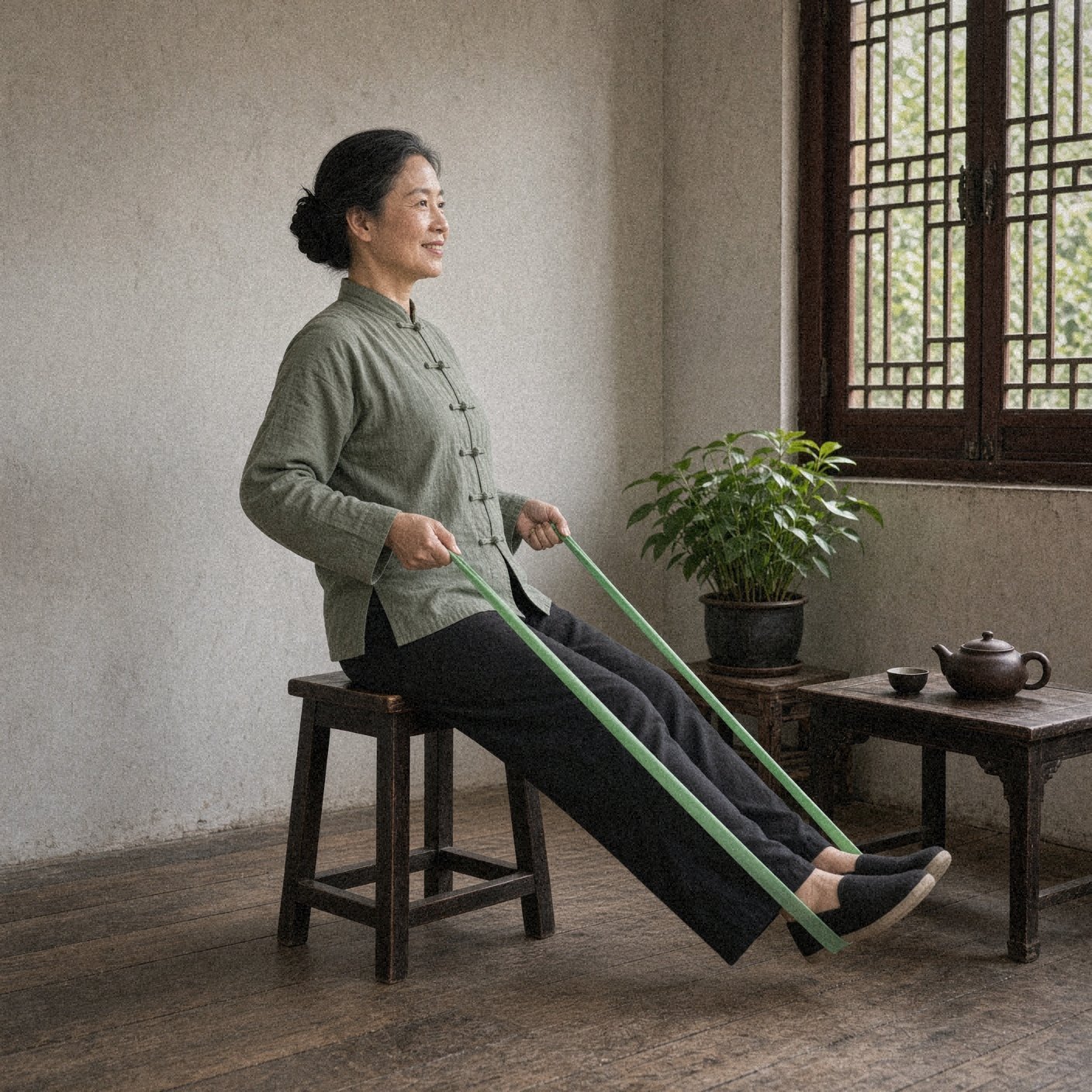
Rowing builds the muscles between your shoulder blades. Keep your neck long and your shoulders down.
How to do it:
- Sit tall near the front of a sturdy seat with your legs out in front and loop a light band around the soles of your feet.
- Hold one end in each hand and pull your elbows back past your ribs.
- Return slowly. No band? Do the same pulling motion with a rolled towel looped around your feet.
Make it easier: Use a very light band, or just move your elbows back with no band.
How much: 10 repeats.
7. Side Neck Stretch

A kind stretch for the side of the neck that often feels tight after long hours of looking down.
How to do it:
- Sit tall and let your shoulders drop.
- Tilt your right ear gently toward your right shoulder.
- Hold for 15 seconds, then switch sides.
Make it easier: Tilt only a little and keep both shoulders low.
How much: 2 holds on each side.
8. Seated Chest Opener
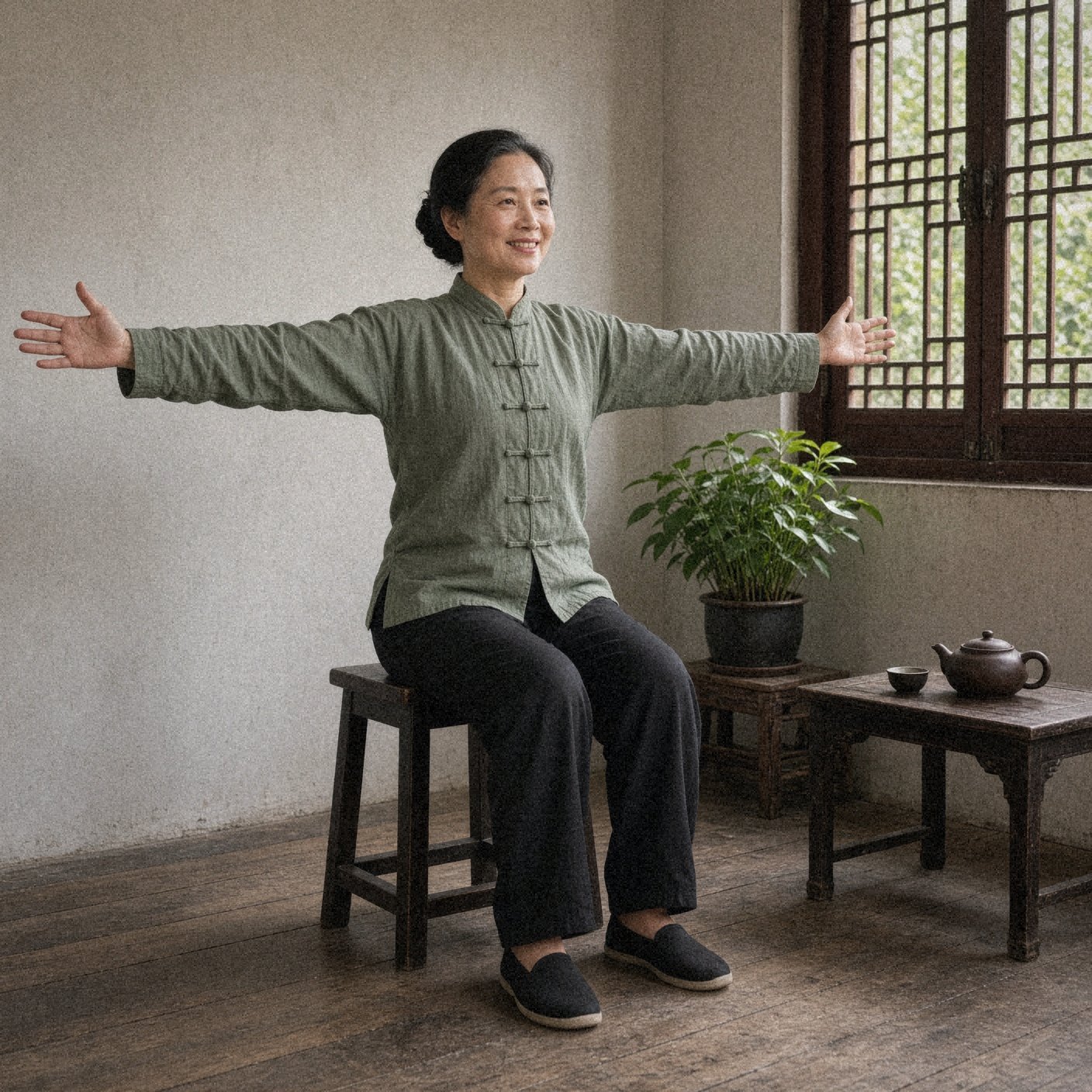
A simple way to undo the rounded sitting shape at your desk, in the car or on the sofa.
How to do it:
- Sit tall and clasp your hands behind your back, or hold the sides of the chair.
- Gently lift your chest and draw your shoulders back and down.
- Hold for 15 seconds and breathe slowly.
Make it easier: Rest your hands on your thighs and just lift your chest.
How much: 3 holds of 15 seconds.
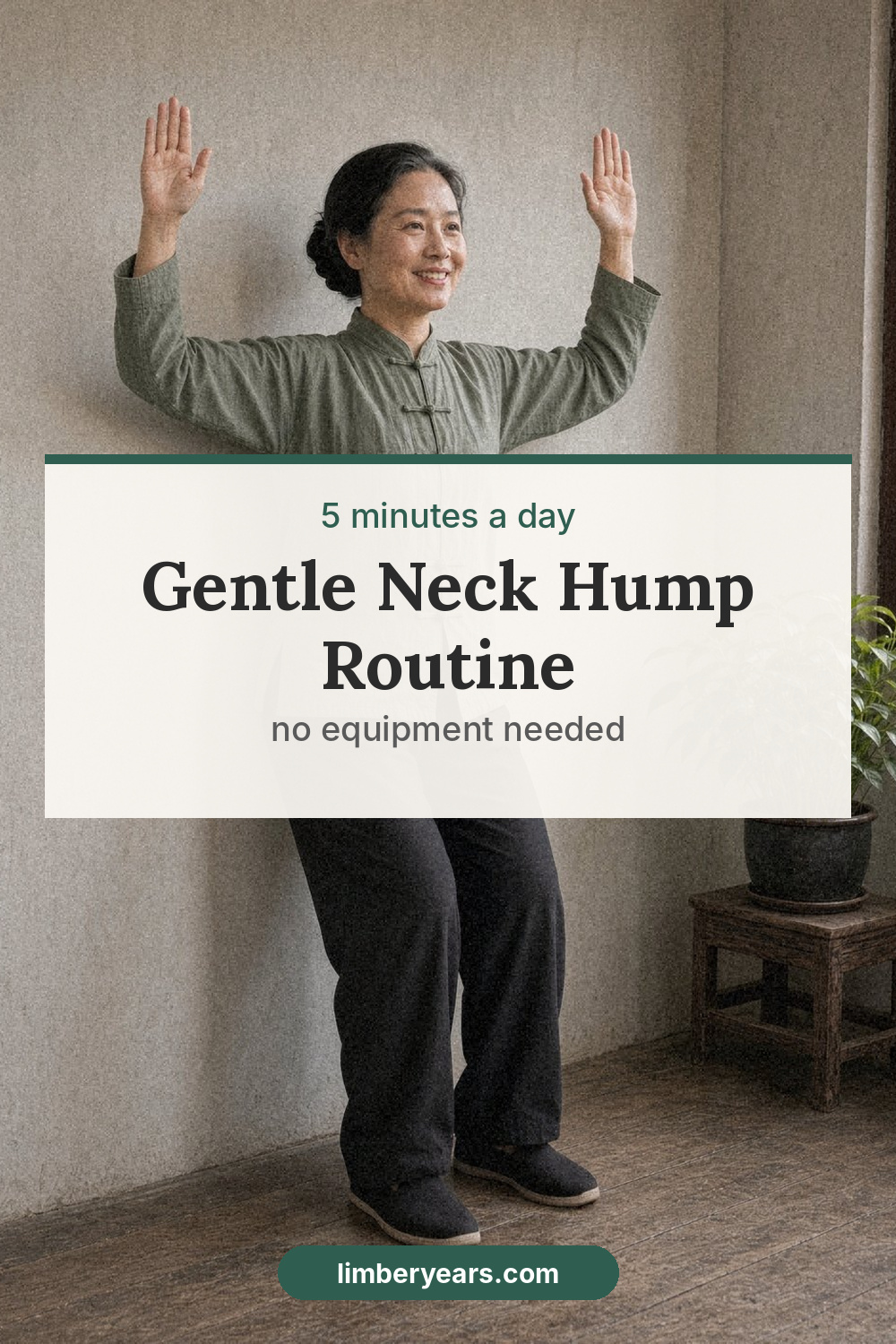
A simple 5 minute neck hump routine
Do these moves in this order once a day. Go slowly, breathe normally and stop if anything hurts.
| Step | What to do | Amount |
|---|---|---|
| 1 | Chin Tucks | 8 repeats |
| 2 | Shoulder Blade Squeezes | 10 repeats |
| 3 | Seated Back Extension | 8 repeats |
| 4 | Seated Chest Opener | 3 holds of 15 seconds |
| 5 | Side Neck Stretch | 2 holds each side |
Your 4 week plan
Posture changes slowly, so a few minutes a day works better than one long session. Build up over four weeks.
| Week | What to do |
|---|---|
| Week 1 | Chin tucks and shoulder blade squeezes once a day. Go slowly. |
| Week 2 | Add the seated back extension and the seated chest opener. |
| Week 3 | Add the doorway chest stretch and wall angels on 4 or 5 days. |
| Week 4 | Do the 5 minute routine daily and add band rows twice a week. |
When to check with your doctor
These moves are gentle, but a neck is a delicate place. Talk to your doctor or a physical therapist first if any of these apply to you:
- You have neck pain that is new, sharp or getting worse.
- You feel numbness, tingling or weakness in your arms or hands.
- You get dizzy or light headed when you move your head.
- You have osteoporosis, a spine condition or a recent injury or surgery.
Frequently asked questions
Is a neck hump the same as forward head posture?
They often go together but they are not always the same thing. A forward head posture means your head sits ahead of your shoulders. A neck hump is a rounded bump at the base of the neck. If a hump is new or growing, ask your doctor to take a look.
How long until I notice a change?
It differs for everyone. Many people feel looser within a couple of weeks of daily practice. Posture changes more slowly, so keep going for a few months and take a photo from the side each month.
Can I do these exercises sitting?
Yes. Chin tucks, shoulder blade squeezes, the seated back extension, the seated chest opener and the side neck stretch can all be done in a chair.
Do I need equipment?
No. Band rows can be done with a rolled towel, and everything else needs only a chair and a wall.
When should I see a doctor?
See your doctor if you have pain, numbness, dizziness, or a hump that appeared quickly. These exercises are for general comfort and are not a treatment.
Keep going
For a full set of moves, try our 12 simple posture exercises for rounded shoulders and neck. For a calmer routine, our chair tai chi guide is easy on the body. You may also like our guide to posture after 50 and our wall posture exercises.

Written by June Ashby
June writes the Limber Years guides to posture, tai chi, mobility and gentle strength for people over 50. She keeps every routine short, gentle and easy to follow at home. June is not a doctor or physical therapist, so please check with yours before starting something new. More about Limber Years
Sources
- CDC: Physical activity guidelines for older adults
- National Institute on Aging (NIA): Safety tips for exercising outdoors, with general exercise safety advice
This article is general information, not medical advice. Read our full disclaimer.