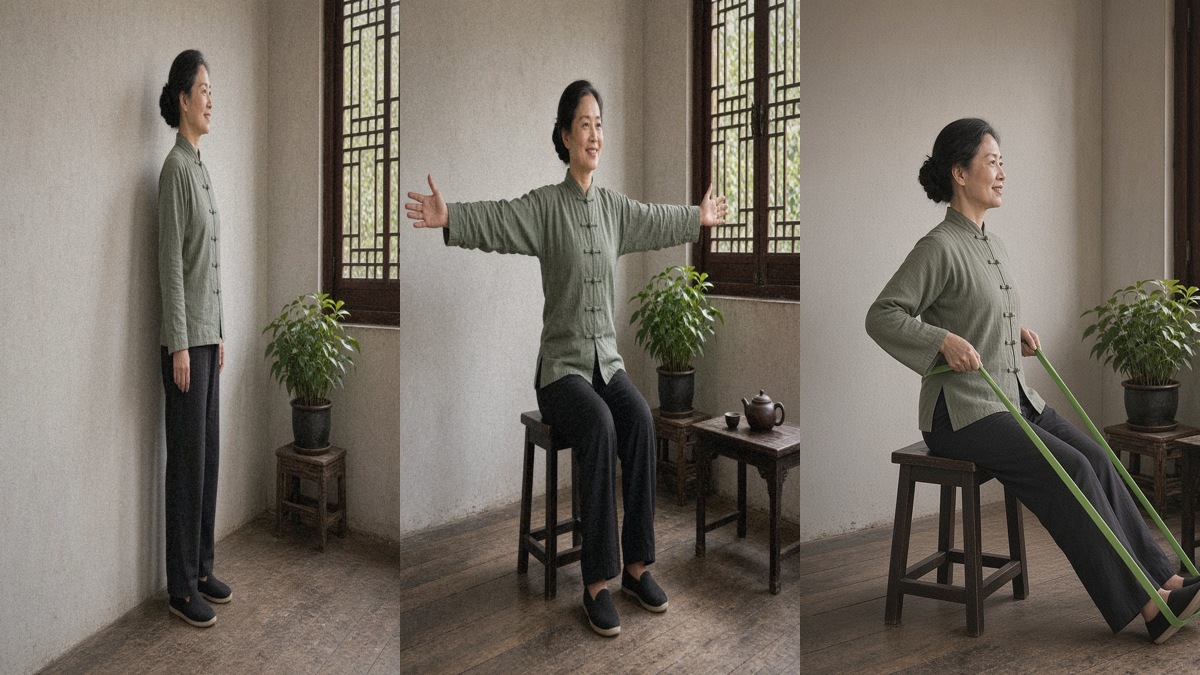
If you have noticed your shoulders rounding forward, your head drifting ahead of your body or your back feeling stiff when you stand up, you are not alone. Many years of sitting, reading and looking down at phones add up, and our bodies tend to get a little stiffer with age.
The posture exercises for seniors below are slow, gentle and safe for most people. Every move has a seated or supported option, so you can do the whole routine from a chair if standing is hard. None of them need you to get down on the floor.
You will find 8 moves with a photo for each, a 10 minute daily routine, a 4 week plan and straight answers to common questions like whether you can improve your posture at 70.
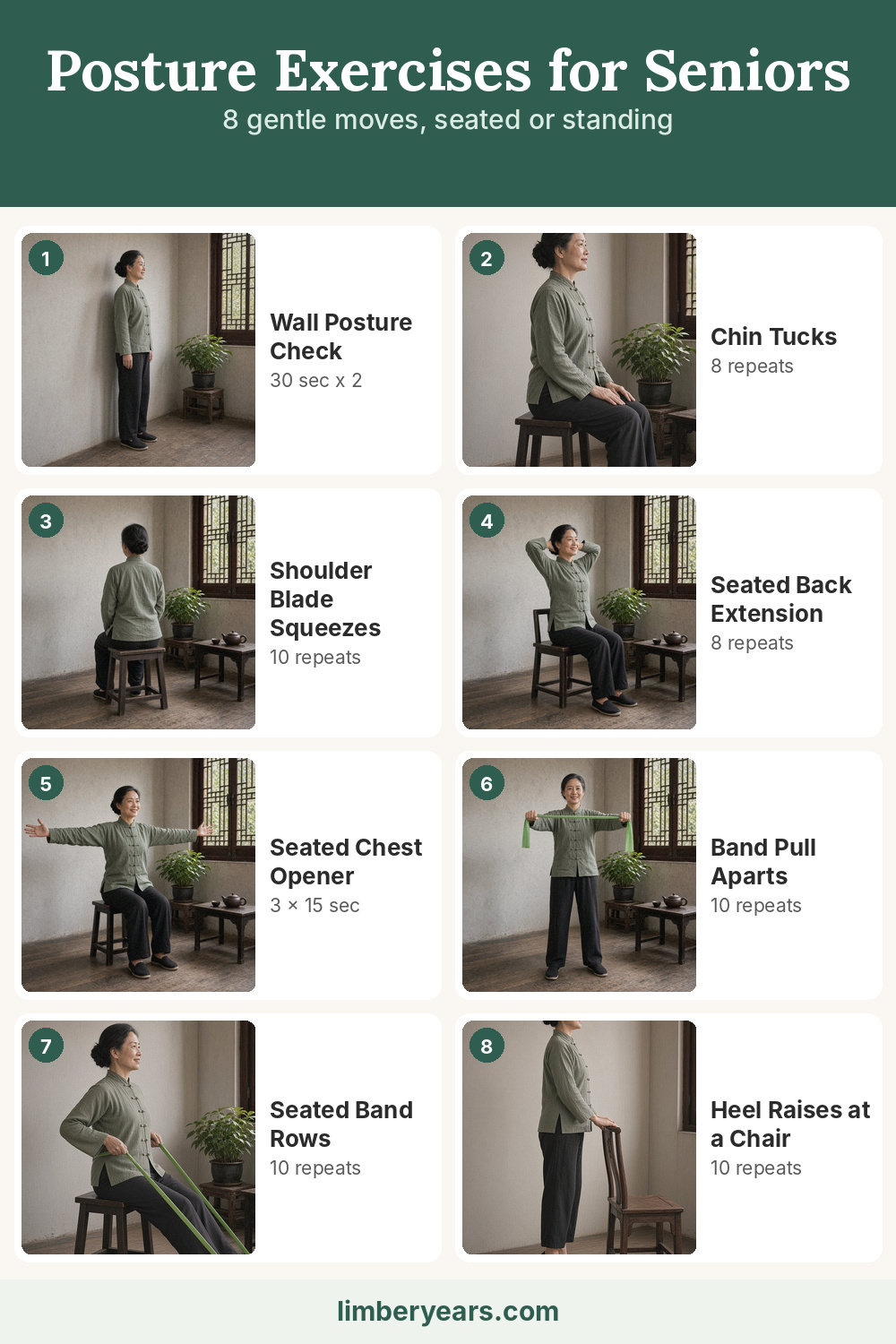
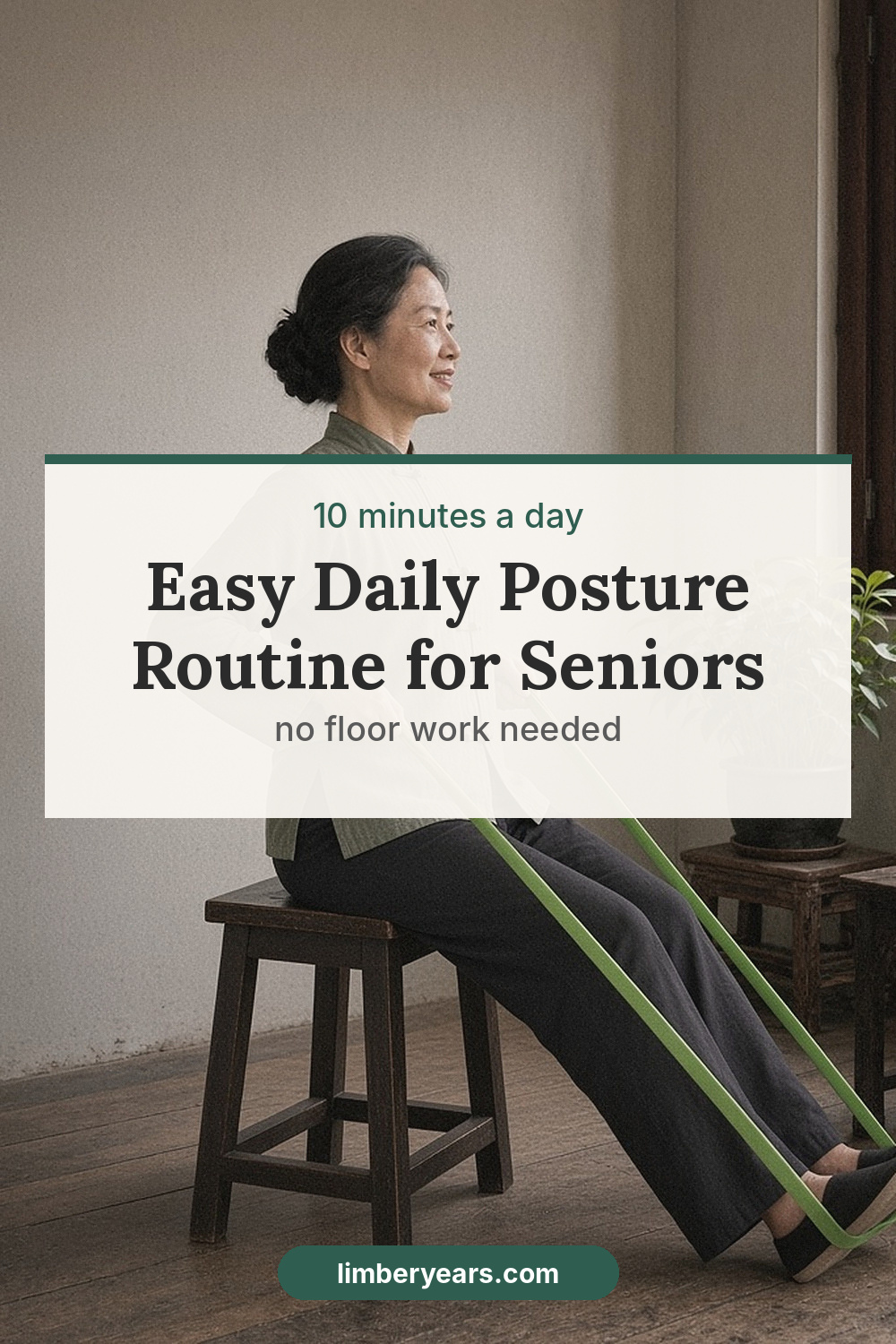
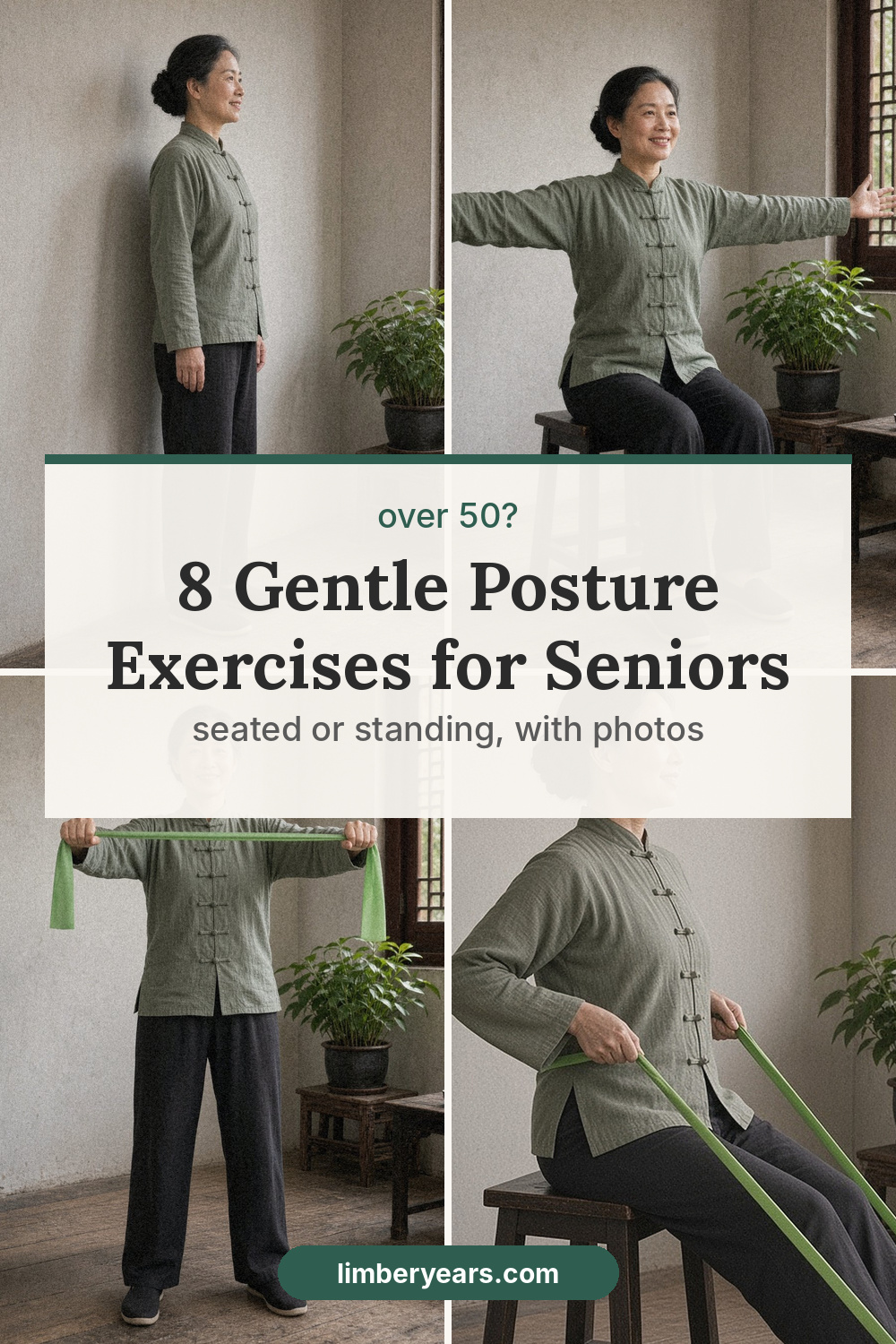
Save this chart to Pinterest or print it out and keep it near your favorite chair. Photos on this site are made with AI to show each move clearly.
Key takeaways
- Good posture is a skill you can practice at any age.
- Open the chest, strengthen the upper back and hold yourself tall. Those three jobs cover most posture work.
- Every move here can be done seated or holding a chair. No floor work.
- If you have osteoporosis or kyphosis, ask your doctor which moves suit you first.
Before you start
- Use a sturdy chair without wheels or arms, and a clear piece of wall.
- Wear comfortable clothes that let your shoulders move.
- Move slowly. Each move should feel like mild effort, never pain.
- Keep breathing. Do not hold your breath.
- Stop if you feel pain, numbness, tingling or dizziness.
What good posture looks like
Posture is how you hold your body.
MedlinePlus: Guide to good posture
When you stand or sit with good posture, your ears sit roughly over your shoulders, your shoulders sit over your hips, and your chin is level. It should feel tall and easy, not stiff or forced.
Try this quick check. Stand with your back against a wall, heels a few inches out. If the back of your head does not touch the wall without tipping your chin up, your head is sitting a little forward. That is very common, and the moves below work on exactly that.
Why posture often changes with age
Several things play a part. Hours of sitting and looking down pull the head and shoulders forward. Muscles that hold us upright get weaker if we do not use them, and the spine itself changes over the years. MedlinePlus notes that with aging, “the posture may become more stooped (bent).”
Some people develop a more rounded upper back, called kyphosis. MedlinePlus describes it as “a curving of the spine that causes a bowing or rounding of the back.” If your back is very rounded or the shape changed quickly, see your doctor before starting new exercises.
The good news is that the muscles involved respond to practice. Harvard Health puts it simply: “You can improve your posture with a few simple exercises.”
The 8 posture exercises at a glance
| # | Move | Works on | How much |
|---|---|---|---|
| 1 | Wall Posture Check | Whole body alignment | 30 seconds, 2 times |
| 2 | Chin Tucks | Neck | 8 slow repeats |
| 3 | Shoulder Blade Squeezes | Upper back | 10 repeats |
| 4 | Seated Back Extension | Upper back | 8 slow repeats |
| 5 | Seated Chest Opener | Chest and shoulders | 3 holds of 15 seconds |
| 6 | Band Pull Aparts | Upper back and shoulders | 10 repeats |
| 7 | Seated Band Rows | Back and arms | 10 repeats |
| 8 | Heel Raises at a Chair | Calves and balance | 10 repeats |
1. Wall Posture Check
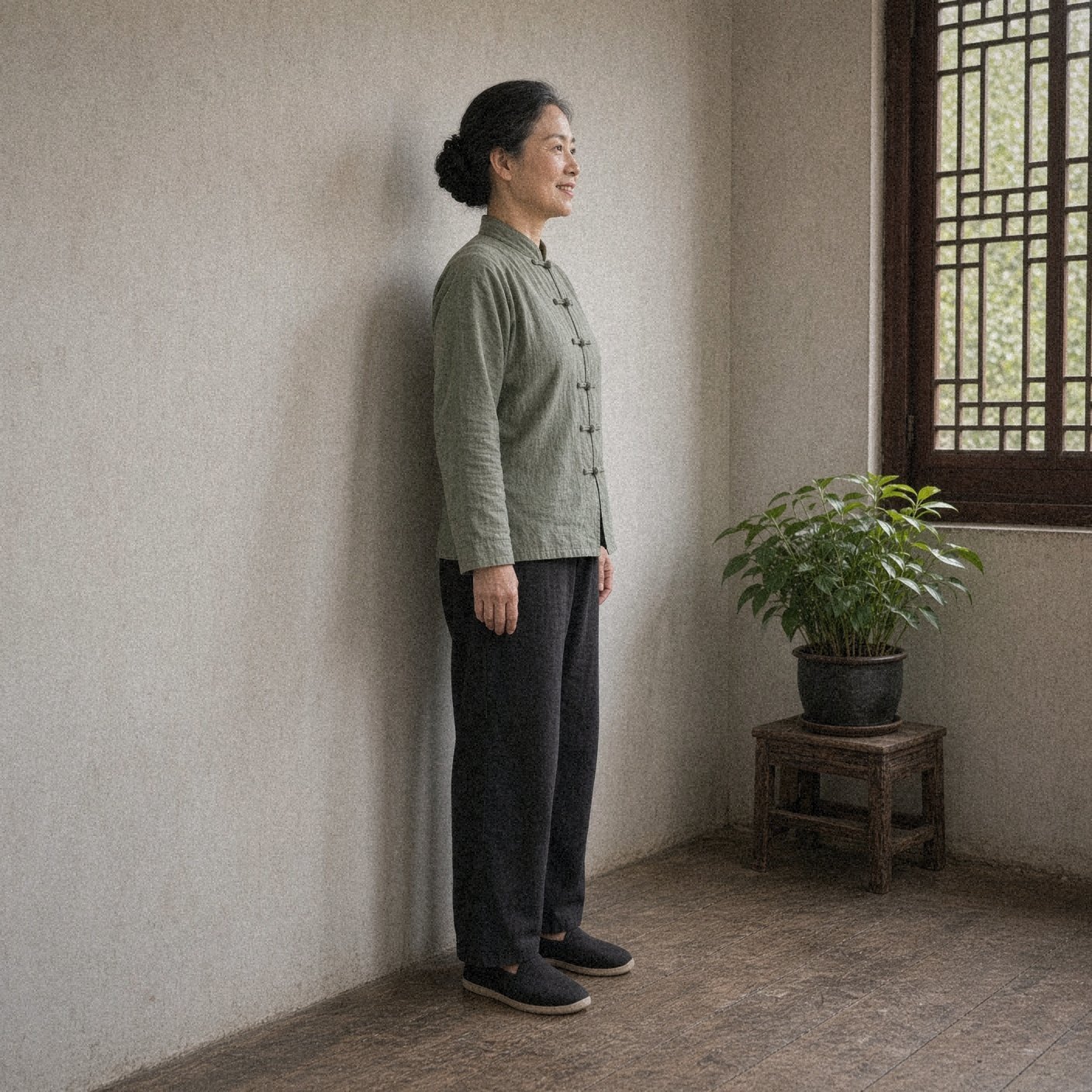
This teaches your body what tall feels like. It is the best way to start every posture session.
How to do it:
- Stand with your back against a wall and your heels a few inches out.
- Let your hips, shoulder blades and, if you can, the back of your head touch the wall.
- Keep your chin level and breathe slowly for 30 seconds, then step away and keep that tall feeling.
Make it easier: If your head does not reach the wall, do not force it. Keep your chin level and let the gap be.
How much: 30 seconds, 2 times.
2. Chin Tucks
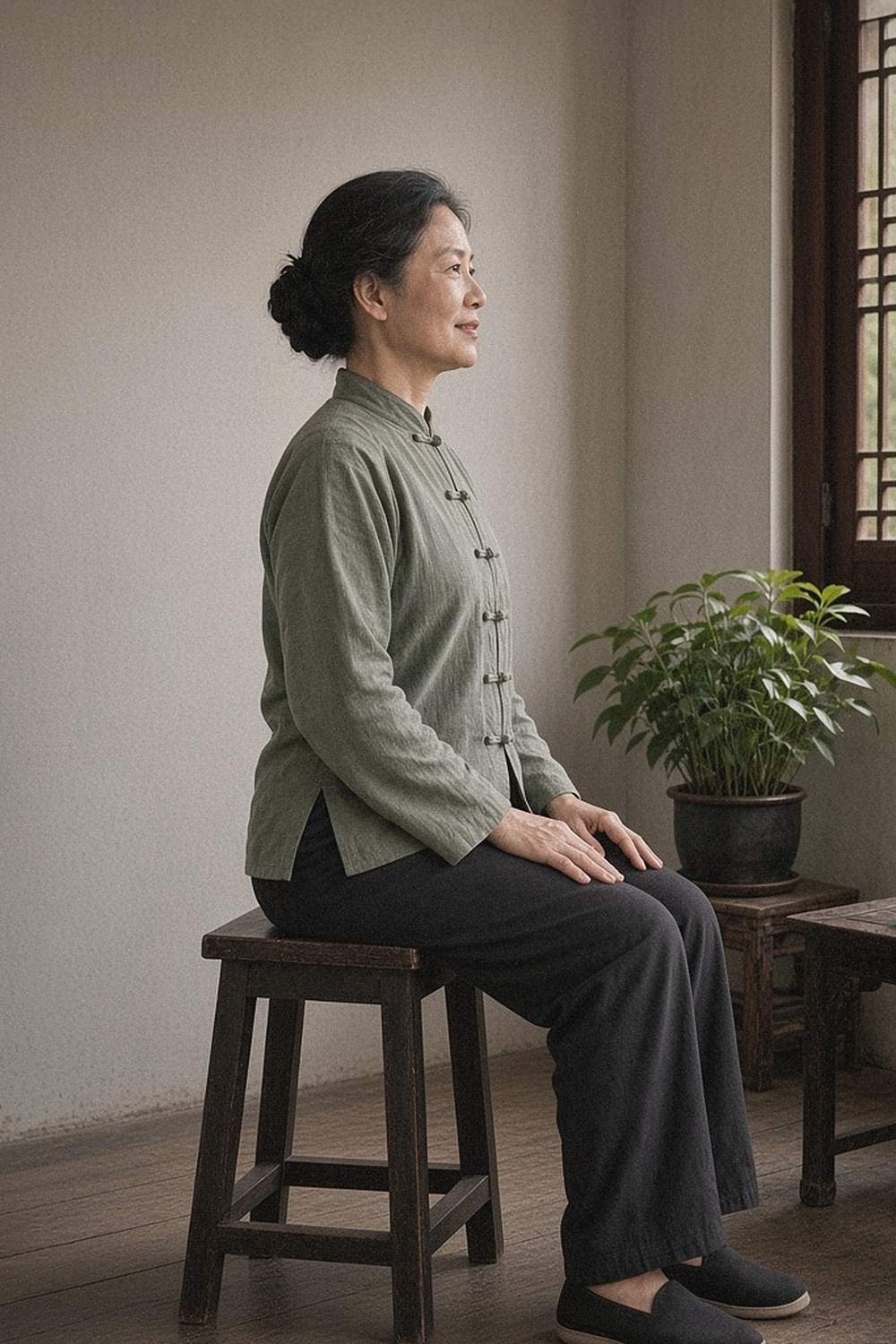
Chin tucks train your head to sit back over your shoulders instead of drifting forward.
How to do it:
- Sit tall and look straight ahead with your eyes level, as in the photo.
- Gently draw your chin straight back, as if making a small double chin. Do not tip your head up or down.
- Hold for 3 seconds, then relax.
Make it easier: Make the movement very small, or rest your fingertips on your chin as a guide.
How much: 8 slow repeats.
3. Shoulder Blade Squeezes
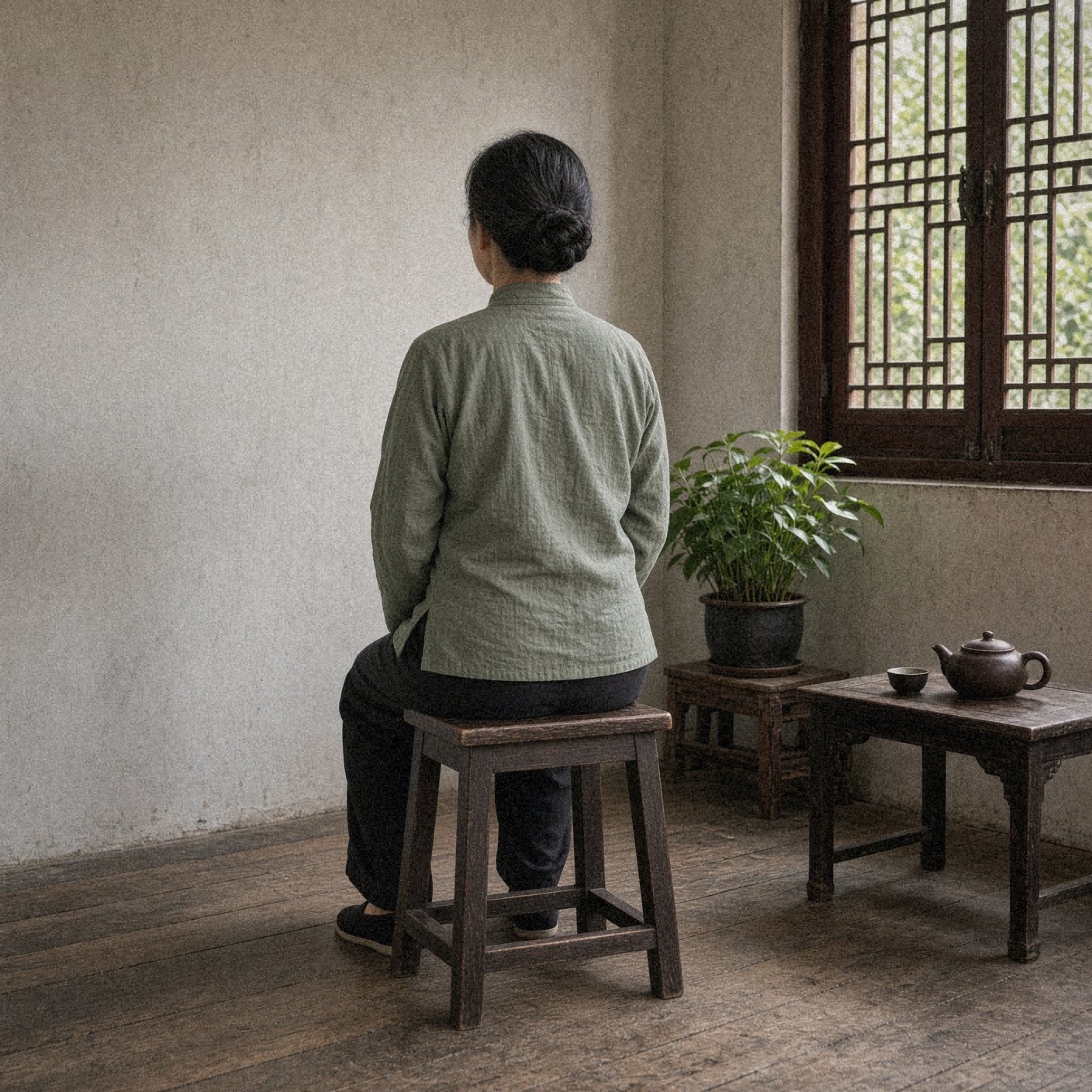
These wake up the muscles between your shoulder blades that pull your shoulders back.
How to do it:
- Sit tall near the front of your chair with your arms relaxed.
- Gently squeeze your shoulder blades together and slightly down.
- Hold for 3 seconds and release.
Make it easier: Squeeze at half effort and hold for 1 or 2 seconds.
How much: 10 repeats.
4. Seated Back Extension
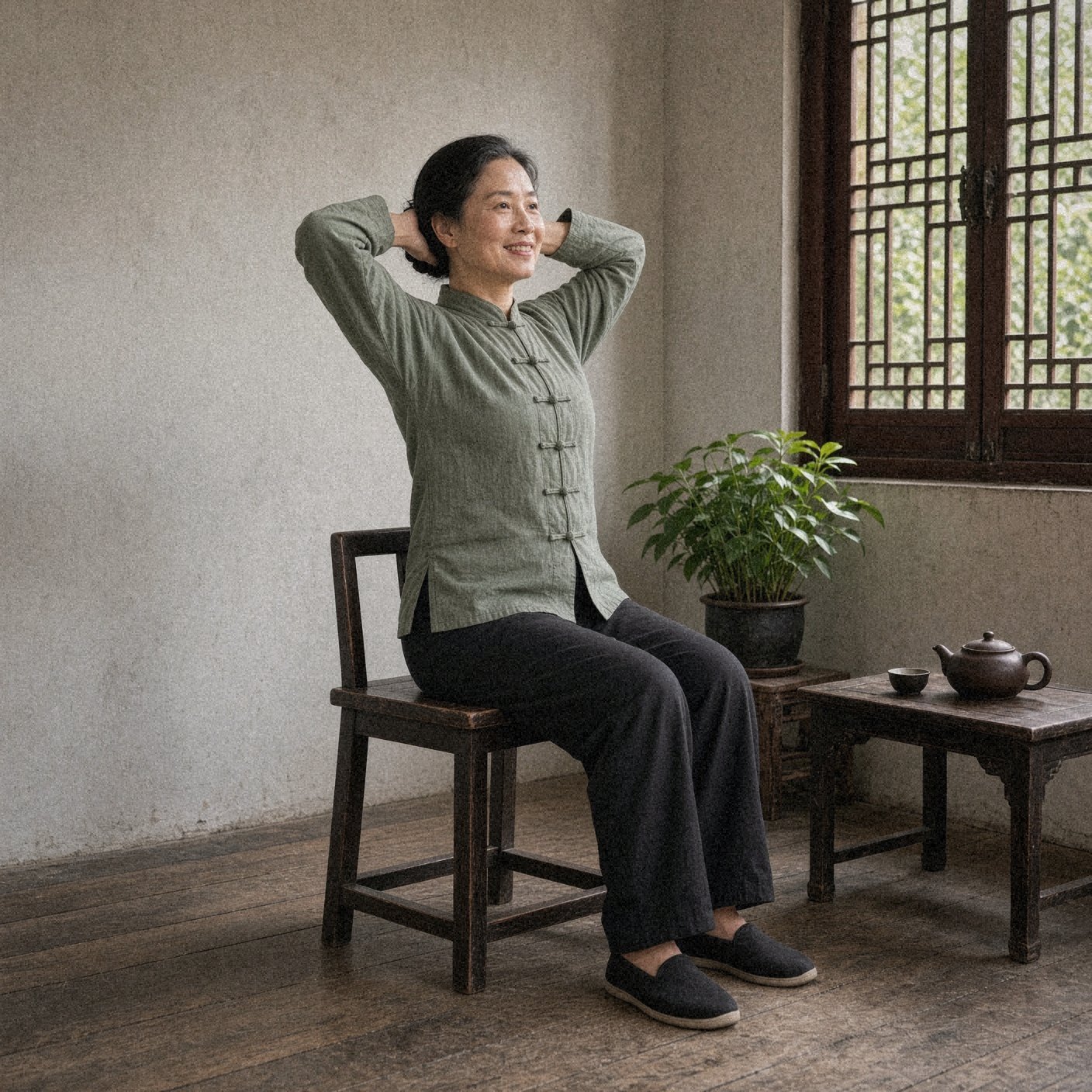
Most of the day we curl forward. This gentle lift moves your upper back the other way.
How to do it:
- Sit tall with your hands resting lightly behind your head or crossed on your chest.
- Breathe in and gently lift your chest, letting your upper back arch a little.
- Breathe out and come back to a tall sit.
Make it easier: Cross your arms over your chest and make the lift very small.
How much: 8 slow repeats.
5. Seated Chest Opener
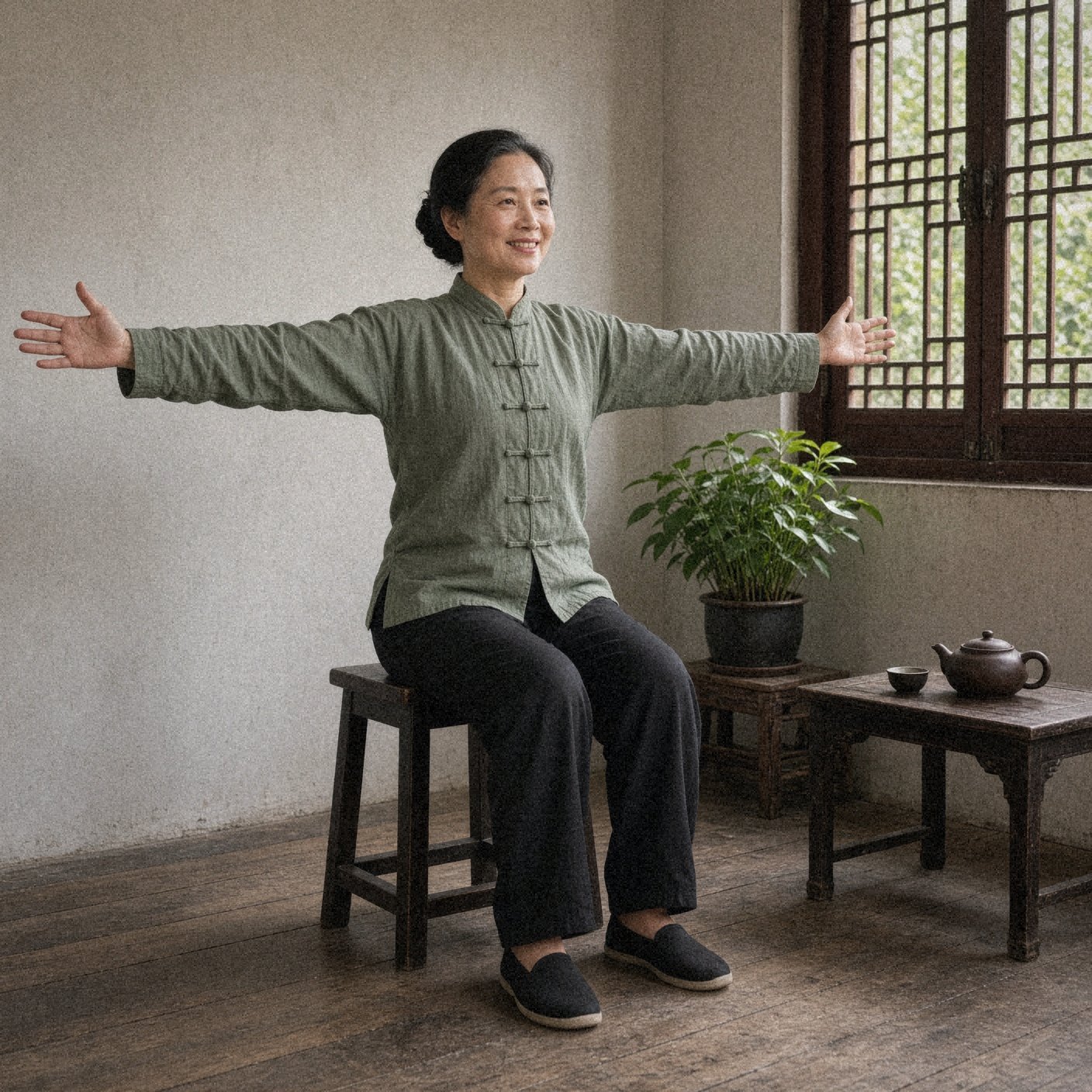
A tight chest pulls the shoulders forward. Opening it gives your upper back room to straighten.
How to do it:
- Sit tall and hold the sides of the chair seat, or clasp your hands behind you.
- Gently lift your chest and draw your shoulders back and down.
- Hold for 15 seconds and breathe slowly.
Make it easier: Rest your hands on your thighs and just lift your chest.
How much: 3 holds of 15 seconds.
6. Band Pull Aparts
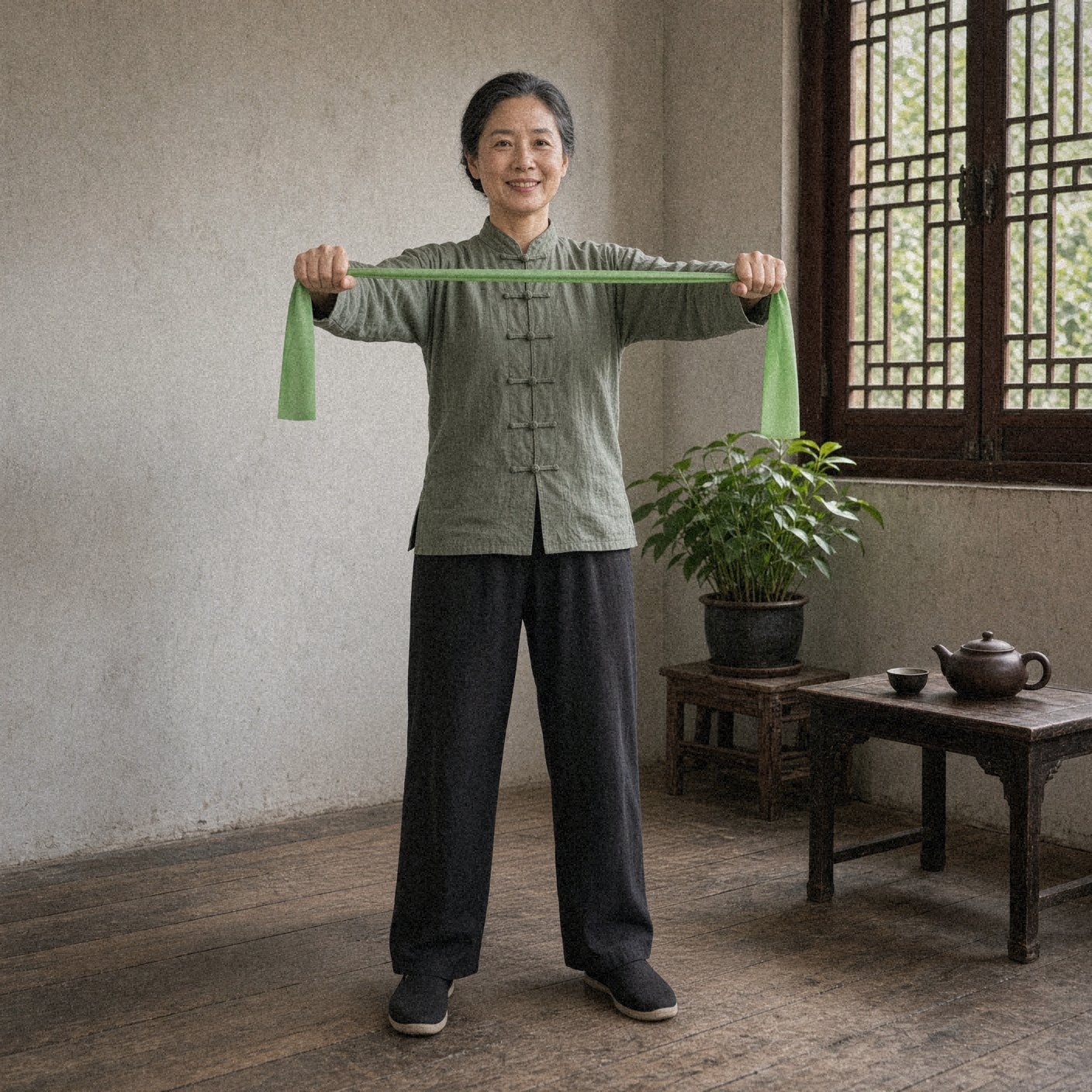
This builds the muscles across the back of your shoulders, which help hold them back and down.
How to do it:
- Hold a light resistance band in front of you at chest height, hands shoulder width apart.
- Keep your arms nearly straight and gently pull the band apart, squeezing your shoulder blades.
- Return slowly.
Make it easier: Use a very light band, hold it wider, or do the same arm movement with no band.
How much: 10 repeats.
7. Seated Band Rows
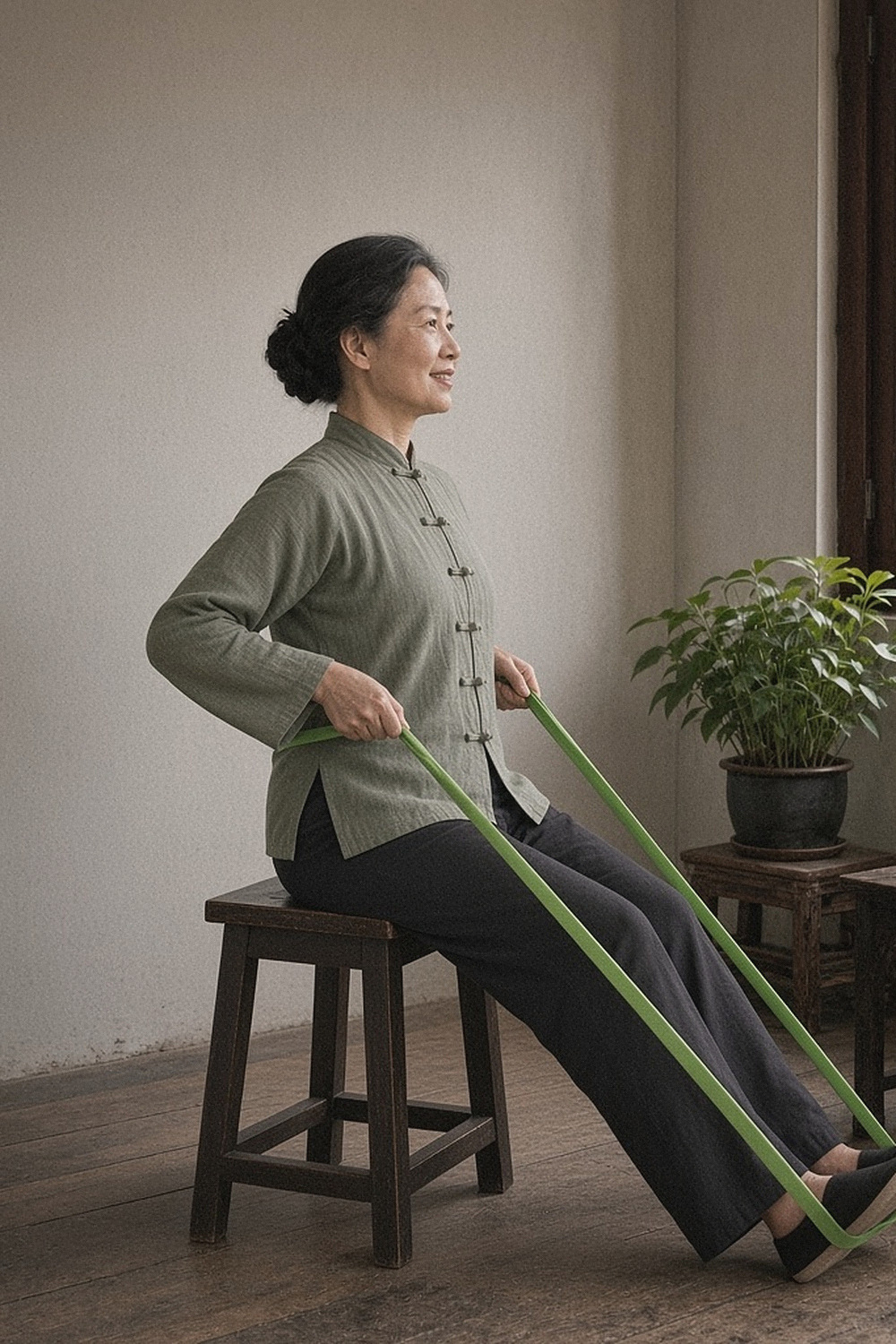
Rows strengthen the middle of your back. Keep your neck long and your shoulders down as you pull.
How to do it:
- Sit tall near the front of a sturdy seat with your legs out in front.
- Loop a light band around the soles of your feet and hold one end in each hand.
- Pull your elbows back past your ribs, then return slowly.
Make it easier: Use a rolled towel around your feet instead of a band, or bend your knees a little.
How much: 10 repeats.
8. Heel Raises at a Chair
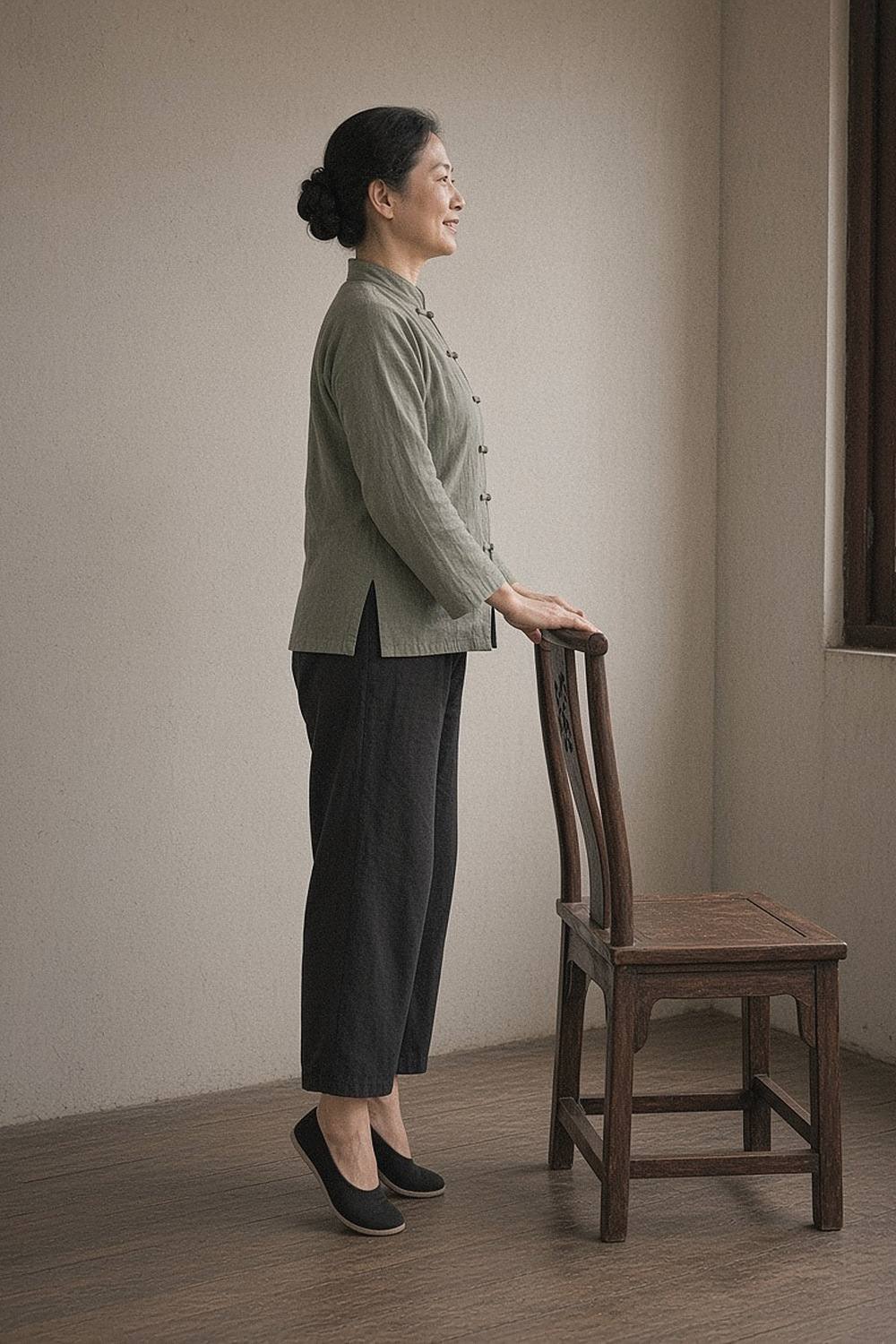
Good posture helps you balance, and balance practice helps you stand tall with confidence. This move works both.
How to do it:
- Stand tall beside or behind a sturdy chair and hold the back.
- Slowly rise onto the balls of your feet, keeping your body tall.
- Hold for a second and lower slowly.
Make it easier: Hold the chair with both hands and lift your heels only a little.
How much: 10 repeats.
Seated or standing: which version should you do?
| Move | Seated | Standing |
|---|---|---|
| Wall Posture Check | Sit tall with your back against the chair back | Back against a wall |
| Chin Tucks | Yes | Yes |
| Shoulder Blade Squeezes | Yes | Yes |
| Seated Back Extension | Yes | Stand with your back near a wall for support |
| Seated Chest Opener | Yes | Use a doorway for a standing chest stretch |
| Band Pull Aparts | Yes | Yes |
| Seated Band Rows | Yes | Loop the band around a sturdy post at chest height |
| Heel Raises | Lift your heels while seated | Hold a chair |
Start seated if your balance is unsure or you tire quickly. Move to standing versions when the seated ones feel easy.
A 10 minute daily posture routine
Do these in order once a day, seated or standing. Go slowly and breathe normally.
| Step | What to do | Amount |
|---|---|---|
| 1 | Wall Posture Check | 30 seconds |
| 2 | Chin Tucks | 8 repeats |
| 3 | Shoulder Blade Squeezes | 10 repeats |
| 4 | Seated Back Extension | 8 repeats |
| 5 | Seated Chest Opener | 3 holds of 15 seconds |
| 6 | Band Pull Aparts | 10 repeats |
| 7 | Heel Raises at a Chair | 10 repeats |
Your 4 week plan
Posture changes slowly. A few minutes most days works better than a long session once a week.
| Week | What to do |
|---|---|
| Week 1 | Wall posture check, chin tucks and shoulder blade squeezes once a day. |
| Week 2 | Add the seated back extension and the seated chest opener. |
| Week 3 | Add band pull aparts and heel raises on 4 or 5 days. |
| Week 4 | Do the full 10 minute routine most days and add seated band rows twice a week. |
When to check with your doctor
These moves are gentle, but check with your doctor or a physical therapist first if any of these apply to you:
- You have osteoporosis, kyphosis or a spine condition.
- Your back became more rounded quickly, or you have new back pain.
- You have neck pain, numbness or tingling in your arms.
- You have had a recent fall, fracture or operation.
- You get dizzy when you move your head or stand up.
Frequently asked questions
Can you correct your posture at 70?
Many people in their 70s and beyond feel and stand taller with regular practice. How much changes depends on your body, including your bones. Muscles respond to exercise at any age, so it is worth trying. Ask your doctor first if you have osteoporosis or a very rounded back.
Why do some seniors walk hunched over?
Common reasons include years of sitting and looking down, weaker back and core muscles, and changes in the spine with age. MedlinePlus notes that posture may become more stooped as we age. A sudden change in posture should always be checked by a doctor.
How can I stop stooping as I get older?
Practice standing tall several times a day, keep your upper back and core strong, stretch your chest, and set up screens and books at eye level so you look straight ahead. The routine on this page covers all of that.
How long does it take to improve posture?
It differs for everyone. Harvard Health says posture can improve “noticeably in just a few weeks” with practice. Keep going for a few months and take a side photo each month to compare.
Do posture correctors work for elderly people?
A brace can remind you to sit up, but it does not build the muscles that hold you upright. If you want to try one, ask your doctor or physical therapist, and keep doing the exercises.
What is the number one posture exercise for seniors?
If you only do one, make it the wall posture check. It shows you what tall feels like and you can do it anywhere there is a wall.
Keep going
New to exercise? Start with our guide to gentle exercise for seniors. For a forward head, see our neck hump exercises, and for more moves try our posture exercises for rounded shoulders. To understand what changes with age, read our guide to posture after 50.

Written by June Ashby
June writes the Limber Years guides to posture, tai chi, mobility and gentle strength for people over 50. She keeps every routine short, gentle and easy to follow at home. June is not a doctor or physical therapist, so please check with yours before starting something new. More about Limber Years
Sources
- MedlinePlus: Guide to good posture
- MedlinePlus: Kyphosis
- MedlinePlus: Aging changes in the bones, muscles and joints
- NHS: Kyphosis
- Harvard Health: Why good posture matters
This article is general information, not medical advice. Read our full disclaimer.