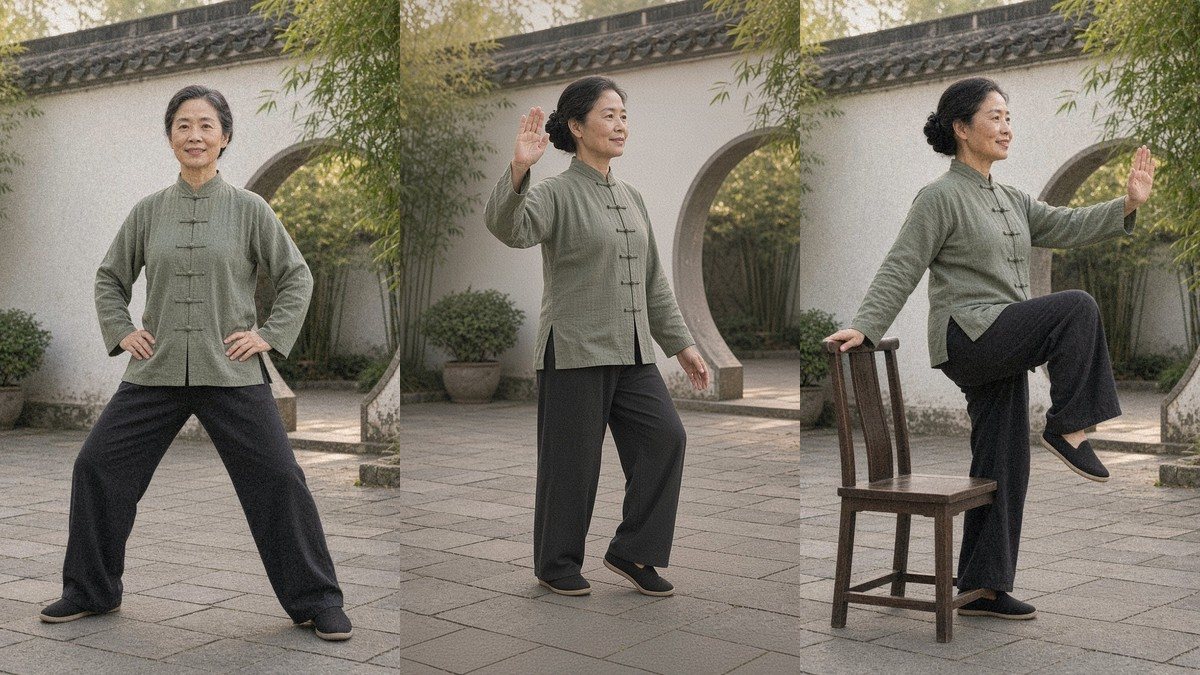
Of all the reasons people try tai chi, better balance is near the top. And it is one of the few areas where the research is fairly strong.
This guide explains what the studies actually say, why slow tai chi moves may help you feel steadier, and how to check your own balance at home so you can see progress.
Then it gives you 7 tai chi balance drills, in order from easiest to hardest. You start holding a chair and move on only when you feel ready.
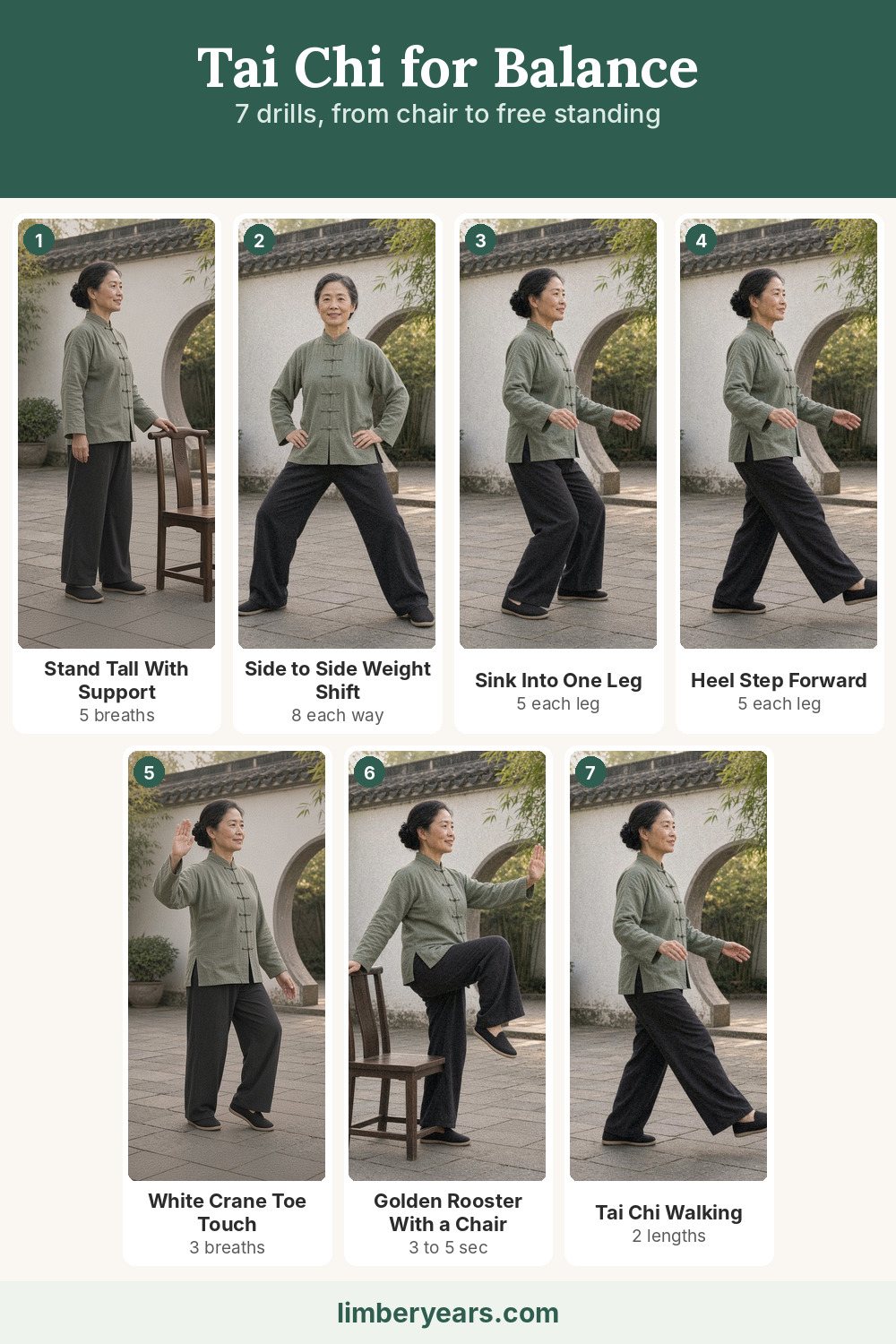
Save this chart to Pinterest or print it out and keep it near your favorite chair. Photos on this site are made with AI to show each move clearly.
Key takeaways
- Good quality research found tai chi may reduce the number of older people who fall by about 20 percent.
- Tai chi trains slow weight shifts, standing on one leg for a moment and turning, which are the moments we often wobble.
- Check your balance before you start and again every 4 weeks to see your progress.
- Always practise next to a counter or sturdy chair, and only let go when you feel steady.
Before you start
- Practise next to a kitchen counter or a sturdy chair that cannot slide.
- Wear flat, flexible shoes with a good grip.
- Clear rugs, cords and clutter from the floor.
- Practise when you feel alert, not when you are tired or have just stood up quickly.
- Stop and sit down if you feel dizzy or lightheaded.
What the research says
The National Center for Complementary and Integrative Health (NCCIH) says tai chi “may be beneficial in improving balance and preventing falls in older adults and people with Parkinson’s disease.”
It also gives the numbers from a large review of studies:
Compared to control interventions that were not thought to reduce falls, there was low-certainty evidence that tai chi may reduce the rate of falls by 19 percent (based on 7 studies with 2,655 participants) and high-certainty evidence that tai chi may reduce the number of people who experience falls by 20 percent (based on 8 studies with 2,677 participants).
NCCIH: Tai chi, what you need to know
In plain English: the evidence is good that fewer people fall when they do tai chi. It is less certain how much it cuts the total number of falls. The National Institute on Aging (NIA) also lists tai chi as a way to work on balance, saying “Yoga, Pilates, and tai chi can all improve balance and muscle strength.”
Fear matters too. Harvard Health notes that “Fear of falling can make you more likely to fall; some studies have found that tai chi training helps reduce that fear.”
Why tai chi may help your balance
Most falls happen when we shift weight, turn or step without thinking. Tai chi practises exactly those moments, slowly and on purpose:
- Slow weight shifts. Nearly every move moves your weight from one leg to the other, under control.
- Short single leg moments. Moves like White Crane and Golden Rooster ask you to balance on one leg for a few seconds.
- Turning the body. Turning from the waist while your feet stay planted trains you to stay steady as you turn.
- Body awareness. Harvard Health explains that the sense of where your body is in space “declines with age” and that “Tai chi helps train this sense.”
Check your balance first
This simple check gives you a starting point. Stand next to a counter with your hands just above it, ready to hold on. Try each stance for up to 30 seconds and write down how long you held it.
| Step | Stance | Your time |
|---|---|---|
| 1 | Feet side by side, touching | Seconds held: |
| 2 | One foot half a step ahead of the other | Seconds held: |
| 3 | One foot directly in front of the other, heel touching toes | Seconds held: |
| 4 | Standing on one foot | Seconds held: |
Stop as soon as you need to hold on. Do the check again every 4 weeks. If you cannot hold the first stance for a few seconds, or you feel very unsteady, talk to your doctor before you go further.
The 7 balance drills at a glance
| # | Move | Works on | How much |
|---|---|---|---|
| 1 | Stand Tall With Support | Level 1: posture and steadiness | 5 slow breaths |
| 2 | Side to Side Weight Shift | Level 1: weight shift | 8 slow shifts each way |
| 3 | Sink Into One Leg | Level 2: single leg strength | 5 times each leg |
| 4 | Heel Step Forward | Level 2: stepping | 5 steps each leg |
| 5 | White Crane Toe Touch | Level 3: near single leg | Hold for 3 to 5 breaths, 2 times each side |
| 6 | Golden Rooster With a Chair | Level 4: single leg | Hold for 3 to 5 seconds, 3 times each side |
| 7 | Tai Chi Walking | Level 4: moving balance | 2 lengths of your counter |
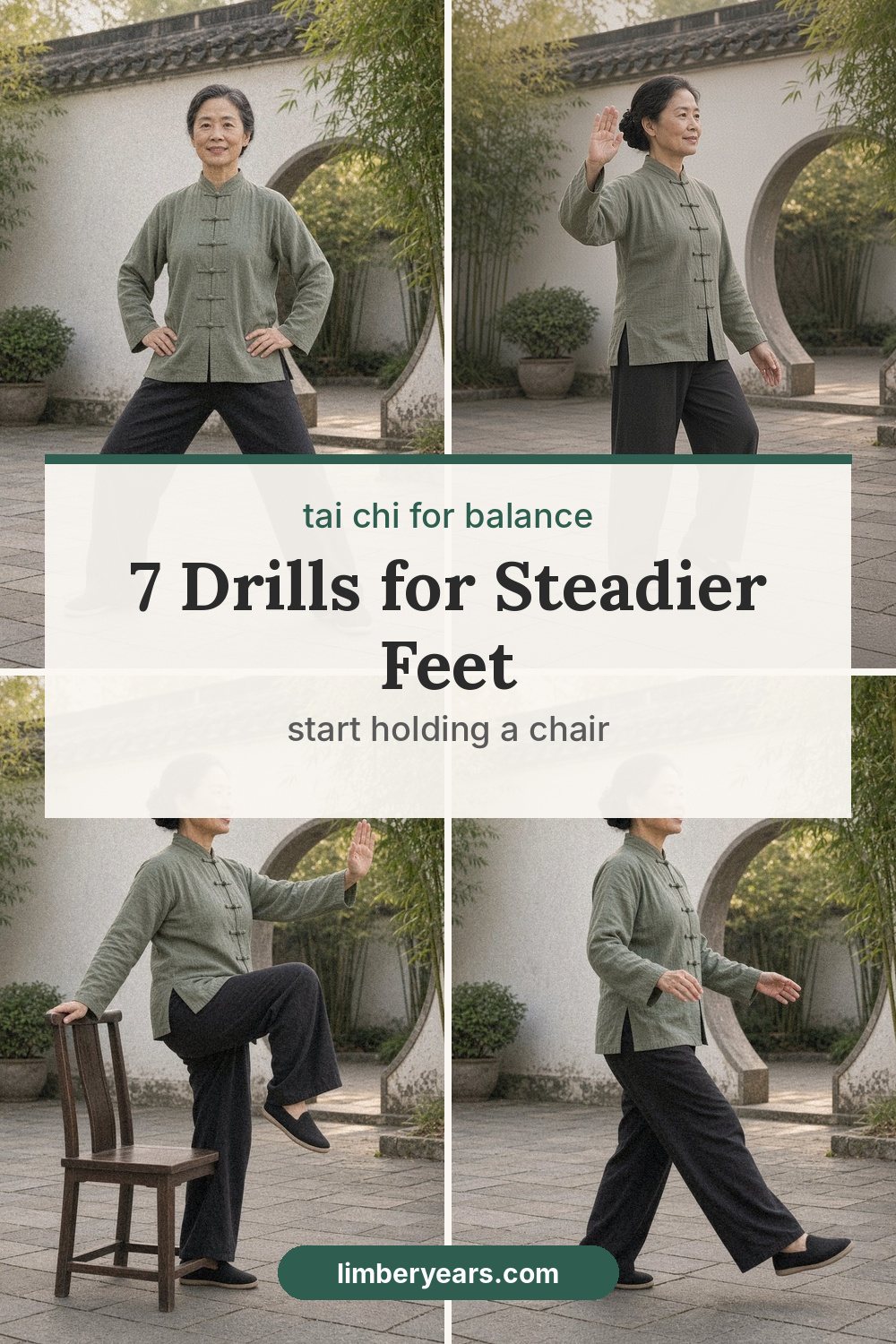
1. Stand Tall With Support
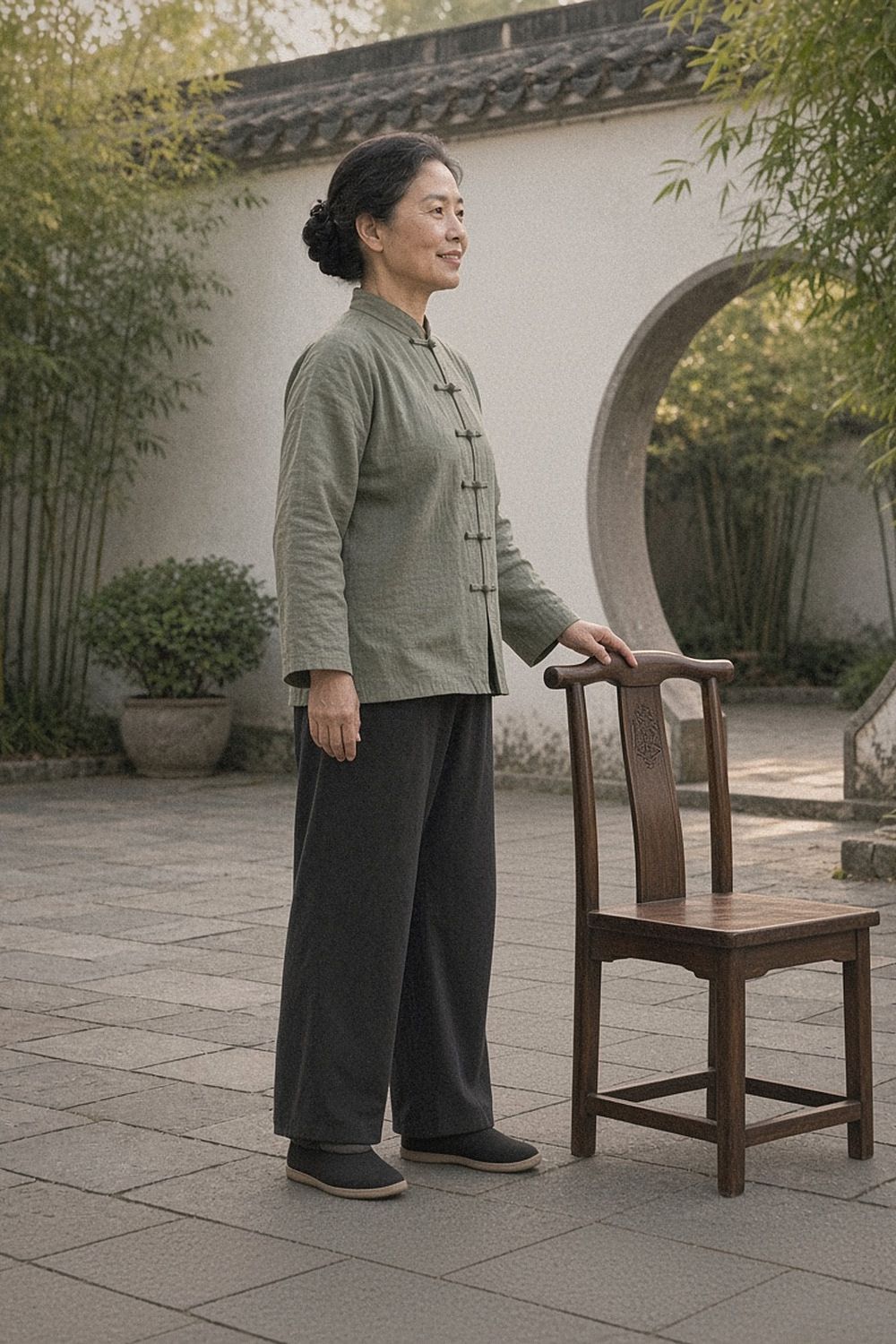
Good balance starts with good alignment. This is your starting position for every drill.
How to do it:
- Stand beside your chair or counter with one hand resting on it, as in the photo.
- Feet hip width apart, knees soft.
- Stand tall and notice your weight spread evenly through both feet. Breathe slowly.
Make it easier: Hold on with both hands.
How much: 5 slow breaths.
2. Side to Side Weight Shift
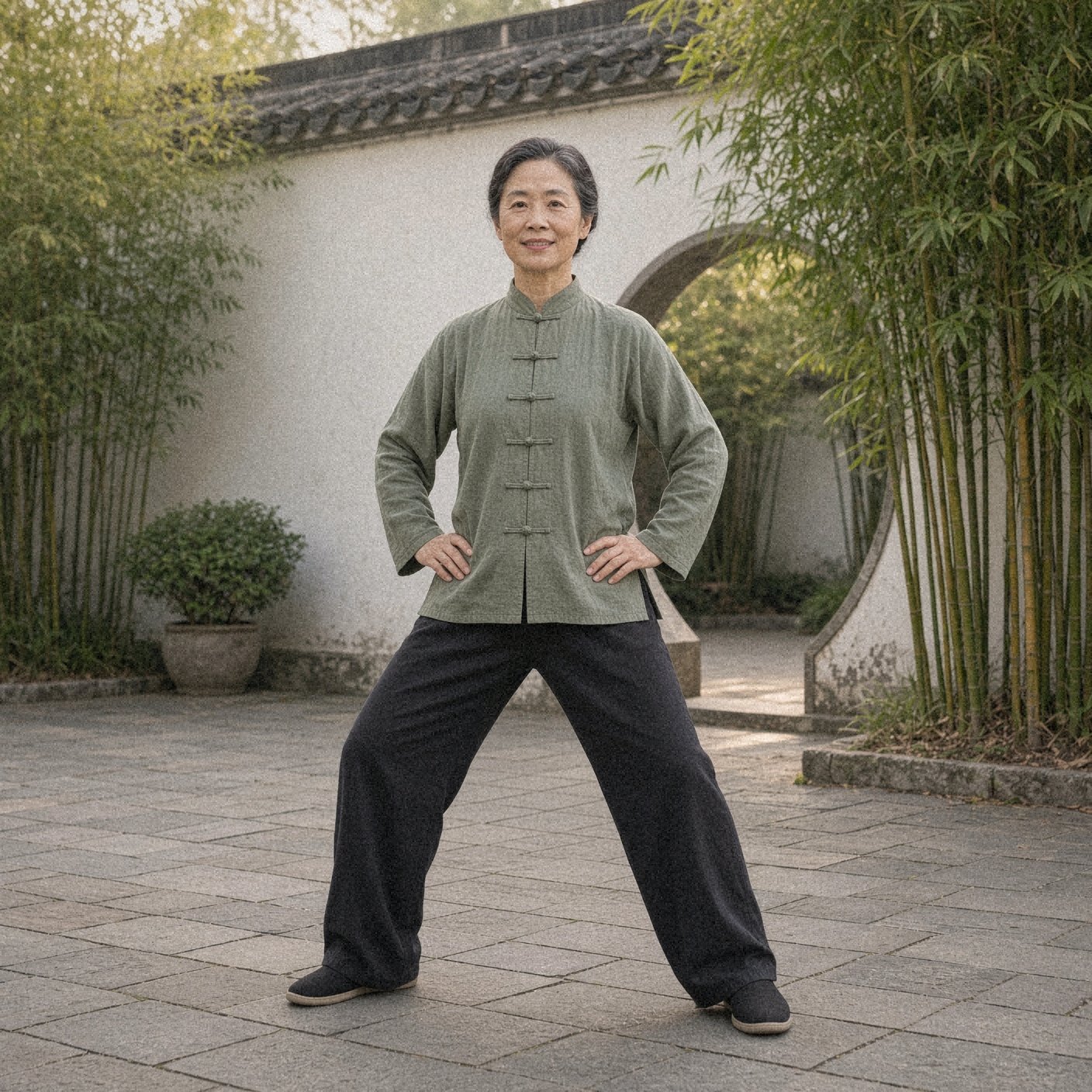
Learning to move your weight smoothly from foot to foot is the base of every tai chi move.
How to do it:
- Stand with your feet a little wider than your hips, hands on your hips or on the chair.
- Slowly shift your weight to one foot, keeping both feet on the floor.
- Pause, then shift slowly to the other foot.
Make it easier: Make the shift smaller and hold the chair.
How much: 8 slow shifts each way.
3. Sink Into One Leg
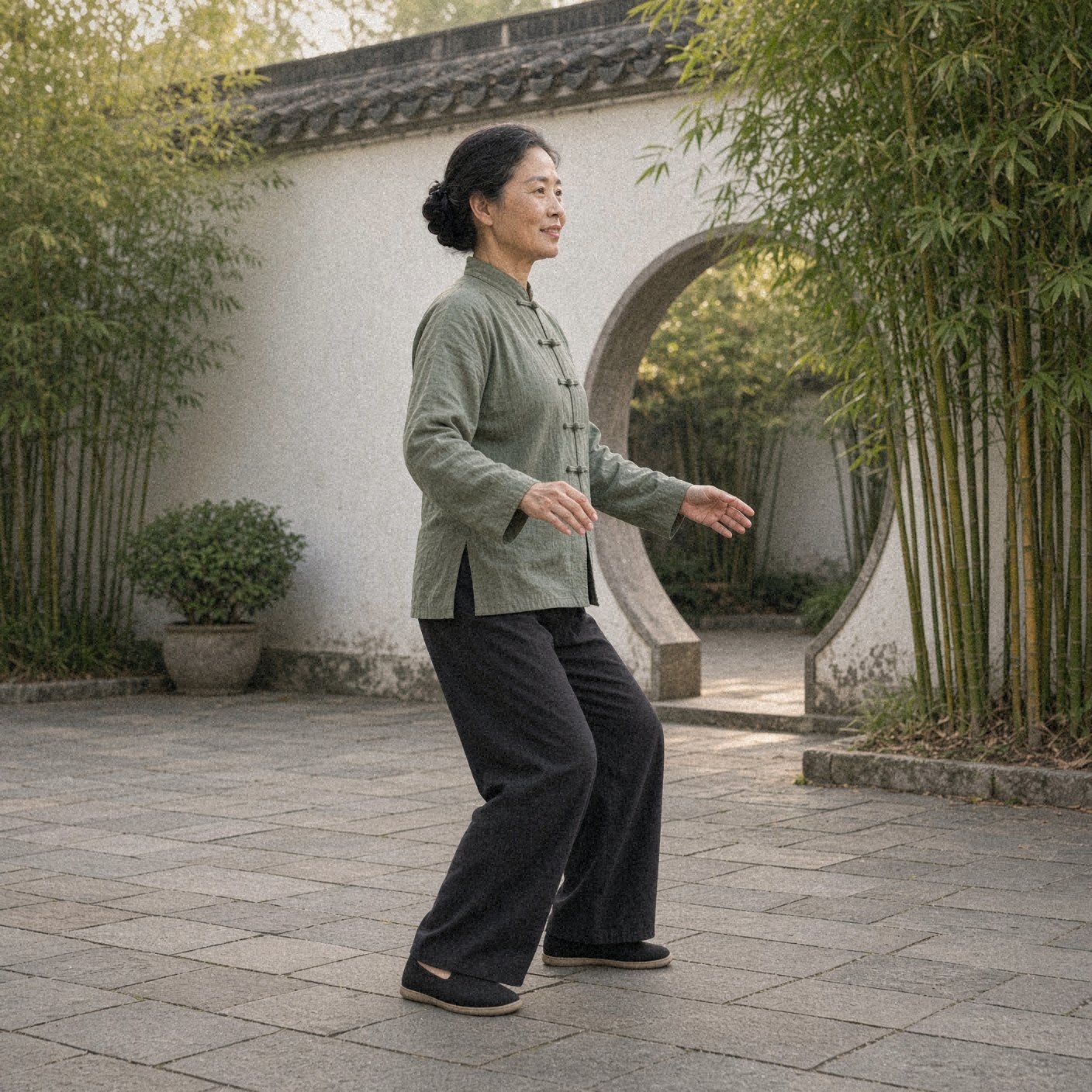
A soft, strong standing leg is what keeps you steady when the other foot is moving.
How to do it:
- Shift your weight onto one leg.
- Bend that knee a little, as if starting to sit, keeping your back tall.
- Hold for a breath, then rise slowly. Keep the other foot lightly on the floor.
Make it easier: Keep both feet flat and just bend your knees a little.
How much: 5 times each leg.
4. Heel Step Forward
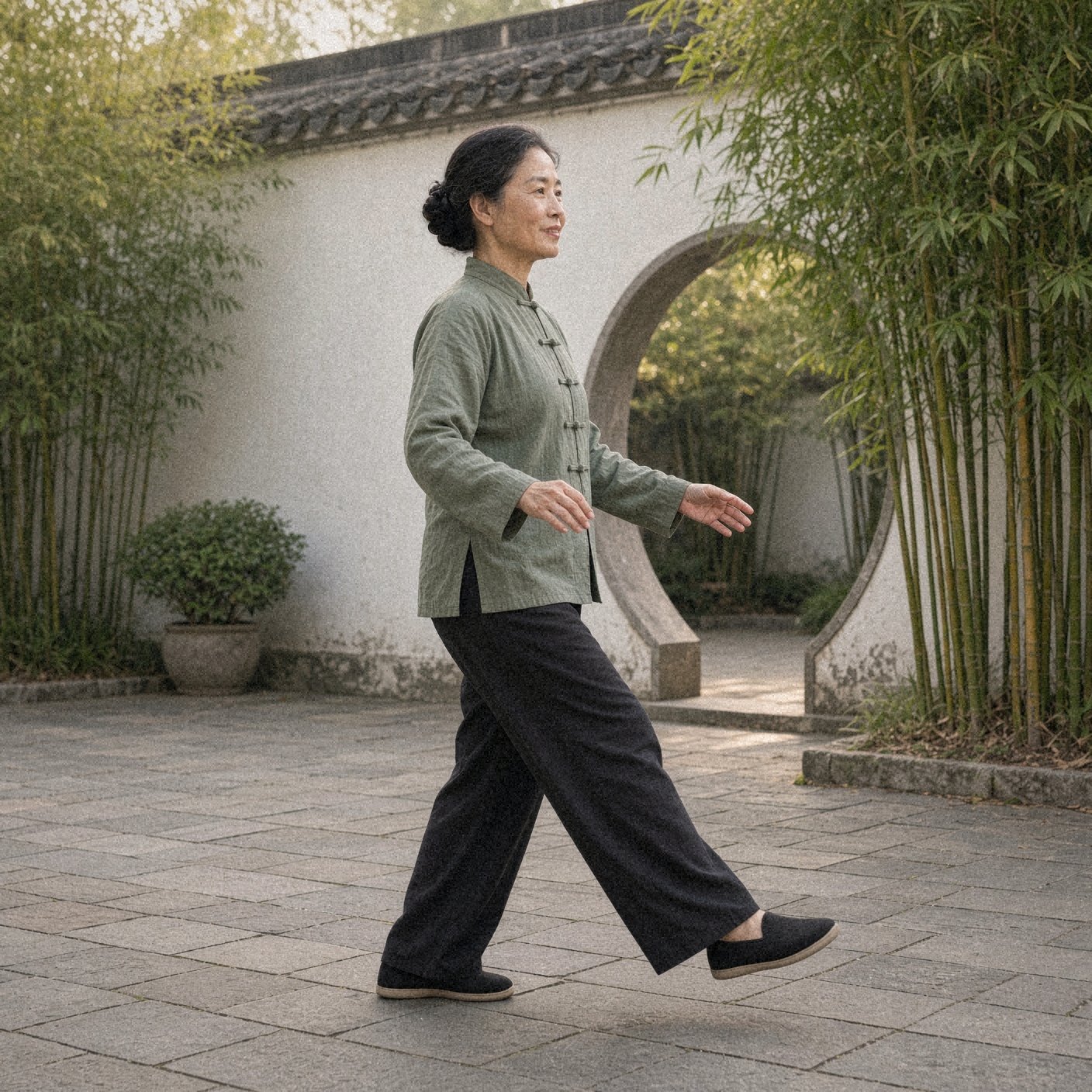
Placing your foot before you trust it with your weight is a habit that helps on uneven ground.
How to do it:
- Hold your chair or counter and sink into one leg.
- Step the other foot forward slowly and place the heel down first, with no weight on it yet.
- Roll your weight forward onto that foot, then step back to the start.
Make it easier: Make the step very short.
How much: 5 steps each leg.
Our tai chi walking guide breaks this step down in detail.
5. White Crane Toe Touch
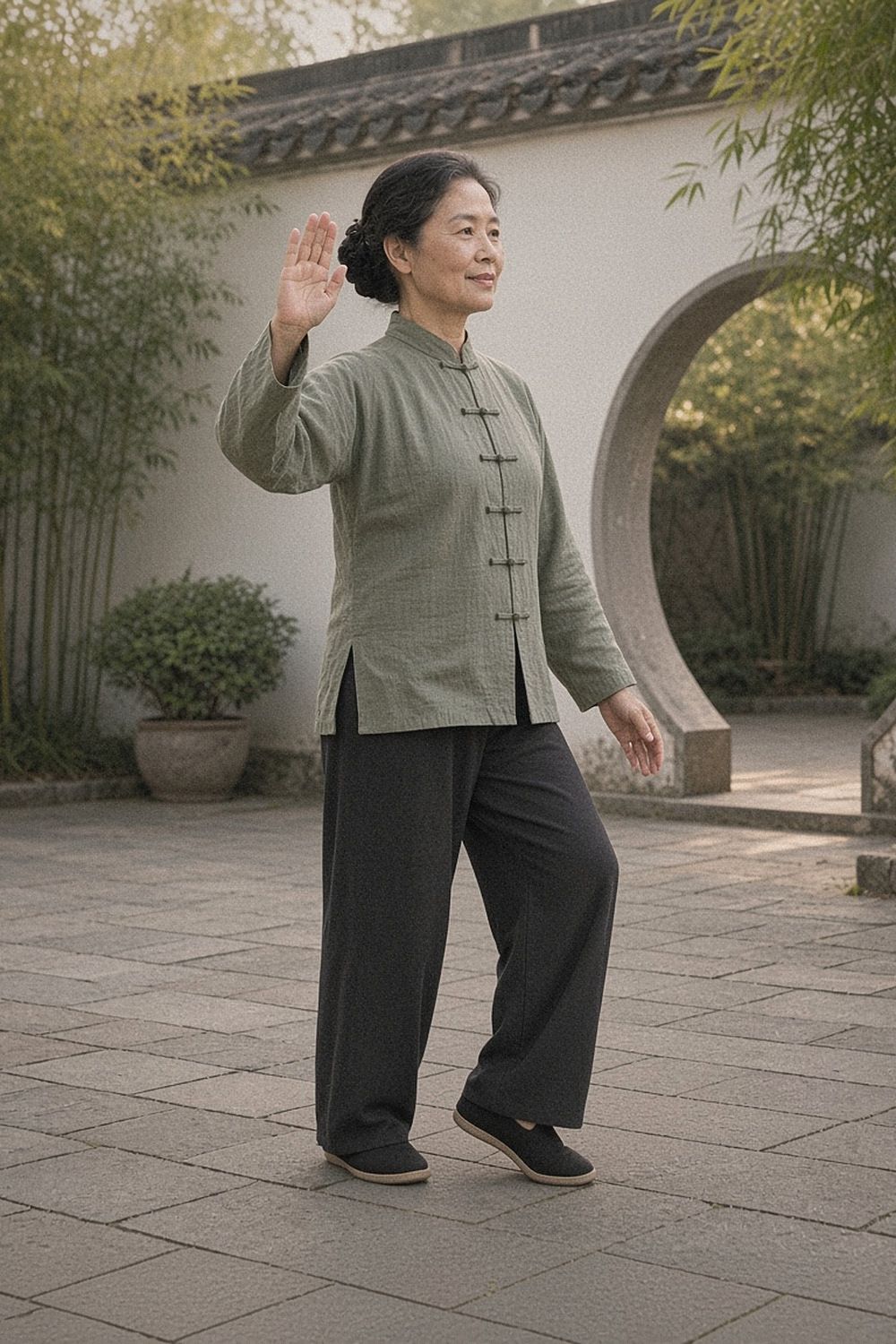
Almost all of your weight is on one leg, but your toes are still there as a safety net.
How to do it:
- Sit your weight back onto one leg.
- Rest just the toes of the other foot on the floor in front of you.
- Raise the hand on your standing side beside your temple and rest the other hand by your hip or on your chair, as in the photo.
Make it easier: Keep a hand on the chair the whole time.
How much: Hold for 3 to 5 breaths, 2 times each side.
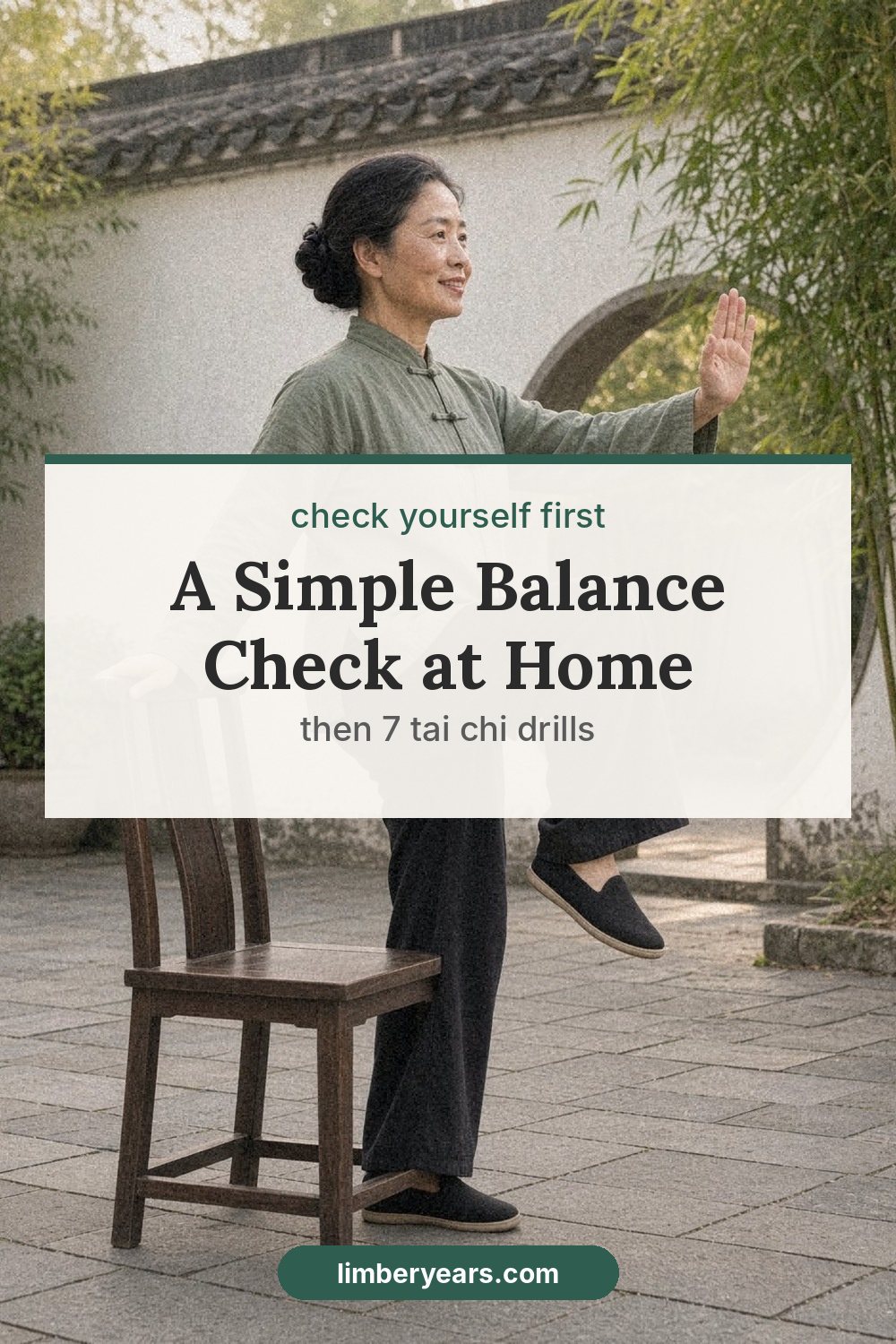
6. Golden Rooster With a Chair
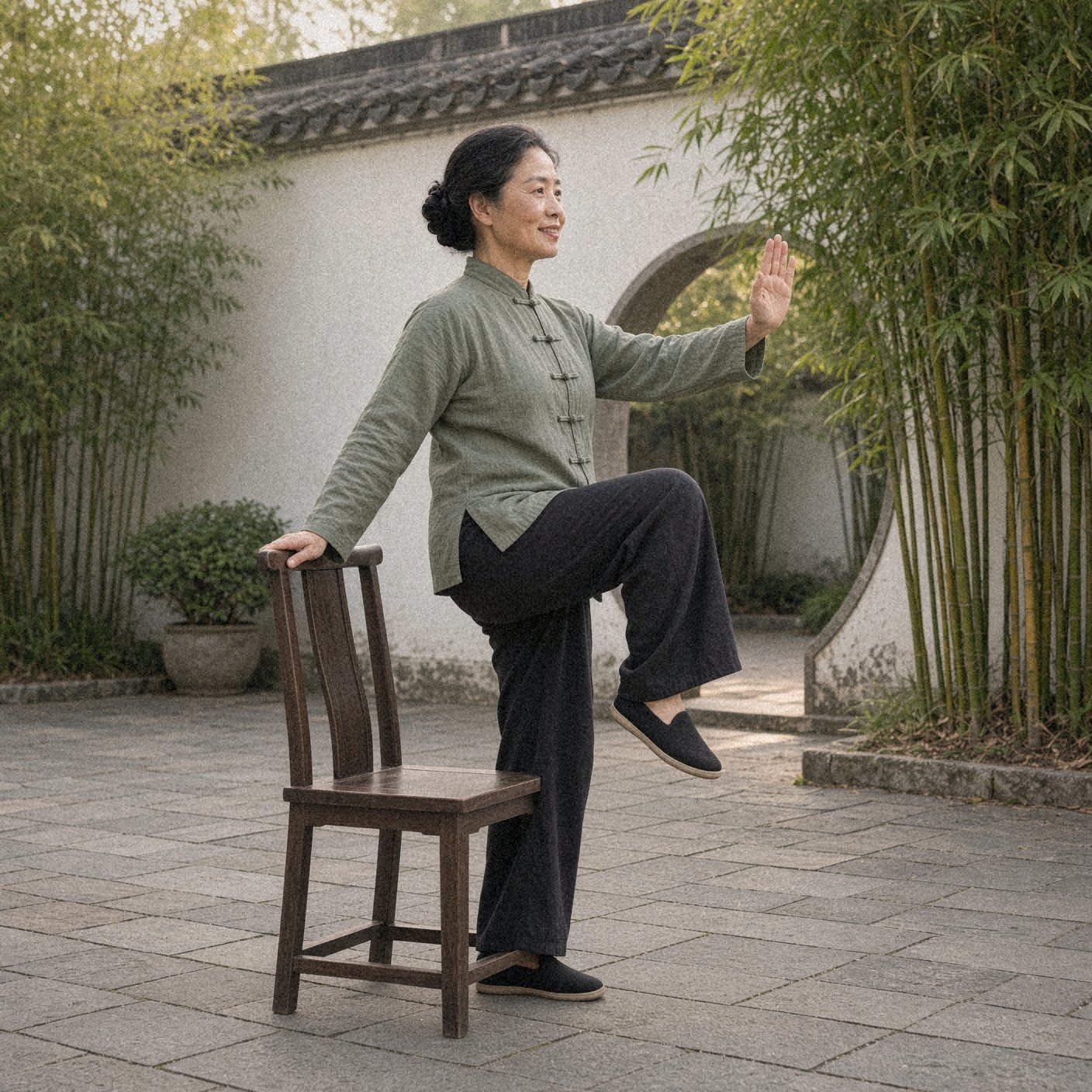
This is a true one leg balance, which is what we need for a moment every time we take a step.
How to do it:
- Hold your chair with one hand and shift your weight onto that side.
- Lift the other knee a little and raise the same side hand, as in the photo.
- Hold, then lower your foot slowly.
Make it easier: Lift only your heel and keep your toes down.
How much: Hold for 3 to 5 seconds, 3 times each side.
More detail in tai chi for beginners.
7. Tai Chi Walking
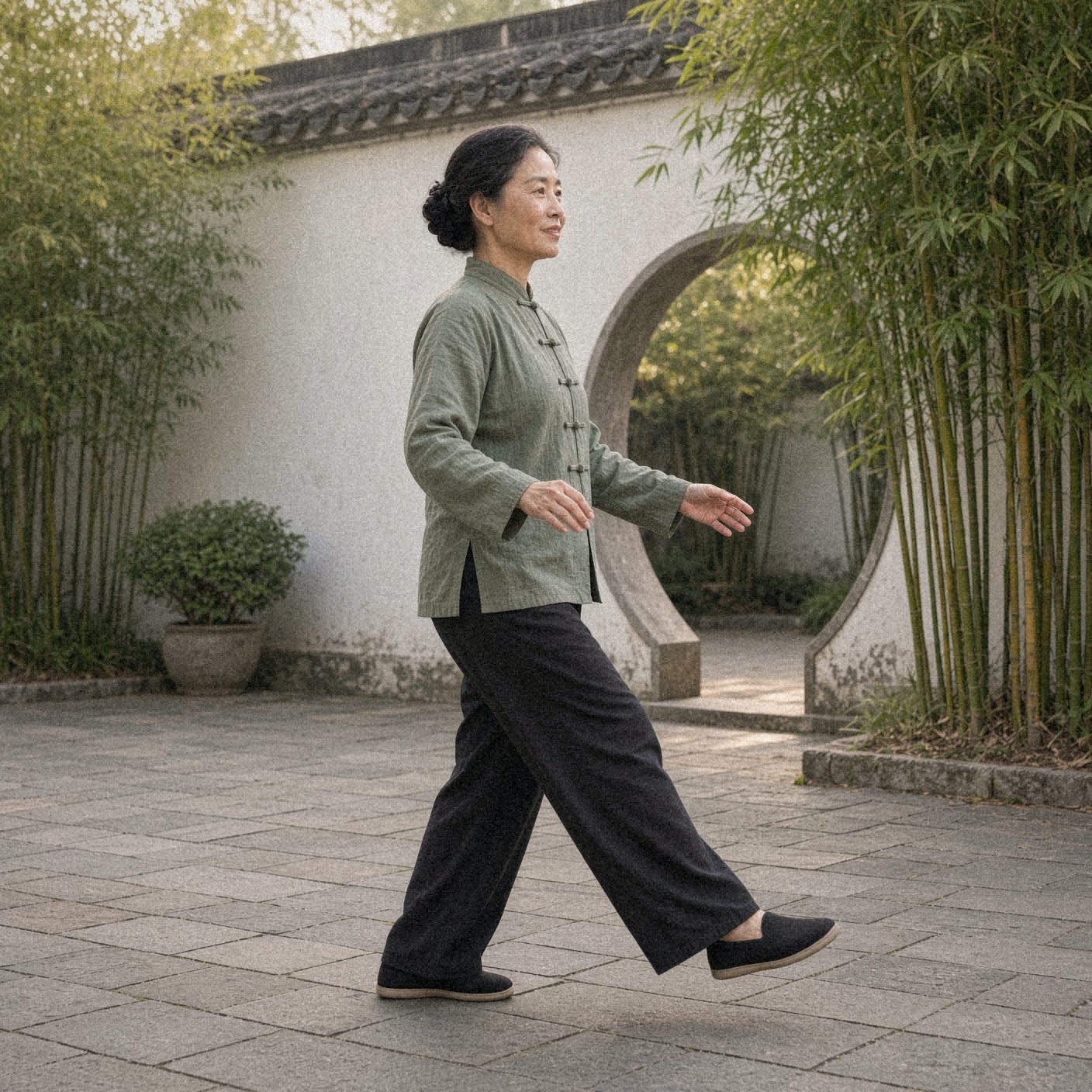
This puts the other drills together into a slow, steady walk.
How to do it:
- Walk slowly along your counter, ready to hold it.
- With each step, sink into the standing leg, place the heel, then roll your weight forward.
- Take 5 slow steps, turn carefully and walk back.
Make it easier: Keep one hand sliding along the counter the whole way.
How much: 2 lengths of your counter.
See the full step by step guide in tai chi walking.
From chair to free standing
Use the same drills, but change how much support you use:
| Level | Support |
|---|---|
| Level 1 | Two hands on the counter or chair |
| Level 2 | One hand on the counter |
| Level 3 | Fingertips only, resting lightly |
| Level 4 | Hands hovering just above the counter, ready to grab |
| Level 5 | Free standing, with the counter still beside you |
Move up one level only when you can do the drill slowly with no wobble. It is normal to be on different levels for different drills.
A 10 minute balance session
Do it 3 days a week, next to a counter or sturdy chair.
| Step | What to do | Amount |
|---|---|---|
| 1 | Stand Tall With Support | 5 breaths |
| 2 | Side to Side Weight Shift | 8 each way |
| 3 | Sink Into One Leg | 5 each leg |
| 4 | Heel Step Forward | 5 each leg |
| 5 | White Crane Toe Touch | 2 holds each side |
| 6 | Golden Rooster With a Chair | 3 holds each side |
| 7 | Tai Chi Walking | 2 lengths |
Your 4 week balance plan
Only move up a level when the one before feels easy and steady.
| Week | What to do |
|---|---|
| Week 1 | Do the balance check. Practise drills 1 to 3, holding on with both hands, 3 days a week. |
| Week 2 | Add drills 4 and 5. Try one hand on the counter for drills you find easy. |
| Week 3 | Add drills 6 and 7. Do the full 10 minute session 3 days a week. |
| Week 4 | Try fingertips only on your easiest drills. At the end of the week, repeat the balance check. |
When to check with your doctor
Balance problems can have many causes, from inner ear issues to medicines. Talk to your doctor before starting if any of these apply to you:
- You have fallen in the past year, or you are afraid of falling.
- You often feel dizzy, lightheaded or like the room is spinning.
- You have numbness in your feet or trouble feeling the floor.
- You take medicines that can affect balance, such as some sleeping pills or blood pressure medicines.
- You cannot hold the first stance of the balance check for a few seconds.
Frequently asked questions
Does tai chi really help balance?
The evidence is fairly good. NCCIH reports high-certainty evidence that tai chi may reduce the number of people who fall by 20 percent in older adults. Results vary from person to person, and it works best with regular practice.
How long does tai chi take to improve balance?
Give it time. Harvard Health notes that most beginner programs tested in research “last at least 12 weeks, with instruction once or twice a week and practice at home.” Many people feel steadier sooner, but plan on at least 3 months.
How often should I practise tai chi for balance?
Aim for 3 sessions a week. The National Institute on Aging suggests aiming for “about three sessions of balance exercises a week.”
Is tai chi better than other balance exercises?
Not necessarily better, but it is a good option because it is gentle and many people enjoy it, which makes them keep going. Simple balance exercises, strength work and walking all help too.
Can I do tai chi for balance if I use a walker or cane?
Often yes, but start seated with chair tai chi and ask your doctor or physical therapist before you try standing drills.
Want a one page version? Get our free mini tai chi chart with 5 easy moves and clear photos. Download the free chart.
Keep going
To learn more full tai chi moves, start with our tai chi for beginners guide. Our tai chi walking guide breaks the walking step down in detail. If you are over 65, see tai chi for seniors, and for a look at all the evidence, read tai chi benefits. Back to our guide to gentle exercise.

Written by June Ashby
June writes the Limber Years guides to posture, tai chi, mobility and gentle strength for people over 50. She keeps every routine short, gentle and easy to follow at home. June is not a doctor or physical therapist, so please check with yours before starting something new. More about Limber Years
Sources
- NCCIH: Tai chi, what you need to know
- Harvard Health: The health benefits of tai chi
- NIA: Falls and fractures in older adults
- NIA: Four types of exercise
This article is general information, not medical advice. Read our full disclaimer.